
In the rapidly evolving world of artificial intelligence, one field stands out for its transformative potential: computer vision. This technology enables machines to interpret and make decisions based on visual data, opening up a plethora of applications across various industries. From healthcare to automotive, computer vision is revolutionizing the way businesses operate and developers create solutions.
In this article, we’ll delve into the fascinating world of computer vision, exploring its fundamentals, applications, and the AI technologies that power it. Whether you’re a business looking to implement AI-powered solutions or a developer eager to understand the intricacies of image recognition and video analysis, this guide will provide you with the insights you need.
Understanding Computer Vision
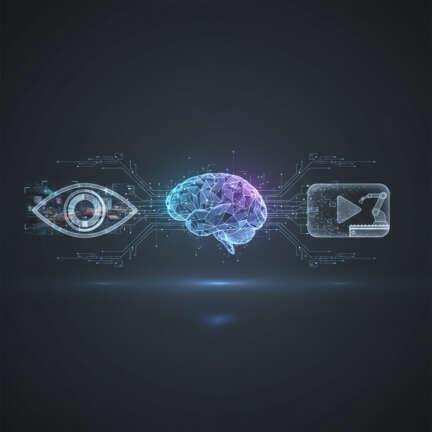
Computer vision is a branch of AI that focuses on enabling machines to interpret and understand the visual world. It involves processing digital images or videos to extract meaningful information, a task that requires sophisticated algorithms and models. At its core, computer vision aims to replicate the human visual system, allowing machines to perceive and interpret their environment.
According to wikipedia.org, computer vision encompasses a wide range of technologies, including image processing, pattern recognition, and machine learning. These technologies work together to enable machines to perform tasks such as object detection, facial recognition, and scene reconstruction. By leveraging these capabilities, businesses can automate processes, enhance security, and gain valuable insights from visual data.
Key Components of Computer Vision
The field of computer vision is built on several key components, each playing a crucial role in enabling machines to interpret visual data. These components include:
- Image Acquisition: The process of capturing digital images or videos using cameras or other sensors.
- Preprocessing: Techniques such as noise reduction, contrast enhancement, and geometric correction to improve the quality of the visual data.
- Feature Extraction: Identifying and extracting relevant features from the visual data, such as edges, textures, and shapes.
- Pattern Recognition: Using machine learning algorithms to identify patterns and make predictions based on the extracted features.
- Decision Making: Interpreting the results of pattern recognition to make decisions or take actions based on the visual data.
These components work together in a pipeline, where each step builds on the previous one to enable the machine to interpret and understand the visual world. By understanding these key components, developers can design and implement computer vision solutions tailored to specific business needs.
The Role of AI in Computer Vision
Artificial intelligence, particularly deep learning and neural networks, plays a pivotal role in the advancement of computer vision. These AI technologies enable machines to learn from vast amounts of visual data, improving their ability to interpret and understand the world around them. By leveraging AI, computer vision systems can achieve high levels of accuracy and reliability, making them suitable for a wide range of applications.
Deep learning, a subset of machine learning, involves training neural networks on large datasets to perform specific tasks. In the context of computer vision, deep learning algorithms can be trained to recognize objects, detect faces, and analyze scenes with remarkable precision. According to azure.microsoft.com, these algorithms can be fine-tuned to meet the unique requirements of different industries, from healthcare to manufacturing.
Neural Networks and Image Recognition
Neural networks, inspired by the human brain, are at the heart of many computer vision applications. These networks consist of layers of interconnected nodes, or neurons, that process input data to produce an output. In the context of image recognition, neural networks can be trained to identify and classify objects within an image.
The process of training a neural network involves feeding it large amounts of labeled data, such as images of cats, dogs, and other objects. The network learns to associate specific features, such as shapes and textures, with the corresponding labels. Over time, the network becomes proficient at recognizing these features in new, unseen images, enabling it to classify objects with high accuracy.
Applications of Computer Vision
Computer vision has a wide range of applications across various industries, from healthcare to automotive. By enabling machines to interpret and understand visual data, computer vision systems can automate processes, enhance security, and provide valuable insights. In this section, we’ll explore some of the most exciting applications of computer vision and the benefits they offer.
According to aws.amazon.com, computer vision is transforming industries by providing new ways to analyze and interpret visual data. From quality control in manufacturing to diagnostic imaging in healthcare, the applications of computer vision are vast and varied. By leveraging these capabilities, businesses can gain a competitive edge and unlock new opportunities for growth.
Healthcare
In the healthcare industry, computer vision is being used to improve diagnostic accuracy and streamline workflows. Medical imaging techniques, such as X-rays, MRIs, and CT scans, generate large amounts of visual data that can be analyzed using computer vision algorithms. These algorithms can help identify abnormalities, such as tumors or fractures, with high precision, enabling earlier diagnosis and treatment.
Additionally, computer vision can be used to automate administrative tasks, such as patient registration and insurance verification. By reducing the burden of these tasks on healthcare professionals, computer vision systems can improve efficiency and allow clinicians to focus on patient care.
Automotive
The automotive industry is another area where computer vision is making a significant impact. Self-driving cars, for example, rely on computer vision systems to navigate roads, detect obstacles, and make decisions in real-time. These systems use a combination of cameras, sensors, and AI algorithms to interpret the visual environment and ensure safe operation.
Computer vision is also being used to enhance driver assistance systems, such as lane departure warnings and adaptive cruise control. By providing real-time feedback and alerts, these systems can help prevent accidents and improve overall road safety.
Implementing Computer Vision Solutions
For businesses and developers looking to implement computer vision solutions, there are several key considerations to keep in mind. From choosing the right AI technologies to selecting appropriate hardware and software, the implementation process can be complex. In this section, we’ll provide practical advice and insights to help you navigate the implementation process successfully.
According to ibm.com, the first step in implementing a computer vision solution is to define your objectives and requirements. What specific problems are you trying to solve? What are the key performance metrics you need to achieve? By answering these questions, you can narrow down your options and choose the most suitable technologies and approaches.
Choosing the Right AI Technologies
The choice of AI technologies will depend on your specific use case and requirements. For example, if you need to perform real-time object detection, you might opt for a convolutional neural network (CNN) trained on a large dataset of labeled images. On the other hand, if your focus is on image classification, a simpler model, such as a support vector machine (SVM), might be sufficient.
It’s also important to consider the scalability and flexibility of the AI technologies you choose. Will they be able to handle increasing amounts of data as your business grows? Can they be easily integrated with other systems and platforms? By addressing these questions, you can ensure that your computer vision solution is both effective and future-proof.
Selecting Hardware and Software
In addition to AI technologies, the hardware and software you choose will play a crucial role in the success of your computer vision solution. For example, if you’re implementing a real-time video analysis system, you’ll need high-performance cameras and processors capable of handling large amounts of data.
When it comes to software, there are several options available, ranging from open-source frameworks, such as OpenCV and TensorFlow, to commercial solutions, such as IBM Watson and Google Cloud Vision. The choice will depend on your specific needs, budget, and expertise. It’s also worth considering the availability of support and documentation, as well as the ease of integration with other systems.
Challenges and Future Directions
Despite its many benefits, computer vision is not without its challenges. From data privacy concerns to the need for high-quality training data, there are several hurdles to overcome. In this section, we’ll explore some of the key challenges facing computer vision and discuss future directions for the field.
According to buffalo.edu, one of the biggest challenges in computer vision is the need for large amounts of high-quality training data. To build accurate and reliable models, AI algorithms require vast datasets of labeled images or videos. However, collecting and annotating this data can be time-consuming and expensive, particularly for niche or specialized applications.
Data Privacy and Security
Another significant challenge in computer vision is data privacy and security. As computer vision systems become more sophisticated, they are increasingly being used to collect and analyze sensitive visual data, such as facial recognition and biometric information. This raises concerns about how this data is being used, who has access to it, and how it is being protected.
To address these concerns, businesses and developers must prioritize data security and implement robust measures to protect sensitive information. This includes using encryption, access controls, and anonymization techniques to ensure that visual data is handled responsibly and ethically.
Future Directions
The future of computer vision is bright, with ongoing advancements in AI technologies and machine learning algorithms. Emerging trends, such as edge computing and federated learning, are set to revolutionize the way computer vision systems are deployed and operated. These trends will enable more efficient and scalable solutions, as well as improved data privacy and security.
Additionally, the integration of computer vision with other technologies, such as augmented reality (AR) and the Internet of Things (IoT), will open up new possibilities for innovation and growth. By staying abreast of these trends and adapting to the evolving landscape, businesses and developers can position themselves at the forefront of the computer vision revolution.
TL;DR
In this article, we’ve explored the fascinating world of computer vision, from its fundamentals to its applications and the AI technologies that power it. We’ve seen how computer vision is transforming industries, from healthcare to automotive, and discussed the key components and challenges involved in implementing computer vision solutions.
Key takeaways include the importance of choosing the right AI technologies and hardware/software, as well as the need to address data privacy and security concerns. As the field of computer vision continues to evolve, businesses and developers must stay informed and adapt to emerging trends to unlock new opportunities for growth and innovation.