
In the realm of artificial intelligence, few technologies hold as much transformative potential as computer vision. This field, dedicated to enabling machines to interpret and make decisions based on visual data, is revolutionizing industries from healthcare to automotive. But what exactly is computer vision, and how does it work? In this comprehensive guide, we’ll delve into the intricacies of computer vision, its applications, and the technologies that power it.
Computer vision is a subfield of artificial intelligence that empowers machines to derive meaningful information from digital images, videos, and other visual inputs. By leveraging advancements in machine learning and deep learning, computer vision systems can perform tasks that once required human intervention, such as object detection, facial recognition, and scene reconstruction. The implications of these capabilities are vast, promising to enhance efficiency, accuracy, and innovation across numerous sectors.
Understanding Computer Vision
Computer vision is essentially the automation of tasks that the human visual system can do. It involves acquiring, processing, analyzing, and understanding digital images to extract valuable insights. At its core, computer vision aims to replicate the human visual system’s ability to interpret and make sense of the world through sight.
The field of computer vision has evolved significantly over the years, thanks to advancements in machine learning and deep learning. These technologies have enabled the development of algorithms that can learn from vast amounts of data, improving their accuracy and reliability. Today, computer vision is used in a wide range of applications, from autonomous vehicles to medical imaging, making it a crucial component of modern AI systems.
The Role of Artificial Intelligence and Machine Learning
Artificial intelligence and machine learning are the backbone of modern computer vision systems. AI provides the framework for developing algorithms that can learn from data, while machine learning enables these algorithms to improve over time. Together, they allow computer vision systems to perform complex tasks such as image recognition, object detection, and video analysis with remarkable accuracy.
Deep learning, a subset of machine learning, has been particularly instrumental in advancing computer vision. Deep learning algorithms, such as convolutional neural networks (CNNs), can process and analyze large amounts of visual data, identifying patterns and features that are crucial for tasks like object detection and facial recognition. These algorithms have significantly enhanced the capabilities of computer vision systems, making them more reliable and efficient.
Key Technologies in Computer Vision
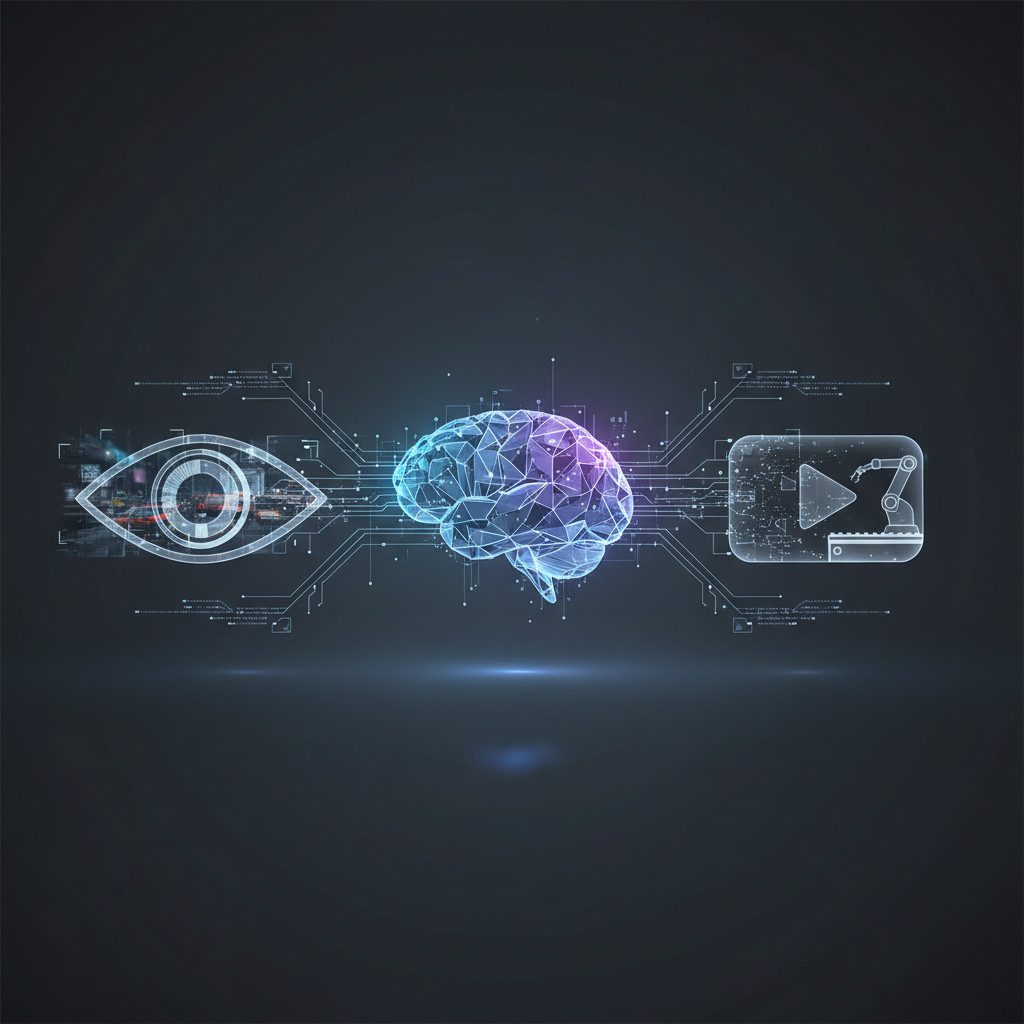
Several key technologies underpin the functioning of computer vision systems. These include neural networks, image recognition, and video analysis. Neural networks, inspired by the human brain, are designed to recognize patterns and learn from data. Image recognition involves identifying and classifying objects within images, while video analysis extends these capabilities to moving images, enabling the tracking of objects and events over time.
Object detection is another critical technology in computer vision. It involves identifying and locating objects within an image or video frame. This technology is widely used in applications such as autonomous vehicles, where the ability to detect and avoid obstacles is crucial. Other important technologies include facial recognition, which is used for security and authentication purposes, and scene reconstruction, which helps in creating 3D models of environments.
Applications of Computer Vision
Computer vision has a wide range of applications across various industries. In healthcare, it is used for medical imaging, assisting in the diagnosis and treatment of diseases. In the automotive industry, computer vision enables autonomous vehicles to navigate and make decisions based on visual data. In retail, it is used for inventory management and customer experience enhancement. The versatility of computer vision makes it a valuable tool in numerous fields, driving innovation and efficiency.
The applications of computer vision are not limited to these sectors. In agriculture, computer vision is used for crop monitoring and disease detection. In manufacturing, it helps in quality control and defect detection. In security, it is used for surveillance and threat detection. The potential applications of computer vision are vast, and as technology continues to advance, we can expect to see even more innovative uses emerge.
Healthcare and Medical Imaging
In the healthcare sector, computer vision is revolutionizing medical imaging. By analyzing X-rays, MRIs, and CT scans, computer vision systems can assist doctors in diagnosing diseases more accurately and efficiently. These systems can detect subtle patterns and anomalies that may be missed by the human eye, leading to earlier and more precise diagnoses. The use of computer vision in healthcare is not only improving patient outcomes but also reducing the workload on medical professionals.
One of the most promising applications of computer vision in healthcare is in the detection of cancer. Computer vision algorithms can analyze medical images to identify tumors and other abnormalities, enabling early intervention and treatment. This technology is also being used to monitor the progression of diseases and the effectiveness of treatments, providing valuable insights for healthcare providers.
Autonomous Vehicles
The automotive industry is another major beneficiary of computer vision technology. Autonomous vehicles rely on computer vision systems to navigate roads, detect obstacles, and make decisions based on visual data. These systems use a combination of cameras, sensors, and AI algorithms to interpret the environment and ensure safe and efficient operation. The development of autonomous vehicles is one of the most exciting applications of computer vision, with the potential to transform transportation and reduce accidents.
Computer vision is also being used to enhance the capabilities of traditional vehicles. Advanced driver-assistance systems (ADAS) use computer vision to provide features such as lane departure warning, adaptive cruise control, and automatic emergency braking. These systems improve road safety and driver convenience, making them an essential component of modern vehicles.
Challenges and Future Directions
Despite its numerous benefits, computer vision also faces several challenges. One of the main challenges is the need for large amounts of high-quality data to train machine learning algorithms. The accuracy and reliability of computer vision systems depend on the quality of the data they are trained on, which can be a significant hurdle. Additionally, computer vision systems must be able to handle a wide range of conditions and scenarios, which can be difficult to achieve.
Another challenge is the ethical and privacy concerns associated with computer vision. The use of facial recognition and other biometric technologies raises questions about privacy and surveillance. Ensuring that computer vision systems are used ethically and responsibly is crucial for their acceptance and adoption. Addressing these challenges will be essential for the continued advancement and widespread use of computer vision technology.
Data Quality and Quantity
The quality and quantity of data are critical factors in the development of computer vision systems. High-quality data is essential for training machine learning algorithms to recognize patterns and make accurate predictions. However, obtaining and labeling large amounts of data can be time-consuming and expensive. Additionally, the data must be diverse and representative of the various conditions and scenarios that the computer vision system will encounter.
To address the challenge of data quality and quantity, researchers are exploring various techniques and approaches. One such approach is the use of synthetic data, which involves generating artificial images and videos to supplement real-world data. Synthetic data can be used to train computer vision systems in a controlled environment, reducing the need for large amounts of real-world data. This approach has shown promise in improving the accuracy and reliability of computer vision systems.
Ethical and Privacy Concerns
The use of computer vision technology raises several ethical and privacy concerns. Facial recognition, for example, has been criticized for its potential to infringe on individuals’ privacy rights. The use of biometric data for identification and surveillance purposes has raised questions about the balance between security and privacy. Ensuring that computer vision systems are used ethically and responsibly is crucial for their acceptance and adoption.
To address these concerns, researchers and policymakers are exploring various approaches. One such approach is the development of privacy-preserving computer vision systems that minimize the collection and use of personal data. Another approach is the establishment of clear guidelines and regulations for the use of computer vision technology, ensuring that it is used in a manner that respects individuals’ rights and freedoms. Addressing these concerns will be essential for the continued advancement and widespread use of computer vision technology.
TL;DR
Computer vision is a transformative technology that enables machines to interpret and make decisions based on visual data. Powered by artificial intelligence and machine learning, computer vision systems perform tasks such as image recognition, object detection, and video analysis with remarkable accuracy. Its applications span various industries, from healthcare to automotive, driving innovation and efficiency. However, challenges such as data quality, quantity, and ethical concerns must be addressed to ensure the continued advancement and widespread use of computer vision technology. As we look to the future, the potential of computer vision to revolutionize the way we interact with the world is immense, promising a future where machines can see, understand, and interpret the visual world with human-like precision.