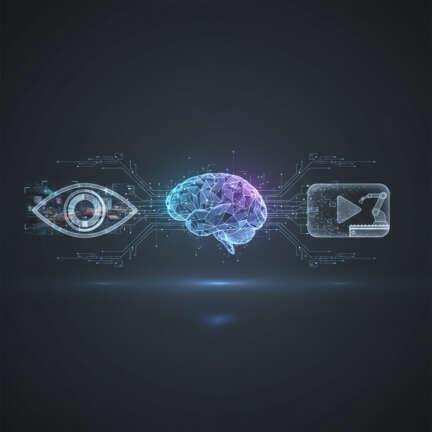

Computer vision is a branch of artificial intelligence that enables machines to interpret and understand visual information from the world. It involves teaching computers to process, analyze, and make decisions based on images or videos, much like how humans do. This technology has numerous applications in various industries, making it an indispensable part of modern technological advancements.
What is Computer Vision?
At its core, computer vision uses algorithms and machine learning models to extract meaningful information from digital images or videos. These systems can recognize objects, faces, text, and patterns, enabling a wide range of applications such as autonomous vehicles, medical diagnostics, security, robotics, and more.
The Role of Artificial Intelligence
Artificial intelligence (AI) is crucial in the development of computer vision. AI allows machines to learn from large datasets, improving their accuracy over time without explicit programming. This makes it possible for computers to analyze complex visual data and make decisions based on that analysis.
The Key Components of Computer Vision
Computer vision involves several key components that work together to enable the technology’s functionality. These include image processing, pattern recognition, machine learning, deep learning, and neural networks.
Image Processing
Image processing is the first step in computer vision tasks. This involves preprocessing raw images or videos to enhance their quality for analysis. Techniques like filtering, smoothing, and normalization are commonly used to prepare visual data before it can be analyzed by machine learning models. Wikipedia offers a detailed explanation of these techniques.
Pattern Recognition
Once the image is processed, pattern recognition algorithms come into play. These algorithms identify and classify objects or patterns within the images based on predefined features. For instance, in object detection tasks, machine learning models can detect and locate specific items like cars or pedestrians in a scene.
Deep Learning and Neural Networks
To achieve high accuracy in computer vision tasks, deep learning techniques are often employed. Deep learning models, such as neural networks, are designed to mimic the human brain’s ability to learn from examples. These complex architectures can automatically extract features from raw data without explicit feature engineering, making them powerful tools for image and video analysis.
Types of Neural Networks
- CNNs (Convolutional Neural Networks): Specifically designed for visual inputs, CNNs use convolutional layers to automatically detect features in images. They are widely used in tasks like image classification and object detection.
- RNNs (Recurrent Neural Networks): Although not as common in computer vision, RNNs can process sequential data, making them useful for certain types of visual analysis where time-series information is relevant.
- Transformer Models: Recently, transformer models have gained popularity due to their ability to handle large datasets efficiently and learn long-range dependencies. They are particularly effective in tasks involving natural language processing but can also be adapted for computer vision applications.
Applications of Computer Vision
The applications of computer vision are vast and diverse, ranging from consumer electronics to industrial automation. Here are some key areas where this technology is making significant impacts:
Autonomous Vehicles
In the realm of self-driving cars, computer vision plays a crucial role in detecting obstacles, recognizing traffic signs, and navigating safely on roads. Advanced systems use multiple cameras, lidar, and other sensors to gather visual data that is then processed by machine learning models to make real-time decisions.
Medical Imaging
Computer vision is revolutionizing medical diagnostics through technologies like radiology image analysis and tumor detection. Deep learning models can analyze MRI or CT scans with high accuracy, helping doctors diagnose diseases more effectively and quickly than traditional methods.
Security and Surveillance
Surveillance systems often rely on computer vision to monitor large areas and detect suspicious activities. Facial recognition technology is a prime example of how this technology enhances security measures by identifying individuals in real-time footage.
Challenges in Computer Vision
While the benefits of computer vision are substantial, there are still several challenges that researchers and practitioners face:
Data Requirements
Training robust machine learning models requires vast amounts of labeled data. Collecting high-quality datasets can be time-consuming and expensive, which is a significant hurdle in developing effective computer vision systems.
Real-World Variability
The performance of computer vision systems often degrades when they encounter real-world variability that wasn’t present during training. Factors like lighting conditions, occlusions, or different angles can significantly affect the accuracy of these models.
Conclusion: TL;DR
In summary, computer vision is a powerful field within artificial intelligence that enables machines to interpret and understand visual information. It combines image processing, pattern recognition, machine learning, and deep learning techniques to analyze images and videos effectively. Applications span various industries, including autonomous vehicles, medical diagnostics, security, and more. However, challenges like data requirements and real-world variability continue to pose significant obstacles for developers.