
Artificial Intelligence (AI) and machine learning (ML) have become integral parts of our daily lives, transforming industries and reshaping the way we interact with technology. From autonomous vehicles to large language models, these technologies are driving innovation at an unprecedented pace. As we step into 2026, it’s crucial to understand the fundamentals, advancements, and future prospects of AI and machine learning.
Whether you’re a business professional, researcher, or simply an enthusiast, this guide aims to demystify AI and ML, providing you with a clear understanding of their applications and the potential they hold for the future. Let’s dive in and explore the fascinating world of AI and machine learning.
Understanding AI and Machine Learning
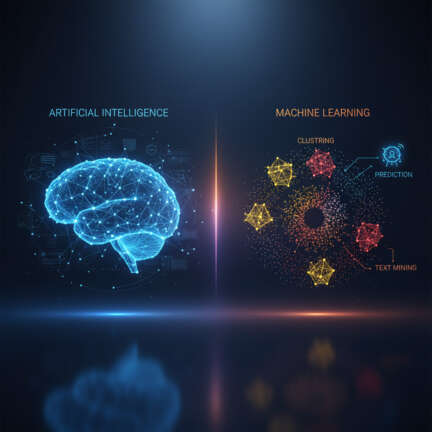
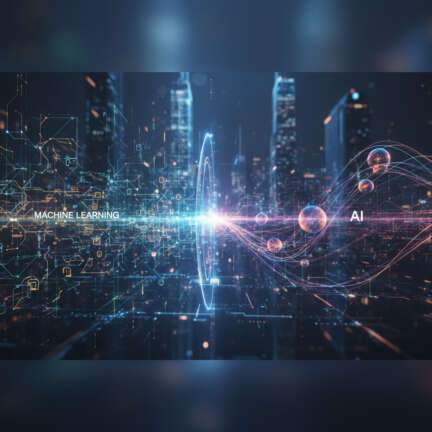
AI and machine learning are often used interchangeably, but they are not the same. AI refers to the broader concept of machines being able to carry out tasks in a way that we would consider ‘smart’ or ‘intelligent’. Machine learning, on the other hand, is a subset of AI that involves the use of algorithms and statistical models to enable machines to improve their performance on a task with experience over time.
According to cloud.google.com, AI can be categorized into narrow AI, which is designed to perform a narrow task, and general AI, which has the ability to perform any intellectual task that a human can do. Machine learning, a key component of AI, allows systems to learn from data and improve their accuracy over time without being explicitly programmed.
Machine learning algorithms can be classified into three main types: supervised learning, unsupervised learning, and reinforcement learning. Supervised learning involves training a model on a labeled dataset, while unsupervised learning involves training a model on an unlabeled dataset. Reinforcement learning involves training a model through a system of rewards and penalties.
Key Differences Between AI and Machine Learning
The primary difference between AI and machine learning lies in their scope and application. AI encompasses a broader range of technologies, including natural language processing, computer vision, and robotics. Machine learning, as a subset of AI, focuses specifically on the use of algorithms to learn from data and make predictions or decisions.
For instance, a chatbot that uses natural language processing to understand and respond to user queries is an example of AI. However, the underlying mechanism that allows the chatbot to improve its responses over time through user interactions is an example of machine learning.
The Evolution of Machine Learning
Machine learning has evolved significantly over the years, with advancements in computing power, data availability, and algorithmic techniques. Early machine learning models were based on simple statistical methods and linear regression. Today, we have complex models like deep learning and neural networks that can process vast amounts of data and make highly accurate predictions.
Deep learning, a subset of machine learning, involves the use of artificial neural networks with multiple layers to process data. These deep neural networks can automatically discover patterns and features in large datasets, making them highly effective for tasks like image recognition, speech recognition, and natural language processing.
According to sas.com, deep learning has revolutionized fields like healthcare, finance, and autonomous vehicles. For example, deep learning models can analyze medical images to detect diseases, predict stock market trends, and enable self-driving cars to navigate complex environments.
Generative AI and Large Language Models
Generative AI is a subset of AI that focuses on creating new content, such as images, music, and text. Large language models, a type of generative AI, are designed to understand and generate human-like text. These models have been trained on vast amounts of text data and can perform a wide range of tasks, from answering questions to writing creative content.
In 2026, large language models have become even more sophisticated, capable of understanding context, generating coherent and contextually appropriate responses, and even engaging in meaningful conversations. These models have applications in various fields, including customer service, content creation, and education.
Applications of AI and Machine Learning
AI and machine learning have a wide range of applications across various industries. From healthcare to finance, these technologies are driving innovation and improving efficiency. Let’s explore some of the key applications of AI and machine learning.
In healthcare, AI and machine learning are used for disease diagnosis, drug discovery, and personalized treatment plans. Machine learning algorithms can analyze patient data to identify patterns and predict disease outcomes, enabling early intervention and improving patient outcomes. According to mitsloan.mit.edu, AI-powered diagnostic tools can analyze medical images with high accuracy, reducing the need for invasive procedures and speeding up the diagnosis process.
In finance, AI and machine learning are used for fraud detection, risk assessment, and algorithmic trading. Machine learning models can analyze transaction data to detect fraudulent activities, assess credit risk, and make investment decisions based on market trends. These applications not only improve the efficiency of financial institutions but also enhance the security and reliability of financial systems.
Autonomous Vehicles and AI
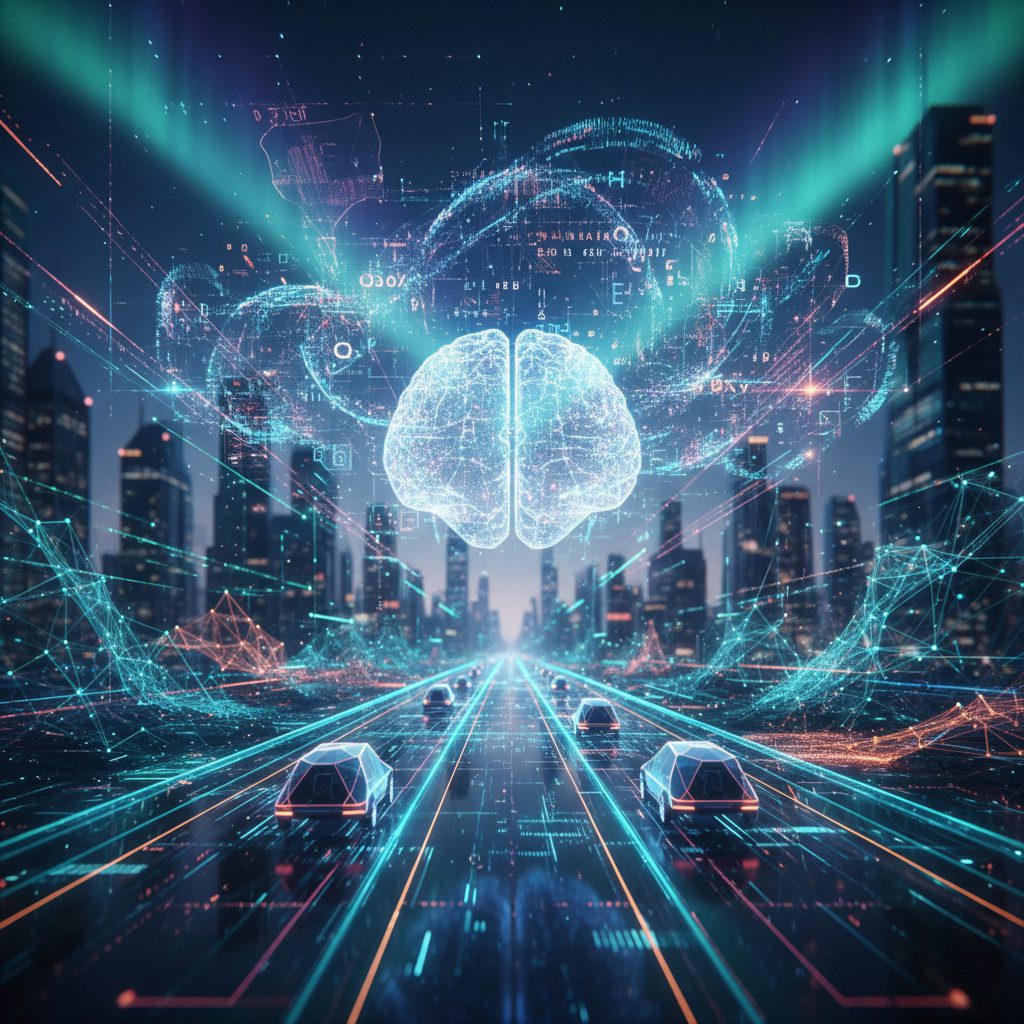
Autonomous vehicles are one of the most exciting applications of AI and machine learning. Self-driving cars use a combination of sensors, cameras, and AI algorithms to navigate roads, avoid obstacles, and make driving decisions. Machine learning models enable these vehicles to learn from their environment and improve their performance over time.
According to ibm.com, autonomous vehicles have the potential to reduce traffic accidents, improve traffic flow, and provide mobility solutions for people with disabilities. As AI and machine learning technologies continue to advance, we can expect to see more autonomous vehicles on the roads in the coming years.
The Future of AI and Machine Learning
The future of AI and machine learning is bright, with endless possibilities for innovation and growth. As these technologies continue to evolve, we can expect to see new applications and advancements that will transform industries and improve our daily lives.
One of the key trends in AI and machine learning is the development of explainable AI. Explainable AI refers to the ability of AI systems to provide clear and understandable explanations for their decisions. This is particularly important in fields like healthcare and finance, where transparency and accountability are crucial.
Another trend is the integration of AI and machine learning with other emerging technologies, such as the Internet of Things (IoT) and blockchain. This integration can lead to the development of smart cities, autonomous supply chains, and secure digital transactions. As these technologies continue to converge, we can expect to see new and innovative solutions that address complex global challenges.
TL;DR
In this comprehensive guide, we’ve explored the fundamentals of AI and machine learning, their applications, and future trends. Here are the key takeaways:
- AI and machine learning are transforming industries and reshaping the way we interact with technology.
- Machine learning is a subset of AI that involves the use of algorithms to learn from data and make predictions or decisions.
- Deep learning and generative AI are advancing rapidly, with applications in healthcare, finance, and autonomous vehicles.
- The future of AI and machine learning holds endless possibilities for innovation and growth, with trends like explainable AI and the integration of AI with other emerging technologies.
As we step into 2026, it’s clear that AI and machine learning will continue to play a crucial role in driving innovation and improving our daily lives. Whether you’re a business professional, researcher, or enthusiast, understanding these technologies is essential for staying ahead in an increasingly digital world.