
Artificial Intelligence (AI) and Machine Learning (ML) are two of the most transformative technologies of our time. They are revolutionizing industries, from healthcare to finance, and are at the heart of many innovative applications we use daily. But what exactly are AI and ML? How do they differ, and what are their subfields and applications? This guide aims to provide tech professionals, researchers, and students with a comprehensive understanding of these technologies.
AI refers to the simulation of human intelligence in machines that are programmed to think and learn like humans. These machines, or AI systems, can perform tasks that typically require human intelligence, such as visual perception, speech recognition, decision-making, and language translation. On the other hand, ML is a subset of AI that involves the development of algorithms that allow computers to learn from data without being explicitly programmed. In other words, ML enables machines to improve their performance on a task through experience.
In this article, we will delve into the differences between AI and ML, explore the subfields of AI, discuss deep learning and neural networks, and look at some practical applications of ML. By the end, you should have a clear understanding of these technologies and their potential.
AI vs. Machine Learning: Understanding the Differences
While AI and ML are often used interchangeably, they are not the same thing. AI is a broader concept that encompasses any technique that enables computers to mimic human intelligence. ML, on the other hand, is a specific approach to achieving AI. It involves the use of algorithms that can learn from data and make predictions or decisions without being explicitly programmed.
According to ai.engineering.columbia.edu, AI can be achieved through various methods, including rule-based systems, expert systems, and machine learning. Rule-based systems rely on a set of predefined rules to make decisions, while expert systems use a knowledge base and inference engine to simulate the decision-making abilities of a human expert. ML, however, allows systems to learn and improve from experience, making them more flexible and adaptable.
One way to think about the difference between AI and ML is to consider the difference between a calculator and a chess-playing computer program. The calculator is an example of a rule-based system that follows a set of predefined rules to perform calculations. The chess-playing program, however, uses ML algorithms to learn from previous games and improve its performance over time.
Key Differences
- Scope: AI is a broader concept that encompasses any technique that enables computers to mimic human intelligence. ML is a specific approach to achieving AI.
- Approach: AI can be achieved through various methods, including rule-based systems, expert systems, and ML. ML, however, relies on algorithms that can learn from data.
- Flexibility: ML systems are more flexible and adaptable than rule-based systems, as they can learn and improve from experience.
Subfields of Artificial Intelligence
AI is a vast field that encompasses many subfields, each with its own focus and applications. Some of the most prominent subfields include machine learning, deep learning, natural language processing (NLP), computer vision, and robotics.
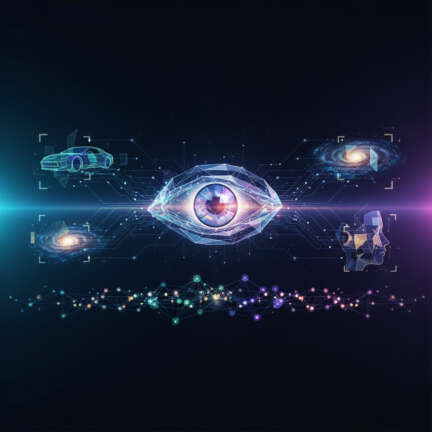
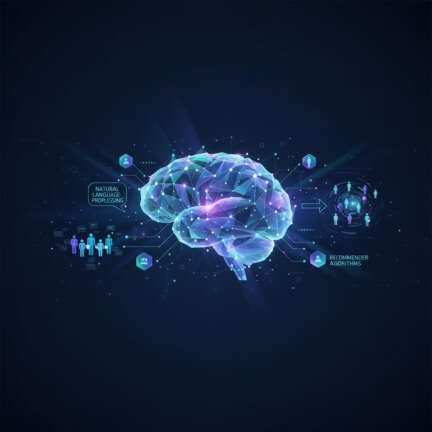
Machine learning is perhaps the most well-known subfield of AI, focusing on the development of algorithms that can learn from data. Deep learning, a subset of ML, involves the use of artificial neural networks with many layers to model complex patterns in data. NLP focuses on the interaction between computers and humans through natural language, while computer vision deals with the automatic extraction of meaningful information from digital images or videos. Robotics, on the other hand, involves the design and development of robots that can perform tasks autonomously or semi-autonomously.
According to sas.com, AI is a rapidly evolving field, and new subfields are emerging all the time. For example, reinforcement learning is a type of ML that involves training agents to make a sequence of decisions by rewarding desirable actions and punishing undesirable ones. Generative adversarial networks (GANs) are another emerging subfield that involves the use of two neural networks, a generator and a discriminator, to generate new data samples.
Emerging Subfields
- Reinforcement Learning: A type of ML that involves training agents to make a sequence of decisions.
- Generative Adversarial Networks (GANs): A type of neural network that involves the use of two networks to generate new data samples.
- Explainable AI (XAI): A subfield that focuses on creating AI systems that can explain their decisions and actions in a human-understandable way.
Deep Learning and Neural Networks
Deep learning is a subset of ML that involves the use of artificial neural networks with many layers to model complex patterns in data. These networks are inspired by the structure and function of the human brain, consisting of interconnected nodes or ‘neurons’ that process information.
Neural networks can be used for a wide range of tasks, including image recognition, speech recognition, and natural language processing. They are particularly effective at handling large amounts of data and can achieve state-of-the-art performance on many tasks. According to mccormick.northwestern.edu, deep learning is one of the most active areas of research in AI, with new architectures and algorithms being developed all the time.
One of the most well-known types of neural networks is the convolutional neural network (CNN), which is particularly effective at handling image data. CNNs use a process called convolution to automatically and adaptively learn spatial hierarchies of features from input images. Another type of neural network is the recurrent neural network (RNN), which is designed to handle sequential data, such as time series or natural language.
Types of Neural Networks
- Convolutional Neural Networks (CNNs): Effective at handling image data.
- Recurrent Neural Networks (RNNs): Designed to handle sequential data.
- Generative Adversarial Networks (GANs): Used to generate new data samples.
- Transformers: A type of neural network that uses self-attention mechanisms to handle sequential data.
Machine Learning Applications
Machine learning has a wide range of applications across many industries. In healthcare, for example, ML algorithms can be used to analyze medical images, predict disease outbreaks, and personalize treatment plans. In finance, ML can be used for fraud detection, algorithmic trading, and risk management. In retail, ML can be used for product recommendations, demand forecasting, and customer segmentation.
According to cloud.google.com, ML is also transforming the way we interact with technology. Virtual assistants like Siri and Alexa use ML to understand and respond to natural language queries. Self-driving cars use ML to navigate roads and avoid obstacles. Even something as simple as spell check in your email uses ML to suggest corrections.
One of the most exciting aspects of ML is its potential to solve complex, real-world problems. For example, ML can be used to predict climate change, optimize energy consumption, and develop new materials. It can also be used to improve education, by personalizing learning experiences and identifying students at risk of dropping out.
Industry-Specific Applications
- Healthcare: Medical image analysis, disease prediction, personalized treatment plans.
- Finance: Fraud detection, algorithmic trading, risk management.
- Retail: Product recommendations, demand forecasting, customer segmentation.
- Manufacturing: Predictive maintenance, quality control, supply chain optimization.
- Transportation: Route optimization, traffic prediction, autonomous vehicles.
Algorithms for Data Analysis
At the heart of ML are algorithms for data analysis. These algorithms can be broadly categorized into supervised learning, unsupervised learning, and reinforcement learning. Supervised learning algorithms are used to learn a mapping from input data to output labels, given a set of labeled examples. Unsupervised learning algorithms, on the other hand, are used to find hidden patterns or intrinsic structures in input data, without the need for labeled examples. Reinforcement learning algorithms are used to train agents to make a sequence of decisions by rewarding desirable actions and punishing undesirable ones.
According to mitsloan.mit.edu, some of the most commonly used ML algorithms include linear regression, logistic regression, decision trees, support vector machines (SVMs), k-nearest neighbors (KNN), and k-means clustering. Each of these algorithms has its own strengths and weaknesses, and the choice of algorithm depends on the specific problem and data at hand.
One of the challenges in ML is selecting the right algorithm for a given problem. This often involves a process of trial and error, where different algorithms are tested and their performance is compared. It also involves feature selection and engineering, where the most relevant features are identified and transformed to improve the performance of the algorithm.
Common Machine Learning Algorithms
- Linear Regression: Used for predicting a continuous output variable.
- Logistic Regression: Used for predicting a binary output variable.
- Decision Trees: Used for both classification and regression tasks.
- Support Vector Machines (SVMs): Used for classification tasks.
- K-Nearest Neighbors (KNN): Used for classification and regression tasks.
- K-Means Clustering: Used for clustering tasks.
TL;DR
In this article, we explored the differences between AI and ML, the subfields of AI, deep learning and neural networks, and the applications of ML. We saw that AI is a broader concept that encompasses any technique that enables computers to mimic human intelligence, while ML is a specific approach to achieving AI that involves the use of algorithms that can learn from data. We also saw that AI encompasses many subfields, including ML, deep learning, NLP, computer vision, and robotics.
Deep learning is a subset of ML that involves the use of artificial neural networks with many layers to model complex patterns in data. Neural networks can be used for a wide range of tasks, including image recognition, speech recognition, and natural language processing. ML has a wide range of applications across many industries, from healthcare to finance to retail.
At the heart of ML are algorithms for data analysis, which can be broadly categorized into supervised learning, unsupervised learning, and reinforcement learning. The choice of algorithm depends on the specific problem and data at hand, and often involves a process of trial and error.
As AI and ML continue to evolve, they are transforming the way we live and work. By understanding these technologies and their potential, we can harness their power to solve complex, real-world problems and create a better future.