
Artificial Intelligence (AI) and Machine Learning (ML) are two of the most transformative technologies of our time. They are revolutionizing industries, from healthcare to finance, and are at the heart of innovative applications like chatbots, recommender algorithms, and natural language processing. For research scientists, AI engineers, and data analysts, understanding these technologies is crucial. This article delves into the fundamentals of AI and ML, their distinctions, and their real-world applications.
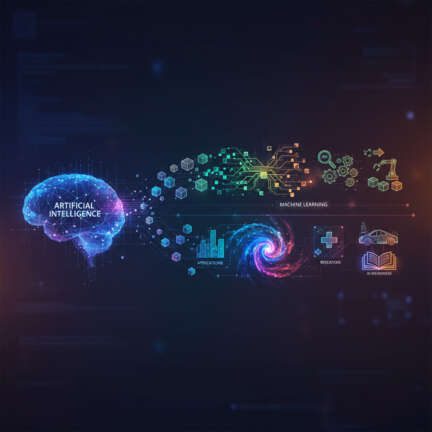
AI refers to the broader concept of machines being able to carry out tasks in a way that we would consider ‘smart’ or ‘intelligent’. On the other hand, ML is a current application of AI based around the idea that we should be able to give machines access to data and let them learn for themselves, without being explicitly programmed. Together, they form the backbone of modern intelligent systems. Let’s explore these concepts in detail.
Understanding Artificial Intelligence
Artificial Intelligence, often referred to as AI, is the simulation of human intelligence in machines that are programmed to think and learn like humans. These intelligent systems are designed to perform tasks that typically require human intelligence, such as visual perception, speech recognition, decision-making, and language translation. AI can be classified into two main types: narrow AI and general AI. Narrow AI is designed to perform a narrow task, like facial recognition or internet searches, while general AI has the ability to perform any intellectual task that a human can do.
The history of AI dates back to the 1950s, with the Dartmouth Conference being a significant milestone. Since then, AI has evolved through various phases, including the rule-based systems of the 1970s and 1980s, the rise of machine learning in the 2000s, and the current era of deep learning. AI’s impact is seen across various sectors, from autonomous vehicles and virtual assistants to advanced healthcare diagnostics and financial forecasting. For a deeper understanding of AI’s evolution, you can refer to columbia.edu.
The Basics of Machine Learning
Machine Learning is a subset of AI that focuses on the development of algorithms that can learn from and make predictions or decisions based on data. Unlike traditional programming, where a developer writes explicit instructions for the machine to follow, ML involves training the machine using data. The machine then uses this training to make decisions or predictions on new data. ML algorithms can be broadly categorized into supervised learning, unsupervised learning, and reinforcement learning.
Supervised learning involves training a model on a labeled dataset, where the correct answers are known. Unsupervised learning, on the other hand, involves training a model on an unlabeled dataset, where the model must find patterns and relationships on its own. Reinforcement learning is a type of ML where an agent learns to make decisions by taking actions in an environment to achieve a goal. For a comprehensive explanation of ML, visit mitsloan.mit.edu.
AI vs. Machine Learning: Key Differences
While AI and ML are often used interchangeably, they are not the same. AI is the broader concept of machines being able to carry out tasks in a way that we would consider ‘smart’. ML, on the other hand, is a current application of AI based around the idea that we should be able to give machines access to data and let them learn for themselves. AI can achieve its goals through various methods, including rule-based systems and expert systems, while ML relies on data and algorithms to learn and make decisions.
The key difference lies in the approach. AI can be rule-based, where the system is programmed with a set of rules to follow, while ML involves training the system using data. For a detailed comparison, you can refer to cloud.google.com. Understanding these differences is crucial for researchers and engineers to choose the right approach for their specific applications.
Applications of AI and ML
AI and ML have a wide range of applications across various industries. In healthcare, AI is used for diagnosing diseases, predicting patient outcomes, and developing personalized treatment plans. In finance, ML algorithms are used for fraud detection, risk assessment, and algorithmic trading. In the retail sector, recommender algorithms powered by ML help in personalized product recommendations and customer segmentation.
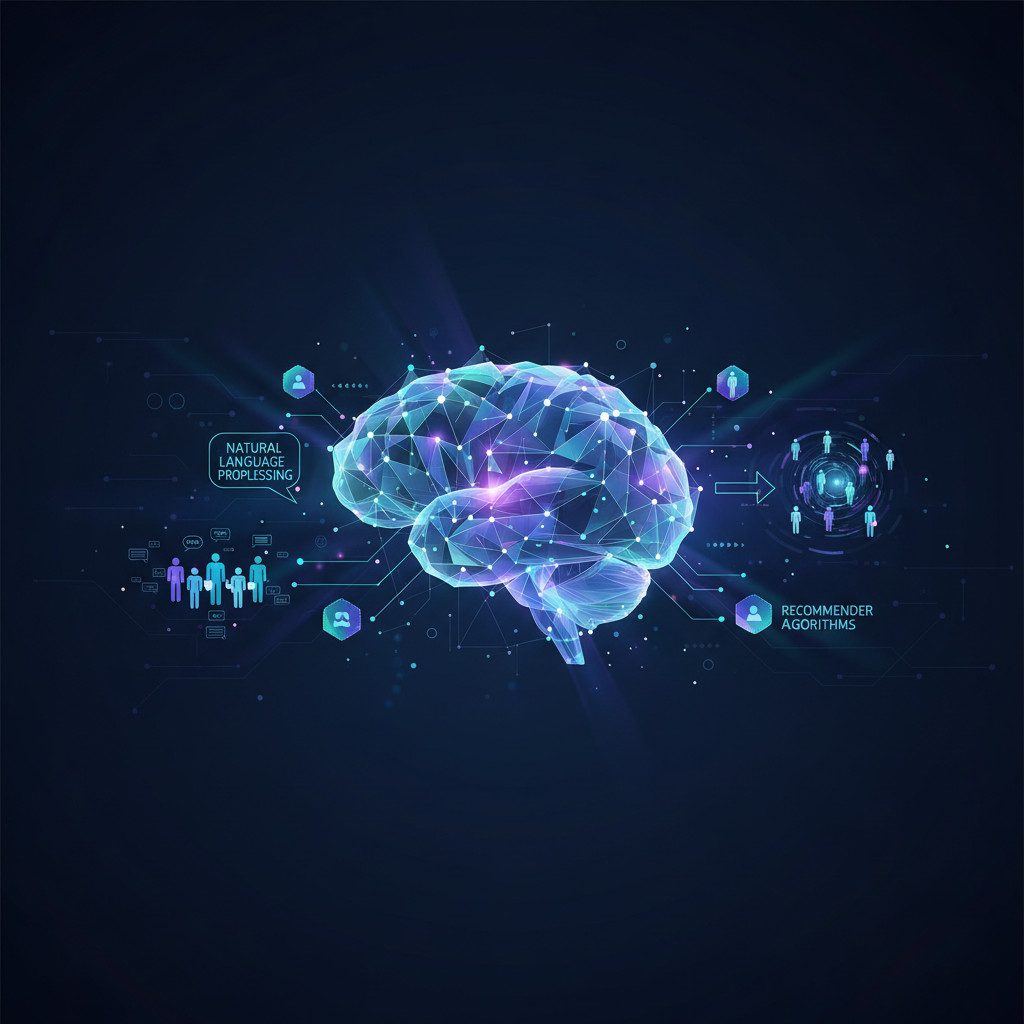
Natural Language Processing (NLP) is another area where AI and ML are making significant strides. NLP involves the interaction between computers and humans through natural language. Applications include chatbots, language translation, and sentiment analysis. For example, chatbots use NLP to understand and respond to user queries, providing a more interactive and personalized user experience. For more on AI and ML applications, check out researchgate.net.
Future Trends in AI and ML
The future of AI and ML is promising, with advancements in areas like deep learning, reinforcement learning, and neural networks. Deep learning, a subset of ML, involves the use of artificial neural networks with many layers. These networks can learn to perform tasks directly from data without the need for explicit programming. Reinforcement learning, another emerging trend, involves training agents to make decisions by taking actions in an environment to achieve a goal.
Other future trends include the integration of AI with the Internet of Things (IoT), edge computing, and quantum computing. These advancements will enable more efficient and powerful AI systems, capable of handling complex tasks and providing real-time solutions. For researchers and engineers, staying updated with these trends is essential to leverage the full potential of AI and ML.
TL;DR
In summary, AI and ML are transformative technologies that are reshaping various industries. AI refers to the broader concept of machines being able to carry out tasks in a way that we would consider ‘smart’, while ML is a current application of AI based around the idea that we should be able to give machines access to data and let them learn for themselves. Understanding the differences between AI and ML is crucial for researchers and engineers to choose the right approach for their specific applications.
The future of AI and ML is promising, with advancements in areas like deep learning, reinforcement learning, and neural networks. Staying updated with these trends is essential to leverage the full potential of AI and ML and to drive innovation in various sectors.