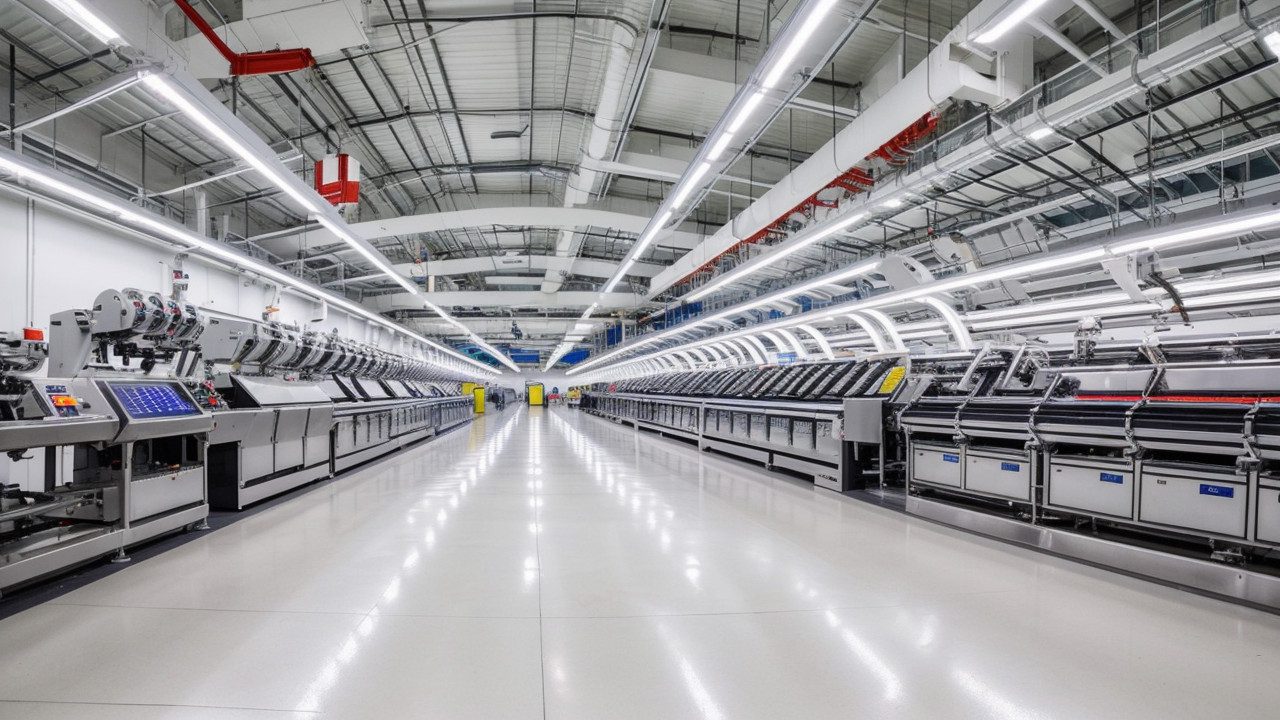

In the modern industrial landscape, the rhythmic precision of a well-oiled production line is more than just a sign of efficiency; it is a testament to the profound integration of technology into every facet of manufacturing. Automation is no longer a futuristic concept reserved for science fiction; it is the very backbone of global supply chains and industrial advancement. For engineers and tech professionals, understanding the nuances of these systems is critical to navigating the transition from traditional manufacturing to the era of intelligent, autonomous operations.
At its core, automation refers to the use of technology to perform tasks with minimal human intervention. This spectrum ranges from simple mechanical relays used in early assembly lines to highly complex, software-defined ecosystems that leverage artificial intelligence. As we move deeper into the 2020s, the focus is shifting from mere repetitive task execution to creating adaptive systems capable of making real-time decisions based on environmental feedback. This shift represents a fundamental change in how we approach factory automation and resource management.
To truly grasp where we are headed, we must look at the convergence of several distinct disciplines: mechanical engineering, control theory, software development, and data science. The goal is not just to replace human labor but to augment human capability, reducing error rates, increasing throughput, and creating safer work environments. In this article, we will delve into the layers of automation technologies that are currently reshaping the industrial world.
The Evolution of Industrial Automation: From Mechanical to Intelligent
The history of automation is often categorized by “generations” or “industries,” moving from steam-powered mechanics to the digital revolution. In the early days, automation was primarily focused on fixed sequences—machines designed to do one thing, very well, in a repetitive loop. This era of process automation laid the groundwork for mass production but lacked the flexibility required for modern, high-mix, low-volume manufacturing environments.
The Roots of Process Automation
Early automation relied heavily on hardwired logic and pneumatic or hydraulic controls. These systems were robust but incredibly rigid; changing a product specification often meant physically reconfiguring much of the machinery. As noted in the historical overview provided by wikipedia.org, the transition toward programmable logic controllers (PLCs) changed everything. This allowed engineers to alter machine behavior through software rather than hardware reconfiguration, providing the first real taste of flexible manufacturing.
This era introduced the concept of closed-loop control, where sensors could provide feedback to a controller to adjust outputs dynamically. While still far from “intelligent,” these automated control systems provided the stability necessary for complex chemical processes and large-scale assembly lines that define modern industrial capability.
The Rise of Robotics in Manufacturing
Perhaps the most visible evolution in this journey is the integration of robotics in manufacturing. Early industrial robots were massive, caged units designed for heavy lifting or simple welding tasks. They were essentially “blind” executors of pre-programmed paths. However, the advent of more sophisticated sensors—vision systems, force/torque sensors, and tactile feedback—has transformed them into collaborative partners.
Today, we see the rise of Cobots (Collaborative Robots) that can work alongside humans without the need for heavy safety fencing. This evolution is driven by a need for versatility; modern manufacturing requires machines that can handle delicate electronics one hour and heavy automotive components the next. The integration of these robotic systems into a broader factory automation strategy is what defines the current state of the art.
Core Pillars of Modern Automation Technologies
Modern industrial automation is built upon several interconnected pillars. It is not enough to have a fast robot; you need an ecosystem where every component communicates seamlessly. This requires a deep understanding of both the physical hardware and the digital logic that governs it.
Automated Control Systems and Sensors
The “nervous system” of any automated factory consists of its sensors and control systems. Sensors—ranging from simple proximity switches to advanced LiDAR and hyperspectral imaging—provide the raw data required for decision-making. Without accurate, real-time data, automation is merely a blind loop. The precision of these sensors directly dictates the accuracy of the entire production process.
The brain behind this system is the automated control system, which includes PLCs, Distributed Control Systems (DCS), and increasingly, edge computing nodes. As discussed in various academic studies found on mdpi.com, the complexity of these control loops is increasing as we integrate more variables into the decision-making matrix. The challenge for engineers is managing this increased complexity without introducing latency or instability into the system.
The Critical Role of the Human-Machine Interface (HMI)
While the goal of automation is to reduce manual intervention, the Human-Machine Interface (HMI) remains a vital component. An HMI is the dashboard through which engineers and operators monitor, diagnose, and interact with the automated process. A well-designed HMI provides clarity in moments of crisis, translating thousands of sensor inputs into actionable insights.
Modern HMIs are moving away from simple touchscreens toward augmented reality (AR) and advanced data visualization. The goal is to provide “contextualized information”—not just telling an operator that a motor is overheating, but showing them exactly which part of the assembly line is affected and suggesting the optimal shutdown sequence to prevent collateral damage. This bridge between human intuition and machine precision is where true operational excellence is found.
Integrating Intelligence: Machine Learning in Automation
The most significant leap in recent years has been the infusion of intelligence into automation technologies. We are moving from “automated” (doing a task) to “autonomous” (deciding how to do a task). The catalyst for this change is machine learning in automation.
Machine learning allows systems to identify patterns in massive datasets that would be invisible to human observers. For example, by analyzing vibration data from a spindle, an ML model can predict a bearing failure weeks before it actually occurs. This shift from reactive maintenance to predictive maintenance is one of the most significant cost-saving measures in modern industry. As highlighted by experts at ibm.com, the ability to turn data into foresight is the ultimate competitive advantage.
Furthermore, machine learning enables “adaptive manufacturing.” In a high-mix environment, an ML-driven system can automatically adjust the parameters of a robotic arm or a CNC machine as it detects slight variations in raw material quality. This level of self-optimization reduces waste and ensures that even with variable inputs, the output remains within strict tolerance levels. However, implementing these models requires high-quality, structured data and significant computational power at the edge.
Overcoming Challenges in Factory Automation Implementation
Despite the clear benefits, the path to full automation is fraught with engineering and operational hurdles. It is rarely as simple as “plugging in” a new robot and expecting immediate ROI. The complexity of integrating new technologies into existing environments cannot be overstated.
Interoperability and Legacy Systems
One of the greatest headaches for manufacturing engineers is the “brownfield” problem—trying to integrate cutting-edge IoT sensors and AI models with decades-old machinery. Many factories rely on legacy equipment that uses proprietary protocols, making communication with modern, standardized systems difficult. Achieving true interoperability requires a robust middleware strategy and often a complete overhaul of the network architecture.
This is where the convergence of IT (Information Technology) and OT (Operational Technology) becomes critical. As explored in technical discussions on redhat.com, creating a unified software-defined layer that can abstract the underlying hardware is essential for managing modern automation at scale. Without this abstraction, each new piece of technology becomes another silo, increasing complexity rather than reducing it.
Cybersecurity in Automated Environments
As factories become more connected, they also become more vulnerable. Every sensor, every PLC, and every HMI is a potential entry point for a cyberattack. In an era where a ransomware attack can halt a global production line in minutes, cybersecurity is no longer just an IT concern—it is a fundamental requirement of industrial engineering. Protecting the integrity of automated control systems requires a “security by design” approach, incorporating encryption, network segmentation, and continuous monitoring into the very fabric of the automation architecture.
The Future Landscape: Autonomous Operations and Beyond
Looking ahead, the trajectory of automation points toward hyper-automation and the concept of the “Lights Out” factory. We are moving toward environments where the entire production lifecycle—from raw material intake to finished goods shipping—is managed by a self-organizing swarm of intelligent agents.
We will likely see even deeper integration of Digital Twins, where every physical asset has a perfect virtual counterpart that is updated in real-time. This allows engineers to run “what-if” scenarios in a risk-free virtual space before ever touching the physical hardware. The boundary between the digital and physical worlds will continue to blur, creating a seamless loop of design, manufacture, and optimization.
Ultimately, the future of automation is not about removing humans from the loop, but about elevating them. By automating the repetitive, dangerous, and dull tasks, we free the human mind to focus on innovation, complex problem-solving, and strategic oversight. The engineers who master these technologies will be the architects of a new industrial era.
TL;DR
Key Takeaways:
- Evolution: Automation has moved from rigid, mechanical processes to flexible, programmable systems and now toward intelligent, autonomous operations.
- Core Components: The synergy between sensors, automated control systems, and advanced Human-Machine Interfaces (HMI) is essential for operational stability.
- The AI Revolution: Machine learning is transforming automation from reactive to predictive, enabling unprecedented levels of efficiency through predictive maintenance and adaptive manufacturing.
- Implementation Hurdles: Engineers must navigate the complexities of legacy system integration (IT/OT convergence) and the rising necessity of industrial cybersecurity.
- Future Outlook: The industry is moving toward hyper-automation, characterized by Digital Twins, autonomous decision-making, and a more collaborative relationship between humans and machines.