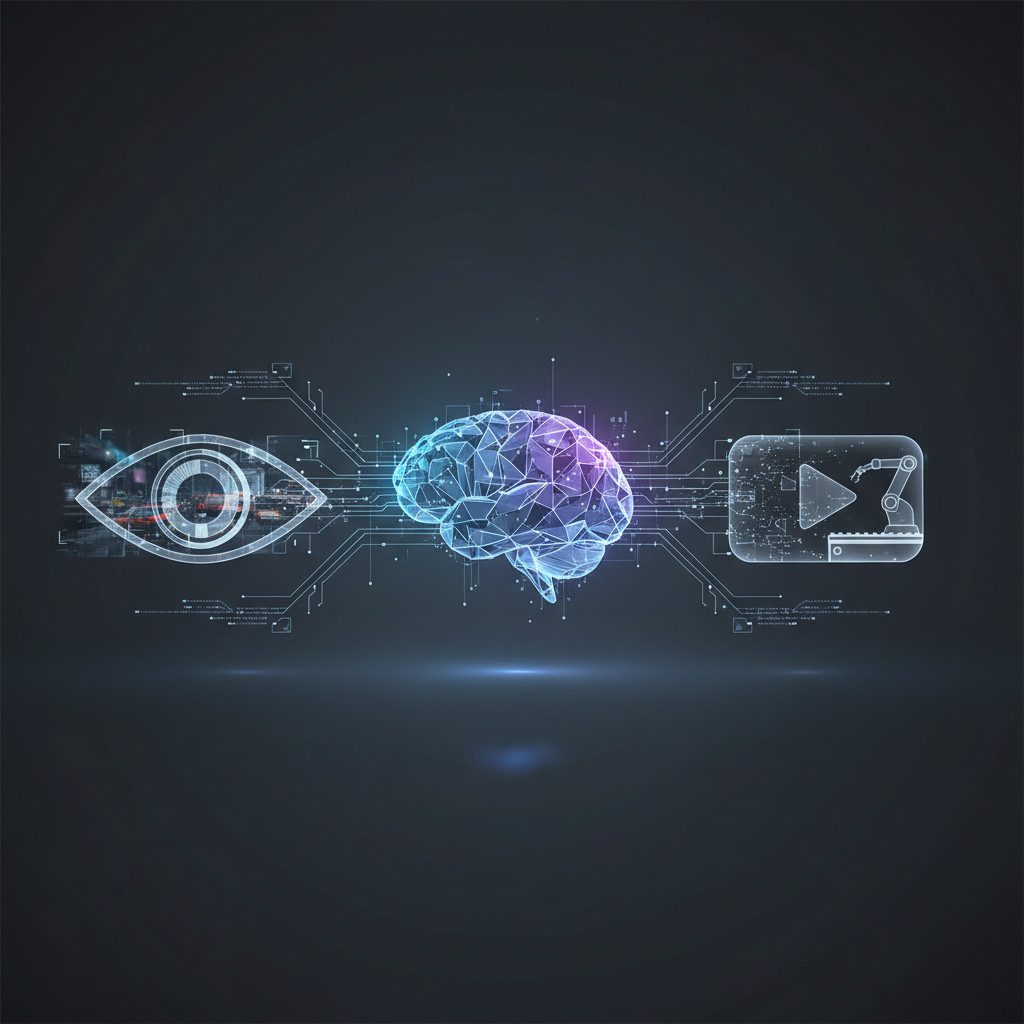

In today’s digital age, machines are gaining the ability to see, interpret, and understand the visual world. This remarkable capability is known as computer vision, a field of artificial intelligence (AI) that enables computers to extract meaningful information from digital images, videos, and other visual inputs. From facial recognition in smartphones to autonomous vehicles navigating city streets, computer vision technology is revolutionizing industries and enhancing our daily lives.
As businesses and tech professionals seek to leverage these advancements, understanding the fundamentals of computer vision becomes crucial. This article delves into the core aspects of computer vision, its applications, and the technologies that drive it. We’ll explore how machine learning in computer vision is transforming image recognition algorithms and video analysis software, providing practical insights for those interested in harnessing these powerful tools.
What is Computer Vision?
Computer vision is a branch of AI that empowers machines to interpret and make decisions based on visual data. This field combines image processing methods, deep learning for computer vision, and object detection techniques to enable computers to ‘see’ and understand their environment. Essentially, computer vision aims to replicate the human visual system, allowing machines to perform tasks such as identifying objects, recognizing patterns, and making sense of visual information.
According to azure.microsoft.com, computer vision involves several key components, including image acquisition, processing, analysis, and interpretation. These components work together to transform raw visual data into actionable insights. For instance, a computer vision system might capture an image through a camera (image acquisition), enhance the image quality (processing), identify objects within the image (analysis), and then make a decision based on the identified objects (interpretation).
Historically, computer vision has evolved from simple image processing techniques to complex deep learning models. Early systems relied on handcrafted features and rule-based algorithms, which were limited in their ability to handle diverse and complex visual scenarios. With the advent of machine learning and deep learning, computer vision systems have become more robust, accurate, and versatile. Today, these systems can perform a wide range of tasks, from basic image classification to sophisticated video analysis.
Key Technologies in Computer Vision
Several technologies underpin the field of computer vision, each contributing to its advancement and application. Machine learning in computer vision, for example, plays a pivotal role in enabling systems to learn from data and improve their performance over time. Deep learning for computer vision, a subset of machine learning, leverages neural networks to process and interpret visual data with remarkable accuracy.
Image recognition algorithms are another critical component, allowing computers to identify and classify objects within images. These algorithms form the backbone of many computer vision applications, from facial recognition systems to medical imaging tools. Object detection techniques further enhance these capabilities by not only identifying objects but also locating them within an image, providing precise spatial information.
Video analysis software extends these principles to moving images, enabling the tracking of objects and events over time. This technology is particularly useful in surveillance, autonomous vehicles, and sports analytics, where understanding dynamic scenes is essential. Together, these technologies create a powerful toolkit for developing computer vision solutions that can address a wide range of real-world challenges.
Applications of Computer Vision
Computer vision technology has a broad array of applications across various industries. Its ability to interpret and analyze visual data makes it invaluable in fields such as healthcare, automotive, retail, and security. From improving diagnostic accuracy in medical imaging to enhancing customer experiences in retail, computer vision is driving innovation and efficiency.
In healthcare, computer vision applications include medical image analysis, where systems can detect abnormalities in X-rays, MRIs, and CT scans. This capability aids healthcare professionals in diagnosing conditions such as tumors, fractures, and other medical issues with greater precision and speed. Similarly, in the automotive industry, computer vision is a cornerstone of autonomous driving, enabling vehicles to perceive their surroundings, identify obstacles, and make real-time decisions to ensure safe navigation.
Retail businesses leverage computer vision for inventory management, customer behavior analysis, and personalized shopping experiences. For example, smart shelves equipped with computer vision can monitor stock levels in real-time, triggering automatic reorders when inventory is low. In security, computer vision enhances surveillance systems by enabling real-time threat detection, facial recognition, and anomaly identification, thereby improving public safety and crime prevention efforts.
Real-World Use Cases
To illustrate the practical impact of computer vision, let’s explore some real-world use cases. In agriculture, computer vision systems are used for crop monitoring and disease detection. By analyzing images captured by drones or satellites, these systems can identify areas of a field that are affected by pests or diseases, allowing farmers to take targeted actions and improve crop yields.
In manufacturing, computer vision is employed for quality control and defect detection. By inspecting products on the assembly line, these systems can identify defects and ensure that only high-quality items reach the market. This not only enhances product quality but also reduces waste and production costs. In the realm of augmented reality (AR), computer vision enables the overlay of digital information onto the physical world, creating immersive experiences for gaming, education, and training.
Another compelling use case is in the field of accessibility. Computer vision technologies can assist individuals with visual impairments by providing real-time descriptions of their surroundings. For example, smart glasses equipped with computer vision can read text aloud, recognize faces, and describe objects, thereby enhancing the independence and quality of life for visually impaired individuals. These examples demonstrate the versatility and transformative potential of computer vision across diverse sectors.
How Computer Vision Works
Understanding how computer vision works involves exploring the underlying technologies and processes that enable machines to interpret visual data. At its core, computer vision relies on a combination of hardware and software components, each playing a crucial role in the system’s functionality. The process typically begins with image acquisition, where visual data is captured using cameras or other sensors.
Once the data is acquired, it undergoes preprocessing to enhance its quality and prepare it for analysis. This may involve tasks such as noise reduction, contrast adjustment, and image segmentation. The preprocessed data is then fed into machine learning models, which have been trained to recognize patterns and features within the visual data. These models use algorithms to classify objects, detect anomalies, and extract meaningful information from the images or videos.
The final step in the computer vision pipeline is interpretation, where the system translates the analyzed data into actionable insights. For example, a computer vision system might identify a face in an image and then match it against a database of known individuals to perform facial recognition. This process involves complex object detection techniques and deep learning models that have been trained on vast datasets to ensure accuracy and reliability.
Machine Learning and Deep Learning in Computer Vision
Machine learning and deep learning are integral to the functioning of computer vision systems. Machine learning algorithms enable systems to learn from data and improve their performance over time. By analyzing large datasets, these algorithms can identify patterns and features that are relevant to specific tasks, such as object recognition or image classification. This capability allows computer vision systems to adapt to new scenarios and handle diverse visual inputs.
Deep learning, a subset of machine learning, leverages neural networks to process and interpret visual data. These networks consist of multiple layers of interconnected nodes, or neurons, that mimic the structure and function of the human brain. By training these networks on large datasets, deep learning models can achieve remarkable accuracy in tasks such as image recognition and object detection. For instance, convolutional neural networks (CNNs) are a type of deep learning model specifically designed for image processing tasks, making them particularly well-suited for computer vision applications.
According to ibm.com, the combination of machine learning and deep learning has revolutionized the field of computer vision, enabling systems to perform complex tasks with high levels of accuracy and efficiency. These technologies have opened up new possibilities for applications in healthcare, automotive, retail, and many other industries, driving innovation and transforming the way we interact with the visual world.
The Future of Computer Vision
The future of computer vision is bright, with ongoing advancements in AI, machine learning, and deep learning continuing to push the boundaries of what is possible. As these technologies evolve, we can expect to see even more sophisticated and capable computer vision systems. Emerging trends such as edge computing, which involves processing data closer to its source, are likely to enhance the speed and efficiency of computer vision applications.
Another exciting development is the integration of computer vision with other AI technologies, such as natural language processing (NLP) and robotics. This convergence of technologies is enabling the creation of more intelligent and autonomous systems that can understand and interact with the world in increasingly complex ways. For example, robots equipped with computer vision and NLP capabilities can perform tasks such as sorting and organizing objects in a warehouse, or assisting customers in a retail store.
As computer vision continues to advance, it will likely become even more ubiquitous in our daily lives. From smart homes that can recognize and respond to our needs, to cities that use computer vision for traffic management and public safety, the potential applications are vast and varied. However, with these advancements come important ethical and privacy considerations that must be addressed to ensure the responsible and equitable use of computer vision technology.
Challenges and Ethical Considerations
While the future of computer vision is promising, it is not without its challenges. One of the primary concerns is the ethical use of computer vision technology. As systems become more capable of interpreting and analyzing visual data, questions arise about privacy, surveillance, and the potential for misuse. For example, facial recognition systems can be used to monitor individuals without their consent, raising concerns about civil liberties and personal privacy.
Another challenge is the need for large and diverse datasets to train computer vision models. These datasets must be representative of the various scenarios and conditions that the system will encounter in the real world. Bias and discrimination can occur if the training data is not diverse enough, leading to inaccurate or unfair outcomes. Addressing these challenges requires a commitment to ethical practices, transparency, and the development of robust frameworks for the responsible use of computer vision technology.
According to aws.amazon.com, the field of computer vision is rapidly evolving, and it is essential for businesses and tech professionals to stay informed about the latest developments and best practices. By understanding the challenges and ethical considerations associated with computer vision, we can work towards creating systems that are not only powerful and accurate but also fair, transparent, and respectful of individual rights.
TL;DR
Computer vision is a transformative field of AI that enables machines to interpret and understand visual data. Key technologies such as machine learning, deep learning, and object detection techniques drive its capabilities, allowing for applications in healthcare, automotive, retail, and security. Real-world use cases demonstrate the versatility and impact of computer vision, from crop monitoring in agriculture to quality control in manufacturing. Understanding how computer vision works involves exploring the underlying technologies and processes, including image acquisition, preprocessing, analysis, and interpretation. The future of computer vision holds exciting possibilities, with advancements in AI and ethical considerations shaping its development. As the field continues to evolve, it is essential to stay informed and committed to the responsible use of computer vision technology.