
Artificial Intelligence (AI) and Machine Learning (ML) are rapidly evolving fields that have become integral to modern technology and business strategies. Both concepts are often used interchangeably but they represent distinct areas of expertise with their own unique capabilities and limitations.
In recent years, AI has seen a significant surge in popularity due to advancements in computational power, data availability, and algorithmic innovation. Machine Learning, on the other hand, is a subset of AI that focuses specifically on enabling machines to learn from data without being explicitly programmed. This article will explore these concepts in depth, providing insights into their practical applications and potential.
Understanding Artificial Intelligence (AI)
The term Artificial Intelligence, coined by John McCarthy in 1956, refers to the development of intelligent machines capable of performing tasks that typically require human intelligence. These tasks include learning from experience, understanding natural language, recognizing patterns, making decisions under uncertainty, and solving complex problems.
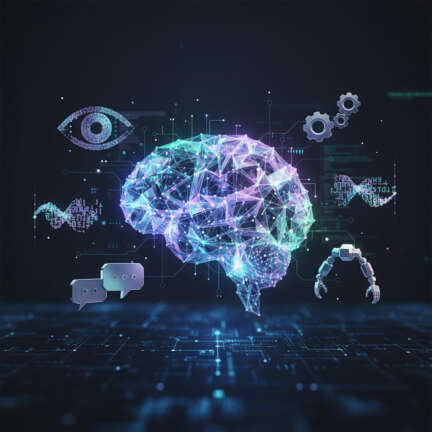
AI encompasses a broad range of techniques and technologies, including machine learning, expert systems, robotics, natural language processing (NLP), speech recognition, and computer vision. Each of these areas contributes to the development of intelligent machines that can mimic human cognitive functions and perform tasks autonomously.
The Role of Machine Learning in AI
Machine Learning is a key component within AI that enables systems to improve their performance through experience without being explicitly programmed. ML algorithms analyze vast amounts of data, identify patterns, and make decisions based on those insights. This process is crucial for developing intelligent applications such as recommendation engines, fraud detection systems, and predictive analytics tools.
Key Concepts in Machine Learning
To fully understand the potential of machine learning, it’s essential to familiarize yourself with some fundamental concepts:
- Supervised Learning: In supervised learning, machines learn from labeled data. This means that for every input, there is a corresponding output or label provided by humans. Common applications include classification and regression tasks.
- Unsupervised Learning: Unsupervised learning deals with unlabeled datasets where the algorithm tries to find hidden patterns within the data. Clustering and dimensionality reduction are typical use cases for unsupervised learning.
- Semi-Supervised Learning: This approach combines elements of both supervised and unsupervised learning by using a small amount of labeled data along with a large amount of unlabeled data to improve model accuracy.
In addition to these core concepts, reinforcement learning is another important area within ML that focuses on training agents to make decisions in dynamic environments through trial and error.
Deep Learning: A Subset of Machine Learning
Deep Learning represents a more advanced form of machine learning inspired by the structure and function of biological neural networks. It involves building artificial neural networks with multiple layers, allowing them to learn hierarchical representations from raw data.
The primary advantage of deep learning lies in its ability to automatically extract features from complex datasets such as images or sound waves without manual intervention. This has led to breakthroughs in areas like computer vision, natural language processing, and speech recognition.
Applications of Deep Learning
Deep learning is particularly effective for applications where traditional ML approaches struggle due to high dimensionality or complexity:
- Image Recognition: Convolutional Neural Networks (CNNs) are widely used in image classification tasks, such as identifying objects within photos.
- Natural Language Processing (NLP): Recurrent Neural Networks (RNNs) and Transformer models like BERT have revolutionized the way we process text data for sentiment analysis, language translation, and more.
- Automated Speech Recognition: Deep learning models can accurately transcribe spoken words into text, enabling applications ranging from virtual assistants to transcription services.
The success of deep learning in these areas has paved the way for innovative solutions across various industries.
Data Science and Its Role in AI & ML
While machine learning focuses on developing algorithms that can learn from data, Data Science encompasses a broader set of skills including statistical analysis, data visualization, and domain expertise. Data scientists work closely with ML engineers to clean, process, and analyze large datasets.
The synergy between data science and ML is crucial for building effective AI systems. By leveraging advanced analytics techniques, data scientists can uncover valuable insights hidden within big data, enabling organizations to make informed decisions based on empirical evidence rather than intuition alone.
Challenges in Data Science
Data science projects often face several challenges:
- Data Quality Issues: Poor quality or incomplete datasets can severely impact model performance. Ensuring data integrity and consistency is critical before applying ML algorithms.
- Solving Real-World Problems: Applying theoretical knowledge to real-world scenarios requires domain expertise and an understanding of business objectives. Data scientists must bridge the gap between technical capabilities and practical applications.
Addressing these challenges effectively can lead to significant improvements in AI-powered solutions.
Practical Applications of AI & ML
The impact of AI and machine learning is evident across numerous industries:
- E-commerce: Recommendation engines powered by ML algorithms enhance user experience by suggesting personalized products based on browsing history and purchase patterns.
- Healthcare: Predictive models using patient data help identify high-risk individuals for early intervention, improving overall healthcare outcomes.
- Finance: Fraud detection systems leverage machine learning to identify suspicious transactions in real-time, protecting both customers and financial institutions from fraudulent activities.
The potential applications of AI and ML are virtually limitless, making it an exciting field with numerous opportunities for innovation.
Tips for Developers, Data Scientists, and Researchers
For those interested in pursuing careers or research in this domain:
- Leverage Open-Source Libraries: Python libraries such as TensorFlow (tensorflow.org) and PyTorch (pytorch.org) provide powerful tools for implementing ML models.
- Stay Updated: The field of AI and ML is constantly evolving. Keep abreast of new developments by following relevant blogs, attending conferences, and participating in online communities.
- Emphasize Ethics: As the use of AI grows, so does its impact on society. Ethical considerations must be at the forefront when developing and deploying intelligent systems.
By adopting these practices, professionals can contribute meaningfully to advancing this transformative technology.
TL;DR
This article explored the fundamental concepts of Artificial Intelligence (AI) and Machine Learning (ML), highlighting their differences and interconnections. We delved into key ML algorithms, deep learning techniques, practical applications across industries, and tips for professionals aiming to excel in this dynamic field.