
In the realm of artificial intelligence, few fields are as transformative as computer vision. This technology enables machines to interpret and make decisions based on visual data, effectively giving them a sense of sight. For developers, data scientists, and researchers, understanding computer vision is crucial as it opens up a world of innovative applications and solutions. From autonomous vehicles to medical imaging, the potential is vast and exciting.
But what exactly is computer vision? How does it work, and what are the key technologies driving its advancements? In this article, we’ll delve into the fundamentals of computer vision, explore its applications, and discuss the future trends shaping this dynamic field. Whether you’re a seasoned professional or a curious newcomer, this guide will provide valuable insights and practical knowledge to help you navigate the world of computer vision.
Understanding Computer Vision
Computer vision is a subset of artificial intelligence that focuses on enabling computers to interpret and understand visual data from the world. This involves tasks such as image processing, object detection, and visual analysis. The goal is to automate tasks that the human visual system can do, such as recognizing objects, scenes, and activities.
At its core, computer vision relies on machine learning algorithms to analyze and interpret visual data. These algorithms are trained on large datasets of images and videos, allowing them to recognize patterns and make predictions. Deep learning, a subset of machine learning, has significantly advanced the field of computer vision by enabling more accurate and efficient analysis of visual data. According to springer.com, the combination of deep learning and computer vision has led to breakthroughs in various applications, from facial recognition to autonomous driving.
Key Components of Computer Vision
Several key components form the foundation of computer vision. These include image processing, object detection, and image recognition. Image processing involves manipulating images to enhance their quality or extract useful information. Object detection focuses on identifying and locating objects within an image or video. Image recognition, on the other hand, involves classifying and labeling objects within visual data.
These components work together to enable machines to understand and interpret visual data. For example, in an autonomous vehicle, image processing might be used to enhance the quality of images captured by the car’s cameras. Object detection would then identify and locate pedestrians, other vehicles, and road signs. Finally, image recognition would classify these objects to help the car make decisions about how to navigate the road safely.
The Role of Machine Learning in Computer Vision
Machine learning is the backbone of computer vision. It provides the algorithms and models that enable machines to learn from and make decisions based on visual data. Supervised learning, unsupervised learning, and reinforcement learning are the three main types of machine learning used in computer vision.
Supervised learning involves training models on labeled datasets, where the correct answers are known. This approach is commonly used for tasks like image classification and object detection. Unsupervised learning, on the other hand, involves training models on unlabeled data, allowing them to identify patterns and relationships without prior knowledge. Reinforcement learning uses a system of rewards and punishments to train models to make decisions based on visual data.
Deep Learning and Convolutional Neural Networks
Deep learning has revolutionized the field of computer vision. It involves training neural networks with multiple layers to learn hierarchical representations of data. Convolutional neural networks (CNNs) are a type of deep learning model specifically designed for image processing tasks. They use convolutional layers to automatically and adaptively learn spatial hierarchies of features from input images.
According to szeliski.org, CNNs have achieved state-of-the-art performance in various computer vision tasks, including image classification, object detection, and semantic segmentation. Their ability to automatically learn and extract features from images makes them particularly well-suited for complex visual analysis tasks.
Applications of Computer Vision
Computer vision has a wide range of applications across various industries. From healthcare to manufacturing, its ability to interpret and analyze visual data has led to significant advancements and improvements. Let’s explore some of the most notable applications of computer vision.
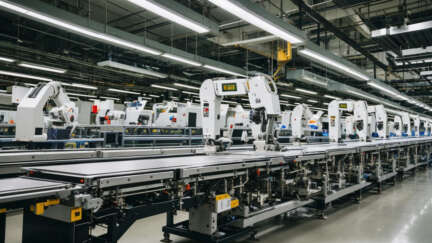
In healthcare, computer vision is used for medical imaging and diagnosis. It can analyze X-rays, MRIs, and CT scans to detect abnormalities and assist doctors in making accurate diagnoses. In manufacturing, computer vision is used for quality control and inspection. It can identify defects and inconsistencies in products, ensuring they meet quality standards. According to ibm.com, computer vision is also used in agriculture for monitoring crop health and detecting diseases, helping farmers improve yields and reduce losses.
Autonomous Vehicles and Surveillance
Autonomous vehicles rely heavily on computer vision for navigation and safety. They use cameras and sensors to capture visual data from the environment, which is then analyzed to identify objects, pedestrians, and road signs. This information is used to make decisions about steering, braking, and accelerating, ensuring the vehicle operates safely and efficiently.
Surveillance is another key application of computer vision. It is used to monitor public spaces, detect suspicious activities, and enhance security. Computer vision systems can analyze video feeds in real-time, identifying potential threats and alerting authorities. This helps to prevent crimes and ensure public safety.
Future Trends in Computer Vision
The field of computer vision is continuously evolving, with new advancements and innovations emerging regularly. Future trends in computer vision include the integration of computer vision with other technologies, such as augmented reality and virtual reality. This integration will enable more immersive and interactive experiences, transforming industries like gaming, education, and healthcare.
Another future trend is the development of more advanced and efficient algorithms. Researchers are exploring new techniques and models to improve the accuracy and efficiency of computer vision systems. The use of edge computing, which involves processing data closer to the source, is also gaining traction. This approach reduces latency and improves the performance of computer vision applications.
Ethical Considerations and Challenges
As computer vision continues to advance, ethical considerations and challenges must be addressed. Privacy concerns, bias in algorithms, and the potential for misuse are some of the key issues that need to be considered. Ensuring that computer vision systems are fair, transparent, and respectful of privacy rights is crucial for their responsible and ethical use.
According to wikipedia.org, addressing these challenges requires collaboration between researchers, developers, policymakers, and the public. By working together, we can ensure that computer vision is used ethically and responsibly, benefiting society as a whole.
TL;DR
Computer vision is a transformative field within artificial intelligence that enables machines to interpret and understand visual data. It relies on machine learning algorithms, particularly deep learning and convolutional neural networks, to analyze and interpret images and videos. Applications of computer vision span various industries, including healthcare, manufacturing, agriculture, autonomous vehicles, and surveillance.
The future of computer vision is bright, with advancements in algorithms, integration with other technologies, and the use of edge computing. However, ethical considerations and challenges must be addressed to ensure the responsible and ethical use of computer vision. By understanding the fundamentals, applications, and future trends of computer vision, developers, data scientists, and researchers can harness its potential to create innovative solutions and transform industries.