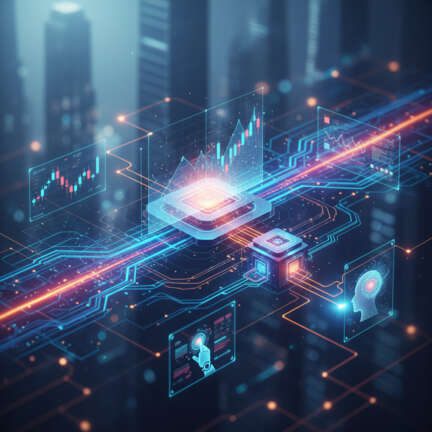

In the modern era, technology is no longer just a tool we use; it is the very fabric upon which our global society is woven. From the seamless way you order groceries on a smartphone to the complex, high-frequency trading algorithms managing global markets, Information Technology (IT) acts as the invisible engine driving progress. For IT professionals, students, and enthusiasts, understanding this landscape requires looking far beyond simple hardware and software. It involves grasping the intricate dance between data, intelligence, and infrastructure.
We are currently witnessing a pivotal moment in history where the boundaries of what is possible are being redfined by rapid innovation. The convergence of traditional computing with advanced intelligence is creating a paradigm shift in how we solve problems. This isn’t just about making computers faster; it is about making them smarter, more autonomous, and more deeply integrated into our physical reality. As we navigate this complexity, the core principles of IT remain our compass, guiding us through the waves of digital transformation.
To truly understand where we are headed, we must dissect the fundamental components that make up the modern technological ecosystem. We need to look at how software engineering provides the logic, how data management provides the fuel, and how AI and Machine Learning provide the cognitive power to turn raw information into actionable wisdom.
The Core Pillars of Information Technology
At its most fundamental level, Information Technology encompasses the use of systems—specifically computers and telecommunications—for storing, retrieving, and sending information. While this definition might seem straightforward, the actual implementation is incredibly vast. It involves a complex layering of hardware, software, and networks that must work in perfect orchestration to deliver value to the end user. As noted by wikipedia.org, IT is essentially the backbone of modern business operations.
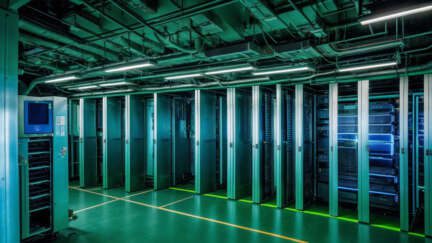
One cannot discuss IT without mentioning IT Infrastructure. This is the foundation upon which everything else sits. It includes the physical servers, the networking hardware (like routers and switches), and the cloud environments that host our digital lives. Without a robust and scalable infrastructure, even the most brilliant software would fail to reach its audience. In today’s world, this infrastructure is increasingly moving toward hybrid models, blending on-premise stability with the infinite scalability of the cloud.
Software Engineering and Logic
If infrastructure is the body, then Software Engineering is the mind. Software engineering is much more than just writing code; it is the disciplined application of engineering principles to the development of software. It involves the entire lifecycle—from requirements gathering and architectural design to testing, deployment, and maintenance. In an age where “software is eating the world,” the ability to build resilient, scalable, and secure applications is perhaps the most critical skill in the tech industry.
Modern software engineering has evolved from simple procedural programming to complex microservices architectures and DevOps methodologies. This evolution allows for continuous integration and continuous delivery (CI/CD), enabling companies to push updates to millions of users instantly. For students entering the field, mastering these methodologies is just as important as learning a specific programming language like Python or Java.
The Power of Data Management
We often hear that “data is the new oil,” but unlike oil, data is an inexhaustible resource that grows exponentially every second. However, raw data is useless without Data Management. This discipline involves the processes, technologies, and practices used to ensure that data is accurate, available, and secure. Effective data management ensures that organizations can move from being “data-rich” to “insight-driven.”
This includes everything from traditional relational databases (SQL) to modern NoSQL systems designed for unstructured big data. The challenge today isn’t just storing data; it is managing its lifecycle, ensuring privacy compliance (like GDPR), and preparing it for use in analytical models. Without high-quality, well-structured data, the most advanced AI algorithms will inevitably fail due to the “garbage in, garbage out” principle.
The Revolution of AI and Machine Learning
Perhaps the most transformative force in contemporary technology is the rise of AI and Machine Learning. While artificial intelligence has been a concept in computer science for decades, recent breakthroughs in computing power and data availability have brought it into the mainstream. Unlike traditional software that follows pre-defined rules, machine learning allows systems to learn from patterns in data, improving their performance over time without explicit programming.
The heart of this revolution lies in Machine Learning Algorithms. These algorithms—ranging from simple linear regressions to complex deep neural networks—are capable of processing massive datasets to identify subtle correlations that are invisible to the human eye. As explained by online.uc.edu, these technologies are fundamentally changing how we interact with machines and each other.
Deep Learning and Neural Networks
Within the realm of machine learning, deep learning stands out as a particularly potent subset. By mimicking the layered structure of the human brain through neural networks, deep learning enables breakthroughs in image recognition, natural language processing, and even autonomous driving. These layers of “neurons” allow the computer to learn increasingly abstract features of the input data, moving from simple edges in an image to identifying complex objects like faces or street signs.
This capability is what powers modern virtual assistants, real-time translation services, and advanced medical diagnostics. For the tech enthusiast, watching the progress of neural network architectures—such as Transformers, which revolutionized how machines understand language—is one of the most exciting aspects of modern computer science.
The Impact of Automation
The integration of AI into business processes is driving a new wave of automation. We are seeing “intelligent automation” where software agents can handle complex tasks like invoice processing, customer support via advanced chatbots, and even predictive maintenance in manufacturing. This doesn’t just reduce costs; it frees up human professionals to focus on higher-level strategic thinking and creative problem-solving.
Navigating Digital Transformation
For many organizations, the arrival of new technologies necessitates a complete overhaul of their operational models. This process is known as Digital Transformation. It is not merely about adopting new software; it is a cultural and structural shift that requires rethinking how value is delivered to customers. As emphasized by comptia.org, IT is the primary driver of this transformation.
Digital transformation involves integrating digital technology into all areas of a business, fundamentally changing how you operate and deliver value. This might mean moving from legacy on-premise servers to a cloud-native architecture, or using IoT (Internet of Things) sensors to create a “digital twin” of a physical factory. The goal is to become more agile, responsive to market changes, and capable of leveraging data for competitive advantage.
The Role of IT Professionals in Change
As companies undergo these transformations, the role of the IT professional shifts from being a “support function” to becoming a “strategic partner.” No longer are IT teams just the people who fix broken laptops; they are the architects of business strategy. They are responsible for designing the digital ecosystems that allow a company to scale, innovate, and compete in a globalized market.
This shift requires a broader skill set. Modern IT professionals need to understand not only the technical implementation but also the business outcomes. Understanding how a specific cloud architecture supports a new customer-facing mobile app is crucial. This convergence of business acumen and technical expertise is where the most significant value is created during a digital overhaul.
The Evolving Landscape of Computer Science
At its core, all these technological advancements are rooted in the academic and practical foundations of Computer Science. While IT focuses on the application and management of technology, computer science provides the theoretical framework that makes it possible. It is the study of algorithms, computation, information, and automation.
The field is constantly expanding. We are seeing new frontiers in quantum computing, which promises to solve problems that are currently impossible for classical computers. We are also seeing advancements in edge computing, where processing power is moved closer to the data source (like an IoT device) to reduce latency. These scientific breakthroughs eventually trickle down into the IT industry, becoming the standard tools of the trade for the next generation of engineers.
- Quantum Computing: Utilizing quantum bits (qubits) to perform calculations at unprecedented speeds.
- Edge Computing: Bringing computation and data storage closer to the sources of data.
- Cybersecurity Science: Developing new cryptographic methods to protect against increasingly sophisticated threats.
TL;DR
In summary, the landscape of Information Technology is a complex, interconnected ecosystem. The strength of our digital future depends on several key pillars:
- Infrastructure & Software: Robust hardware and disciplined software engineering provide the foundation for all digital services.
- Data Management: Efficiently handling the explosion of data is essential to turn raw information into actionable intelligence.
- AI & Machine Learning: Advanced algorithms are driving automation and unprecedented levels of machine intelligence.
- Digital Transformation: The strategic integration of these technologies is fundamentally reshaping how businesses operate and compete.
- Continuous Evolution: As computer science advances with quantum and edge computing, the IT landscape will continue to redefine the boundaries of possibility.