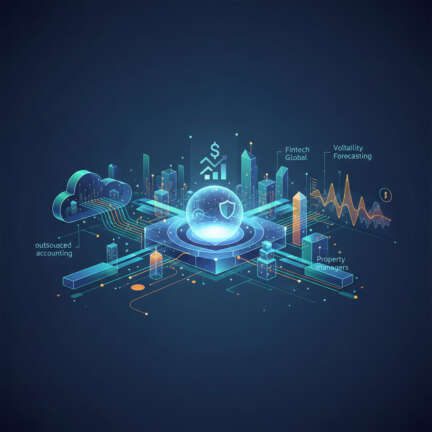

The financial world is no longer defined by marble pillars, heavy vaults, and intimidating mahogany desks. It has moved into the pockets of billions. Fintech entrepreneurship represents far more than just a new way to pay for your morning coffee; it is a fundamental restructuring of how value is exchanged, stored, and managed across the globe. We are witnessing a tectonic shift where traditional banking silos are being dismantled by agile, code-driven competitors.
For the aspiring founder, this era represents both the most significant opportunity and the most daunting challenge of the decade. The barrier to entry for launching a digital payment app might be lower than ever, but the barrier to building a sustainable, trusted, and compliant financial institution has never been higher. It is a high-stakes game played at the intersection of cutting-edge software engineering and rigorous legal frameworks.
To succeed in this space, you cannot simply be a great coder or a seasoned banker. You must become a hybrid professional capable of navigating the complexities of fintech technology drivers, the nuances of the fintech regulatory landscape, and the shifting sands of global economic factors. In this deep dive, we will explore the core pillars of fintech innovation and provide a roadmap for those looking to build the next generation of financial services.
The Engine of Change: Fintech Technology and Economic Drivers
Fintech entrepreneurship does not happen in a vacuum. It is the result of a perfect storm where technological capability meets an urgent economic necessity. To understand where the next big disruption will come from, one must look at the underlying drivers that make innovation possible. It is helpful to view this through the lens of an evolutionary process, where new digital tools gradually replace or augment older, less efficient systems researchgate.net.
The Role of Emerging Technology Drivers
The primary fuel for fintech startup innovation is the rapid advancement of specific technology drivers. We are currently seeing the convergence of three massive pillars: Artificial Intelligence (AI), Blockchain, and Cloud Computing. AI and Machine Learning are revolutionizing credit scoring and fraud detection, allowing companies to assess risk in real-time with much higher accuracy than traditional methods. Blockchain, while still maturing, offers the promise of decentralized finance (DeFi) and near-instant cross-border settlements without the need for intermediary banks.
Furthermore, the ubiquity of cloud computing has democratized access to massive computing power. A small team of five developers can now access the same infrastructure as a global Tier-1 bank, allowing for rapid prototyping and global scaling at a fraction of the historical cost. This technological democratization is what allows a garage-based startup to compete with a century-old institution.
Economic Catalysts and Global Access
While technology provides the tools, economic factors provide the motivation. One of the most significant fintech market drivers is the massive, unbanked, or underbanked population in emerging markets. In many parts of the world, the smartphone is the first and only bank a person will ever own. This creates a massive demand for mobile-first financial services, driving the growth of digital wallets and micro-lending platforms.
In developed economies, the driver is different. Here, it is the demand for transparency, lower fees, and a seamless user experience. Consumers are increasingly dissatisfied with the “hidden fees” and slow processing times of legacy banking. This economic pressure for efficiency and cost-reduction acts as a constant tailwind for fintech entrepreneurship, forcing even the largest incumbents to adopt more modern, consumer-centric approaches.
Navigating the Complex Fintech Regulatory Landscape
If technology is the engine of fintech, regulation is the braking system. You cannot build a successful financial product without addressing the fintech regulatory landscape. Unlike a standard SaaS company, a fintech startup is subject to intense scrutiny regarding Anti-Money Laundering (AML), Know Your Customer (KYC), and capital adequacy requirements. For many founders, the regulatory burden is the single greatest barrier to scaling.
However, a sophisticated entrepreneur does not view regulation merely as a hurdle, but as a competitive moat. In the financial sector, trust is the primary currency. A startup that can demonstrate robust compliance and regulatory alignment can actually use its adherence to standards as a marketing tool to win over skeptical consumers and institutional partners. The goal is to move from “disrupting” regulation to “integrating” with it.
One way regulators have attempted to foster innovation is through the implementation of “regulatory sandboxes.” These are controlled environments where fintech startups can test new products and business models under the supervision of regulators without immediately being subject to the full weight of all financial laws. This allows for controlled experimentation and helps regulators understand new technologies like DeFi before they become systemic risks. Navigating these frameworks requires a deep partnership with legal experts and a proactive approach to compliance-by-design.
Designing Scalable Fintech Business Models
Success in fintech requires more than just a great feature; it requires a sustainable fintech business model. The landscape is vast, ranging from simple payment gateways to complex, AI-driven wealth management platforms. The challenge lies in identifying a niche that is large enough to be profitable but specific enough to be defensable against larger competitors. As noted by experts in the field, the nature of innovation in this sector is deeply tied to how effectively a company can capture value within the digital ecosystem milkeninstitute.org.
From B2C to Embedded Finance
Historically, many fintech startups focused on the Business-to-Consumer (B2C) model—think Neobanks like Chime or Revolut. These companies aim to capture the primary banking relationship by offering superior UX and lower fees. While highly visible, the B2C space is incredibly crowded and expensive to market. The cost of customer acquisition (CAC) in the consumer space can often outweigh the lifetime value (LTV) of the user if the model isn’t perfectly optimized.
A more recent and perhaps more lucrative trend is the rise of B2B fintech and “Embedded Finance.” This is the concept of integrating financial services into non-financial platforms. For example, when you use “Buy Now, Pay Later” (BNPL) at an e-commerce checkout, you are experiencing embedded finance. The fintech provider is working in the background, powering the credit decision for the retailer. This model allows fintech startups to scale rapidly by leveraging the existing user bases of much larger platforms, effectively turning every e-commerce site, ride-sharing app, or delivery service into a potential distribution channel for financial products.
The Entrepreneurial Path: Careers and Skillsets
The journey of a fintech entrepreneur is unique. It requires a “T-shaped” skill set: deep expertise in one area (either finance or technology) and a broad understanding of the other. We are seeing a rise in fintech entrepreneur careers among professionals who have spent years in traditional banking but have developed a passion for digital transformation. These individuals understand the “why” of finance, which is just as important as the “how” of the code.
For those looking to enter this field, formal education and specialized programs are becoming increasingly important. Programs like those offered at rice.edu are designed to bridge the gap between traditional finance and the entrepreneurial mindset. The ability to understand credit risk, liquidity, and capital markets is essential, but so is the ability to lead agile development teams and manage the rapid iteration cycles characteristic of the tech industry.
Beyond technical skills, the “soft skills” of resilience and adaptability are paramount. The fintech landscape changes almost weekly. A new regulation in the EU, a shift in interest rates by the Fed, or a breakthrough in quantum computing can render a business model obsolete overnight. The most successful fintech founders are those who can pivot their strategy without losing sight of their core mission of improving financial access or efficiency.
Future Horizons in Fintech Innovation
Looking ahead, the boundary between “fintech” and “finance” will likely disappear entirely. We are moving toward an era of invisible finance, where financial services are so deeply embedded in our digital lives that we don’t even realize we are using them. The next wave of innovation will likely focus on the intersection of fintech and other sectors, such as HealthTech (for medical payments) and InsurTech (for real-time, usage-based insurance).
Furthermore, the integration of decentralized finance (DeFi) with traditional finance (CeFi) remains one of the most significant frontiers. While the volatility of the crypto markets has tempered some of the initial hype, the underlying technology of programmable money and smart contracts is too powerful to ignore. The entrepreneurs who can build the bridges between these two worlds—creating secure, compliant, and user-friendly interfaces for decentralized protocols—will likely lead the next decade of fintech growth.
TL;DR
- Technology is the Catalyst: AI, Blockchain, and Cloud computing are the primary drivers of fintech startup innovation.
- Regulation is a Moat: While the fintech regulatory landscape is complex, mastering compliance can serve as a significant competitive advantage.
- Economic Opportunity: Fintech thrives by solving real-world problems, such as financial inclusion in emerging markets and the demand for transparency in developed ones.
- Model Matters: While B2C is visible, the rise of B2B and Embedded Finance offers massive scaling potential through integration into existing ecosystems.
- The Hybrid Professional: Success requires a blend of deep financial knowledge and modern technological fluency.