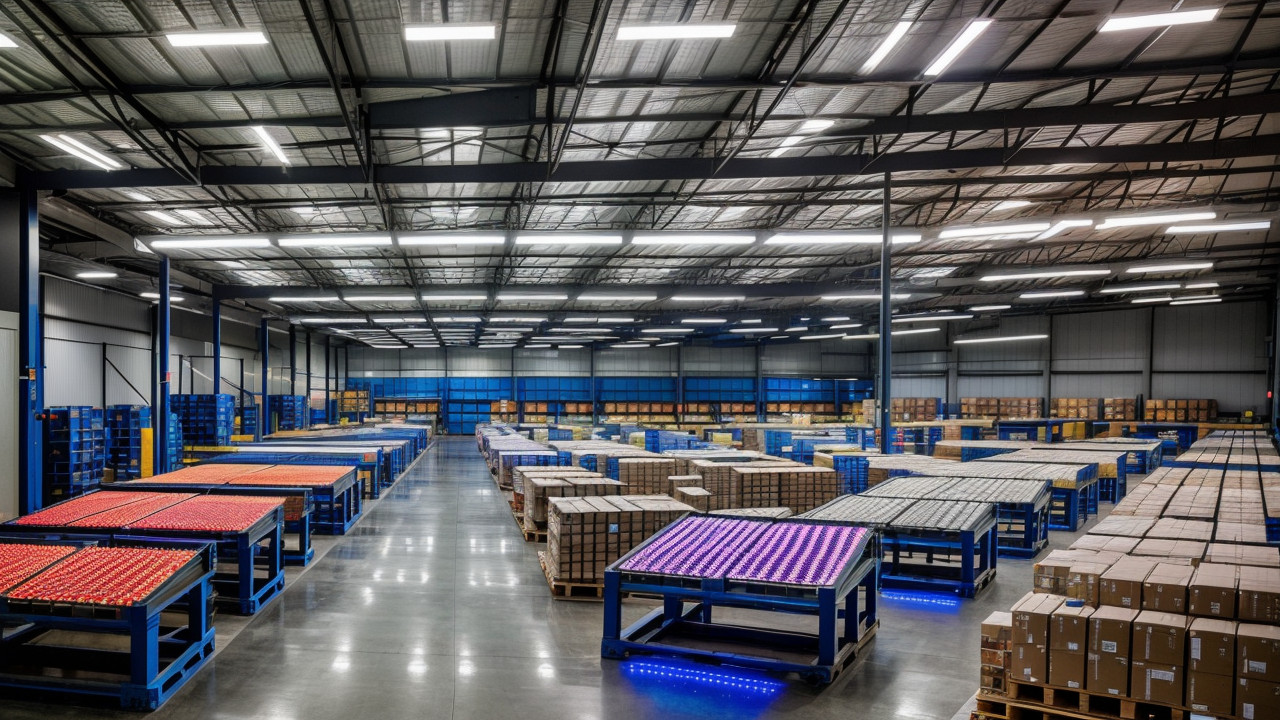

In the fast-paced world of modern commerce, the margin for error is shrinking every single day. Whether you are managing a high-volume retail storefront or overseeing a sprawling distribution center, the pressure to maintain accuracy while increasing speed is relentless. We have moved past the era where manual logging and human intuition were enough to keep the wheels turning. Today, the backbone of a successful operation lies in how effectively you can integrate technology into your daily workflows.
Automation is no longer a futuristic concept reserved for sci-fi movies; it is a fundamental necessity for survival in a globalized economy. For retail managers and warehouse supervisors, the challenge isn’t just about buying new gadgets—it is about implementing Automation Technology that seamlessly integrates with existing processes to reduce friction, minimize human error, and drive profitability. This article explores the critical role of scanning technology and how intelligent automation is reshaping the landscape of industrial and retail operations.
The Foundation of Modern Automation in Logistics
To understand where we are going, we first have to understand what we are actually doing when we talk about automation. At its simplest level, automation refers to the use of technology to perform tasks with minimal human intervention. According to geeksforgeeks.org, automation involves creating systems that can execute processes or instructions to achieve a certain goal, often increasing efficiency and reliability.
In a warehouse or retail environment, this doesn’t necessarily mean replacing every human worker with a robot. Instead, it means augmenting human capability. It is about replacing repetitive, error-prone manual tasks—like manually typing in SKU numbers or checking inventory counts—with intelligent systems that can capture data instantly and accurately. When you automate the data capture layer, you create a “single source of truth” that flows through your entire supply chain.
The Impact on Productivity and Accuracy
The primary driver for adopting automation is the drastic reduction in error rates. In a warehouse, a single mispicked item can lead to a cascade of expensive mistakes: incorrect shipping labels, unhappy customers, and costly returns. By utilizing Industrial Scanning Solutions, companies can ensure that every movement of goods is logged with near-perfect precision. This level of accuracy is what allows modern Automated Retail Systems to function at scale without constant supervision.
Furthermore, the speed gained through automation cannot be overstated. When a worker uses a high-performance scanner to process an incoming shipment, the time saved per unit adds up to thousands of man-hours across a fiscal year. This efficiency allows managers to reallocate their most valuable resource—human talent—to more complex tasks like quality control, customer service, and strategic planning.
Precision Scanning: The Core of Retail Automation
If automation is the brain of a modern operation, then scanning technology is the eyes. You cannot automate what you cannot see. For years, simple 1D barcodes were sufficient, but the complexity of modern products and the rise of digital commerce have demanded much more. This is where 2D Barcode Scanning becomes a game-changer for the industry.
Unlike traditional barcodes that only hold a string of numbers, 2D barcodes (like QR codes) can store much more dense information, including URLs, expiration dates, and batch numbers. This density is crucial for Retail Automation, as it allows for more granular tracking of products throughout their lifecycle. However, reading these complex codes requires specialized hardware capable of handling various lighting conditions and difficult angles.
Spotlight on the 1472g Scanner
When looking for hardware that can handle the rigors of a warehouse or a busy retail floor, the 1472g Scanner stands out as a premier choice. As part of the high-performance lineup from honeywell.com, the Voyager XP 1472g is designed specifically for general-duty environments that demand high Barcode Scanner Performance. It is built to handle the “heavy lifting” of daily scanning tasks without breaking a sweat.
What makes the 1472g particularly valuable is its ability to handle much more than just standard paper labels. It excels in Digital Screen Scanning, a feature that is becoming increasingly vital. As customers move toward mobile wallets and digital coupons, the ability of a scanner to quickly and accurately read data from a smartphone or tablet screen is no longer a luxury—it is a requirement for a seamless checkout experience.
Overcoming Scanning Challenges in a Digital-First World
The modern retail and warehouse environments are increasingly “digital-first.” We are seeing a massive rise in the use of mobile devices, not just by customers, but by employees as well. This shift introduces new challenges for scanning technology. For instance, scanning a barcode off a glossy, reflective smartphone screen is significantly harder than scanning one off a matte paper label. Light glare and screen brightness variations can cause traditional scanners to fail.
This is why investing in Industrial Scanning Solutions that are optimized for Digital Screen Scanning is so critical. A scanner that struggles with screen glare will create bottlenecks at the point of sale or during the receiving process. The goal is to achieve a “first-time read” every single time, regardless of whether the barcode is on a crumpled cardboard box or a high-definition OLED screen.
Handling Damaged or Low-Quality Labels
In a warehouse environment, labels rarely stay in pristine condition. They get scuffed, wet, torn, or smudged during transit. A low-quality scanner will struggle to interpret these damaged codes, leading to manual overrides and data entry errors. High-performance 2D scanners use advanced algorithms to reconstruct the data from partial or damaged barcodes, ensuring that the flow of information remains uninterrupted. This resilience is a key component of any robust Automated Retail System.
Strategic Implementation for Warehouse Leaders
For warehouse supervisors and technology implementers, the transition to more advanced automation requires a strategic approach. You cannot simply drop new hardware into an old workflow and expect magic to happen. Successful implementation requires looking at the entire ecosystem, from the handheld device in the picker’s hand to the central Warehouse Management System (WMS) that receives the data.
As noted by ibm.com, true automation success comes from integrating various layers of technology so they work in concert. This means ensuring your Automation Technology is compatible with your existing software architecture and that your network infrastructure (Wi-Fi/5G) is strong enough to handle the constant stream of real-time data being uploaded by your scanning fleet.
Integration and Scalability
When choosing your scanning solutions, always think about scalability. You might start with a small fleet of 1472g scanners for a single receiving dock, but as your operations grow, you need hardware that can be easily deployed across multiple sites and integrated into a unified management platform. The ability to remotely update firmware, monitor battery health, and track usage statistics is essential for managing a large-scale Automated Retail System.
Furthermore, consider the training aspect. The best technology in the world is useless if your staff finds it difficult to use. Prioritize ergonomic, intuitive devices that reduce the learning curve. The goal is to empower your workforce, not frustrate them. When the technology feels like a natural extension of their workflow, the benefits of automation—speed, accuracy, and ease of use—can truly shine.
The Future Landscape: Emerging Automation Trends
As we look toward the future, the boundaries of automation continue to expand. We are seeing the convergence of AI, IoT, and robotics. The next generation of Automation Technology will likely involve scanners that don’t just read data, but use machine learning to predict errors before they happen or use augmented reality (AR) to guide workers through complex picking routes.
According to research from pewresearch.org, the integration of emerging technologies into the workforce is a major trend that will continue to redefine how we work. For the retail and warehouse sectors, this means that the hardware we use today must be part of a forward-looking strategy. The 1472g scanner is a powerful tool for today, but it is also a building block for the more complex, interconnected automated environments of tomorrow.
TL;DR
Key Takeaways:
- Automation is Essential: Modern retail and warehouse efficiency depends on moving away from manual processes toward integrated Automation Technology.
- The Power of 2D: 2D Barcode Scanning provides the data density needed for complex tracking, far surpassing traditional 1D methods.
- Hardware Matters: Devices like the 1472g Scanner are critical for handling difficult tasks like Digital Screen Scanning and reading damaged labels.
- Strategic Integration: Successful automation requires seamless integration between hardware, software (WMS), and network infrastructure.
- Future-Proofing: As AI and IoT evolve, investing in scalable, high-performance Industrial Scanning Solutions is vital for long-term competitiveness.