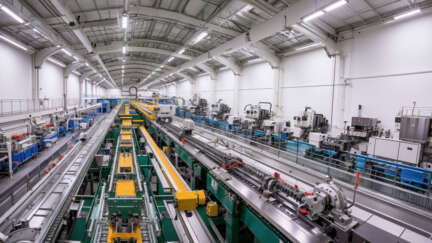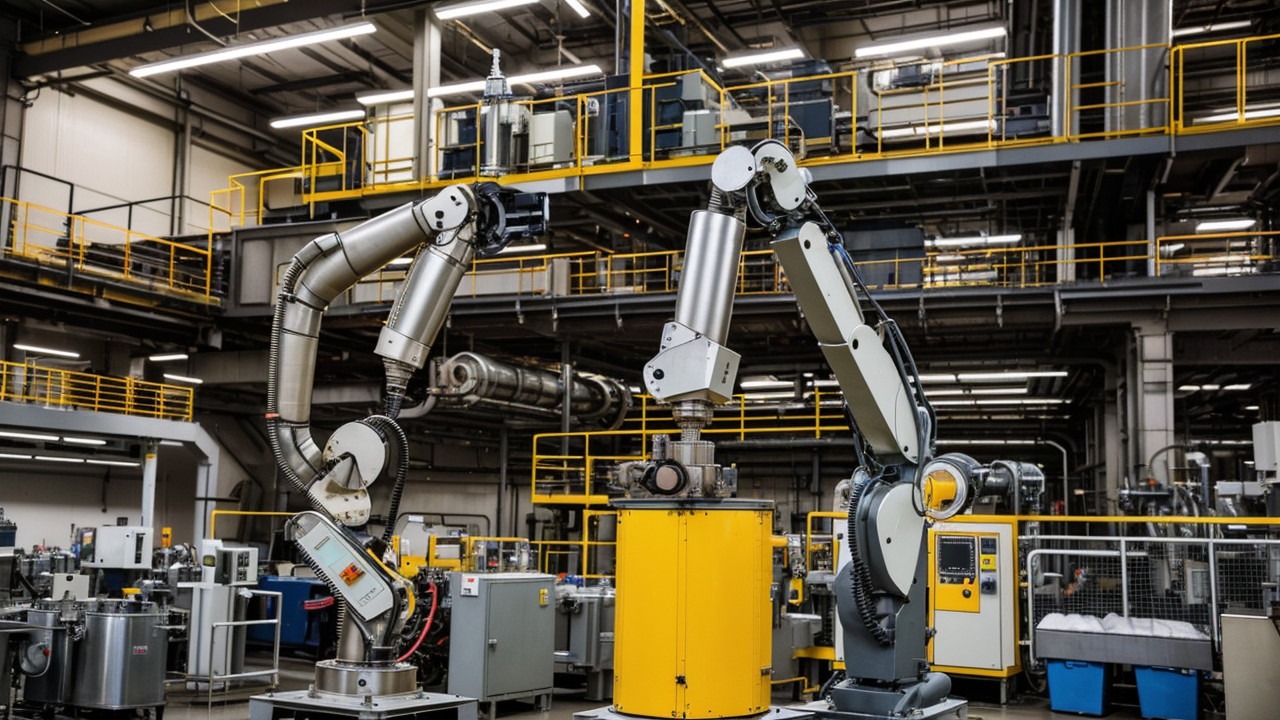

The landscape of global manufacturing has undergone a radical transformation over the last decade. We have moved past the era where automation simply meant a robotic arm performing the same repetitive, high-speed motion on an assembly line. In the current industrial landscape of 2026, automation is increasingly defined by intelligence, adaptability, and deep, cross-platform connectivity. It is no longer just about replacing human muscle; it is about augmenting human decision-making.
For industrial engineers and manufacturing executives, the stakes have never been higher. The transition toward “Smart Manufacturing” promises unprecedented levels of efficiency and reduced waste, but it also introduces complexities in data management and cybersecurity. As we integrate more advanced technologies into the factory floor, the line between traditional mechanical engineering and advanced software engineering continues to blur.
The Evolution of Industrial Automation: From Fixed Logic to Cognitive Systems
Historically, industrial automation was synonymous with rigid, rule-based logic. Engineers programmed machines to follow specific, unchanging sequences. If a part arrived at a certain sensor, the machine would perform a specific action. This “if-this-then-that” approach was incredibly effective for high-volume, low-variety production, but it lacked the flexibility required for today’s personalized manufacturing demands.
As noted by isa.ran, automation is fundamentally the technology used to control a process or system. However, the definition of “control” has expanded. We have moved from simple control loops to complex, multi-variable optimization. Modern systems can now sense changes in their environment and adjust their parameters without human intervention, representing a shift from deterministic to probabilistic automation.
This evolution is driven by the need for agility. In an era of mass customization, factories must be able to switch between different product profiles with minimal downtime. The modern automation stack is designed to handle this variability, utilizing software-defined manufacturing principles to reconfigure production lines through code rather than physical hardware changes.
The Role of Programmable Logic in Modern Contexts
While the era of simple PLCs (Programmable Logic Controllers) is evolving, they remain the bedrock of the factory floor. The difference today lies in their ability to communicate. Modern controllers are no longer isolated islands of logic; they are integrated nodes within a much larger, networked ecosystem.
The integration of edge computing allows these controllers to process critical logic locally, ensuring low latency for time-sensitive tasks, while simultaneously pushing aggregated data to the cloud for long-term analysis. This hybrid approach ensures that the speed of the factory floor is never compromised by the latency of the cloud.
The Impact of AI and Machine Learning on Process Automation
Machine learning (ML) is the true engine behind the current wave of smart manufacturing. Unlike traditional software that follows a pre-set script, ML algorithms are designed to learn from patterns within massive datasets. In a manufacturing context, this means the system can recognize subtle anomalies that would be invisible to the human eye or traditional threshold-based monitoring.
One of the most significant applications of AI in automation is predictive maintenance. For years, manufacturers have struggled with the binary choice between reactive maintenance (fixing things when they break) and preventative maintenance (replacing parts based on a fixed schedule, often too early). Machine learning removes this inefficiency by analyzing vibration, temperature, and acoustic data to predict exactly when a component is likely to fail.
This capability transforms the economic model of the factory. By reducing unplanned downtime, companies can significantly improve their Overall Equipment Effectiveness (OEE). Furthermore, AI-driven computer vision is revolutionizing quality control. High-speed cameras paired with deep learning models can inspect thousands of parts per minute, identifying microscopic defects with a level of accuracy and consistency that far surpasses human capability.
Optimizing Complex Production Cycles
Beyond maintenance, AI is being used to optimize the production cycle itself. In complex chemical or food processing environments, variables like humidity, raw material purity, and ambient temperature are constantly fluctuating. AI models can ingest these variables in real-time and adjust the process parameters—such as heat, pressure, or flow rates—to ensure the end product always meets the required specifications.
This level of precision reduces scrap rates and energy consumption, contributing to both the bottom line and corporate sustainability goals. The ability to perform real-time optimization in a closed-loop system is the hallmark of a truly advanced automated facility.
Building the Nervous System: Industrial IoT and Connectivity
If Artificial Intelligence is the brain of the modern factory, then the Industrial Internet of Things (IIoT) is its nervous system. The deployment of vast networks of smart sensors, actuators, and connected controllers creates a digital fabric that covers the entire production ecosystem. This connectivity allows for a level of visibility that was previously impossible for manufacturing executives.
The concept of “smart manufacturing” relies heavily on this continuous stream of data. By connecting disparate machines, companies can achieve a unified view of their production capabilities. This breaks down the traditional silos between different stages of the manufacturing process, allowing for a more holistic approach to production management.
Effective automation requires more than just hardware; it requires the seamless orchestration of data across the enterprise. As discussed by mulesoft.com, automation can extend to the integration of complex workflows across an entire organization. This ensures that the real-time data from the factory floor (OT) can be used effectively by the business planning and ERP layers (IT), creating a truly synchronized enterprise.
The Convergence of IT and OT
The convergence of Information Technology (IT) and Operational Technology (OT) is perhaps the most significant architectural shift in industrial history. Historically, these two worlds operated independently. IT focused on data integrity and business logic, while OT focused on physical processes and real-time control.
Today, the integration of these two domains allows for unprecedented insights. When a machine on the factory floor reports a slowdown, the IT layer can automatically trigger a supply chain adjustment, notifying suppliers that a shipment may need to be delayed or redirected. This level of integrated responsiveness is what defines the modern, resilient factory.
The Critical Challenge of OT Security in an Interconnected World
As we bridge the gap between IT and OT, we inadvertently expand the attack surface of the factory. In the past, industrial machines were often “air-gapped”—physically disconnected from the internet and external networks. This provided a natural, albeit primitive, layer of security. Today, the rise of IIoT means that every connected sensor and controller is a potential entry point for a cyberattack.
The vulnerability of connected factories is a growing concern for manufacturing executives. A breach in the OT environment is not just a data privacy issue; it is a physical safety and operational continuity issue. A cyberattack could potentially manipulate pressure settings in a boiler, alter chemical compositions, or shut down an entire production line, leading to catastrophic physical consequences and massive financial losses.
Modern security strategies must move beyond simple firewalls. We are seeing the rise of “Zero Trust” architectures in industrial settings, where no device or user is trusted by default, even if they are inside the network perimeter. Continuous monitoring, network segmentation, and deep packet inspection are now essential components of a robust industrial security posture.
Protecting the Integrity of the Production Line
Leading providers in the automation space, such as rockwellautomation.com, are at the forefront of developing integrated solutions that combine high-performance automation with built-in security protocols. The goal is to create “secure-by-design” systems where security is not an afterthought but a fundamental characteristic of the hardware and software.
Implementing robust OT security requires a multi-layered approach. This includes everything from securing the physical access to the factory floor to implementing advanced anomaly detection algorithms that can identify unusual patterns in network traffic. As the factory becomes more intelligent, the security measures must become equally intelligent.
Strategic Implementation: Navigating the Transition to Smart Manufacturing
For industrial engineers and manufacturing executives, the transition to advanced automation is not a single event but a continuous, strategic journey. The primary challenge is often not the availability of technology, but the integration of that technology into existing legacy environments. Many factories are running a mix of brand-new, AI-ready machines and decades-old equipment that lacks basic connectivity.
A successful strategy begins with identifying high-value use cases. Rather than attempting a “big bang” automation approach that risks massive disruption, leaders should focus on “islands of automation” that provide clear, measurable ROI. For example, implementing automated quality inspection in a high-scrap area can pay for itself much faster than a wholesale factory overhaul.
Moreover, the human element of this transition cannot be ignored. As machines become more intelligent, the role of the workforce shifts from manual operation to system oversight, data analysis, and exception management. Investing in upskilling programs is essential to ensure that the existing workforce can effectively interact with and manage these new, complex, and highly digitalized systems.
TL;DR
- Evolution: Industrial automation is shifting from rigid, rule-based logic to adaptive, AI-driven cognitive systems.
- Intelligence: Machine learning is enabling a move from reactive to proactive maintenance and real-time process optimization.
- Connectivity: The IIoT acts as the nervous system of the factory, enabling unprecedented visibility and IT/OT convergence.
- Security: The expansion of the attack surface requires a rigorous, “Zero Trust” approach to OT security to protect physical assets.
- Strategy: Successful implementation relies on identifying high-ROI use cases and prioritizing workforce upskilling.