
Deep learning has transitioned from a niche academic pursuit to the very engine driving the modern technological revolution. From the large language models that can converse with human-like nuance to the computer vision systems enabling autonomous vehicles, the impact of deep learning is ubiquitous. For researchers, data scientists, and developers, understanding the underlying mechanics of these systems is no longer just an advantage—it is a necessity in an era defined by artificial intelligence.
At its core, deep learning is a specialized subset of machine learning that utilizes multi-layered artificial neural networks to learn representations of data. Unlike traditional machine learning algorithms, which often require manual feature engineering, deep learning models possess the ability to automatically discover the hierarchical features necessary for classification or prediction. This ability to extract high-level abstractions from raw, unstructured data is what gives deep learning its transformative power.
However, the path to mastering this field is paved with complex mathematical landscapes, computational challenges, and a rapidly evolving ecosystem of tools. To truly grasp the potential of deep learning, one must look beyond the high-level APIs and understand the fundamental principles of neural architecture, the nuances of different learning paradigms, and the practicalities of deploying models at scale.
The Architecture of Intelligence: Understanding Neural Networks
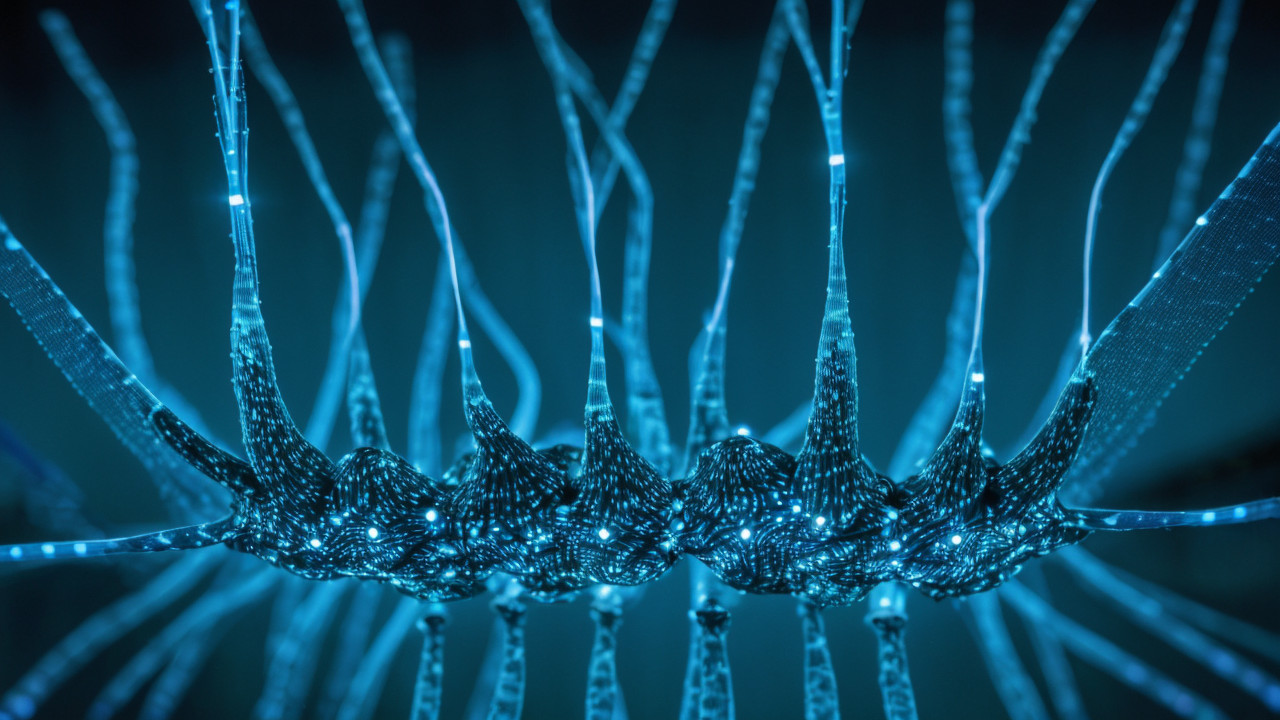
The fundamental building block of deep learning is the artificial neuron, a mathematical abstraction inspired by the biological neurons in the human brain. Each neuron receives multiple inputs, applies a weight to each, sums them up, and then passes the result through a non-linear activation function. This simple operation, when repeated across millions of interconnected neurons and dozens of layers, creates the “deep” in deep learning. The weights and biases within these layers are the parameters that the model learns during the training process.
The architecture of a network dictates how information flows and how features are extracted. In a standard feedforward network, information moves in one direction: from the input layer, through several hidden layers, to the output layer. As noted in the foundational literature at deeplearningbook.org, the depth of these networks allows them to learn increasingly complex features, where early layers might detect simple edges and later layers identify complex objects.
Specialized Architectures: CNNs and RNNs
Not all neural networks are created equal. Depending on the nature of the input data, researchers employ specialized architectures. Convolutional Neural Networks (CNNs) are the gold standard for grid-like data, such as images. By using convolutional layers that apply filters to local regions of an image, CNNs can achieve translation invariance, meaning they can recognize an object regardless of where it appears in the frame.
On the other hand, when dealing with sequential data—such as text, speech, or time-series data—Recurrent Neural Networks (RNNs) are traditionally used. RNNs possess a form of memory, as the output of a hidden layer at one time step is fed back into the network as part of the input for the next time step. While modern architectures like Transformers have largely superseded standard RNNs for many NLP tasks, the concept of processing sequential dependencies remains a cornerstone of deep learning research.
Learning Paradigms: Supervised, Unsupervised, and Beyond
The way a model learns is determined by the type of data it is exposed to and the feedback mechanism available during training. These paradigms are broadly categorized into supervised, unsupervised, and reinforcement learning. Each approach serves a different purpose and requires a distinct strategy for data preparation and model evaluation.
Supervised learning is the most common paradigm in industry today. In this setup, the model is trained on a labeled dataset, meaning each input is paired with the correct output. The goal is to learn a mapping function that can accurately predict the label for new, unseen data. This is used for everything from spam detection to medical image diagnosis. As explored in detailed tutorials on d2l.ai, the quality and quantity of labeled data are often the primary bottlenecks in supervised learning success.
Unsupervised learning, conversely, operates on unlabeled data. The model’s task is to find hidden patterns, structures, or clusters within the data without explicit guidance. This is particularly useful for dimensionality reduction, anomaly detection, and generative modeling. More recently, the rise of self-supervised learning—a subset of unsupervised learning where the data provides its own supervision—has been the key driver behind the massive success of modern LLMs.
- Supervised Learning: Learning from input-output pairs (e.g., classification, regression).
- Unsupervised Learning: Finding intrinsic structures in data (e.g., clustering, association).
- Reinforcement Learning: Learning through trial and error to maximize a reward signal.
The Modern Toolkit: Navigating PyTorch and TensorFlow
For a developer or researcher, the choice of deep learning framework is one of the most critical decisions in a project’s lifecycle. The two dominant players in the ecosystem are PyTorch, developed by Meta’s AI Research lab, and TensorFlow, developed by Google. While both can achieve similar results, they offer fundamentally different experiences in terms of development workflow and deployment.
PyTorch has become the darling of the research community due to its “Pythonic” nature and its use of dynamic computational graphs. In PyTorch, the graph is built on the fly as operations are executed. This makes debugging significantly easier, as you can use standard Python debugging tools to inspect tensors and gradients mid-execution. This flexibility is vital when experimenting with complex, custom neural architectures that change shape during runtime.
TensorFlow, while historically known for its more rigid, static computational graphs, has evolved significantly with the introduction of TensorFlow 2.0 and the integration of Keras. TensorFlow remains a powerhouse in production environments. Its ecosystem, including TensorFlow Serving, TensorFlow Lite for mobile, and TensorFlow Extended (TFX) for end-to-end pipelines, provides a robust framework for deploying models at scale in industrial applications. Choosing between them often comes down to a trade-scale: PyTorch for research flexibility and TensorFlow for production-grade deployment pipelines.
Overcoming the Challenges of Optimization and Regularization
Training a deep neural network is an optimization problem. The objective is to minimize a loss function—a mathematical measure of the error between the model’s prediction and the actual target. The most common method for this is backpropagation, an algorithm that uses the chain rule from calculus to calculate the gradient of the loss function with respect to every weight in the network. These gradients are then used by an optimizer, such as Stochastic Gradient Descent (SGD) or Adam, to update the weights in the direction that reduces error.
However, deep networks are notoriously difficult to train. One of the most significant hurdles is the “vanishing gradient problem,” where gradients become progressively smaller as they are propagated back through many layers, eventually reaching zero and preventing the early layers from learning. Conversely, “exploding gradients” can cause weights to oscillate wildly, leading to model instability. Breakthroughs in activation functions (like ReLU) and architectural innovations (like Residual Connections) have been instrumental in mitigating these issues, as documented in various studies on nature.com.
Another perennial challenge is overfitting, where a model becomes so adept at memorizing the training data that it fails to generalize to new data. To combat this, researchers employ various regularization techniques. Dropout, for instance, randomly ignores a subset of neurons during each training step, forcing the network to learn redundant representations. Weight decay (L2 regularization) penalizes large weights, preventing the model from becoming overly complex. Mastering these optimization and regularization strategies is what separates a practitioner who can build a model from an expert who can build a robust, deployable system.
The Future of Deep Learning: Generative AI and Scalability
We are currently witnessing a paradigm shift from discriminative models (which classify data) to generative models (which create data). The advent of Diffusion models and Transformers has enabled the creation of highly realistic images, videos, and text. The frontier of deep learning is moving toward multi-modal models—systems that can simultaneously process and reason across text, image, audio, and sensor data.
As models grow in scale, the focus is shifting from pure architecture design to the science of “scaling laws.” Researchers are investigating how increasing the amount of compute, data, and parameters impacts model performance. This brings new challenges in efficiency, such as the need for more energy-efficient hardware and techniques like quantization and pruning to make these massive models runnable on edge devices.
The future of deep learning will likely be defined by the quest for “Artificial General Intelligence” (AGI). While we are far from achieving a machine with human-level reasoning across all domains, the trajectory is clear. The integration of symbolic logic with deep learning, the development of more sample-efficient learning algorithms, and the move toward more autonomous, self-correcting systems are the next great frontiers for the AI community.
TL;DR
To master deep learning, focus on these key pillars:
- Foundations: Understand neural architecture, weights, biases, and the importance of activation functions.
- Paradigms: Differentiate between supervised, unsupervised, and reinforcement learning for various use cases.
- Frameworks: Leverage PyTorch for research flexibility and TensorFlow for large-scale production deployment.
- Optimization: Master backpropagation, gradient descent, and regularization techniques like dropout to prevent overfitting.
- Evolution: Stay updated on the shift toward generative AI and multi-modal architectures.