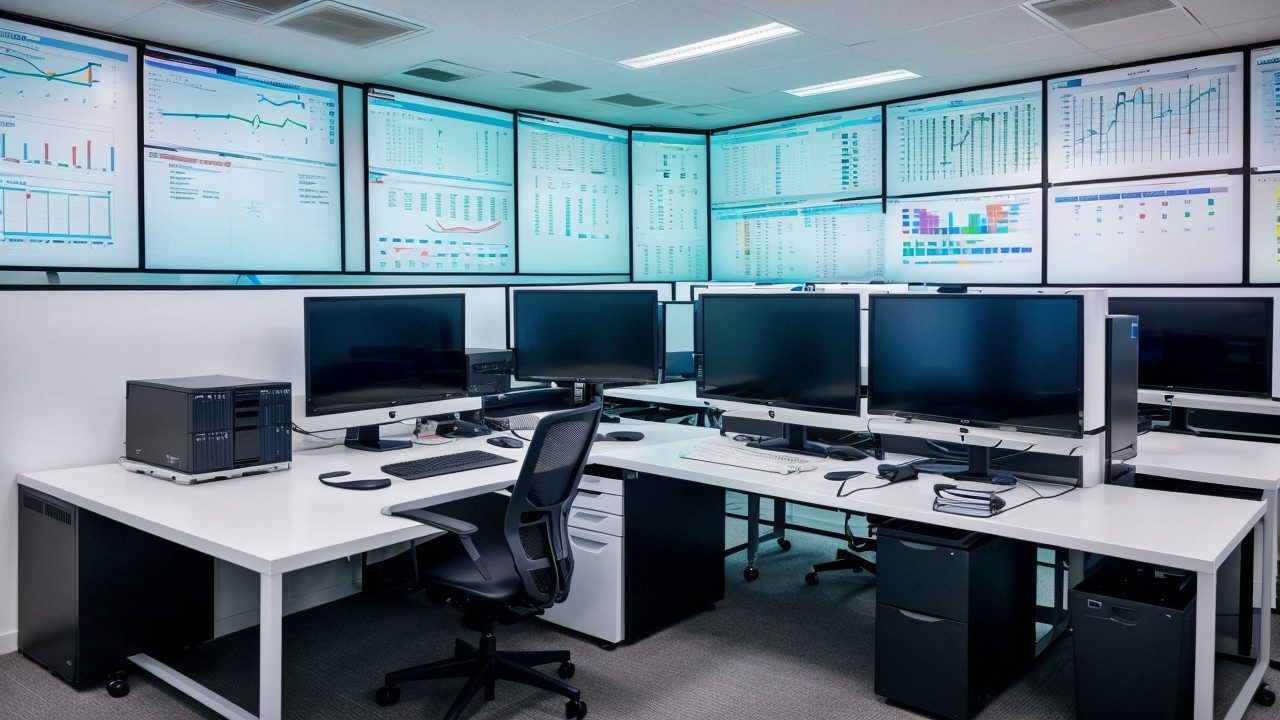

In the modern era, it is almost impossible to go an hour without interacting with some form of technology. From the smartphone in your pocket to the massive server farms powering the global cloud, Information Technology (IT) is the invisible engine driving our civilization. For students entering the field, IT professionals looking to refresh their knowledge, or beginners trying to make sense of the digital landscape, understanding the core pillars of computing is essential. It is not just about knowing how to use a computer; it’s about understanding the complex interplay of hardware, software, networks, and data.
At its heart, Information Technology is the study, design, development, and management of computer-based systems. It encompasses everything from the physical components you can touch to the abstract algorithms that power social media feeds. As we navigate an increasingly digital world, the boundaries of IT continue to expand, incorporating fields like cybersecurity, artificial intelligence, and the Internet of Things (IoT). This guide aims to provide a foundational understanding of these interconnected elements, offering a roadmap through the fundamental concepts of the computing world.
Defining Information Technology and Its Scope
To understand the breadth of the field, we must first define what we mean by Information Technology. While many people equate IT with “fixing computers” or “managing databases,” the discipline is far more expansive. Broadly speaking, IT refers to the use of computers, storage, networking, and other physical devices, infrastructure, and processes to create, process, and exchange all forms of electronic data. According to techtarget.com, the field is centered around the management of information through technology-driven solutions.
The scope of IT can be categorized into several key areas. First, there is the management of infrastructure, which involves the physical and virtual components that allow systems to run. Second, there is the management of data, ensuring that information is accurate, secure, and accessible. Third, there is the application layer, where software is used to solve specific business or personal problems. Whether you are looking at a small-scale local network in a home office or the massive, distributed enterprise networks managed by global corporations, the fundamental principles of IT remain the same.
Understanding this scope is vital for anyone pursuing a career in the industry. It allows you to see that IT is not a siloed department but a foundational layer that supports every other industry, from healthcare and finance to entertainment and education. As technology evolves, the role of IT professionals shifts from mere maintenance to strategic innovation, helping organizations leverage data to gain a competitive edge.
The Core Building Blocks: Hardware and Software
Every computing system, no matter how complex, is built upon two fundamental pillars: hardware and software. Think of hardware as the body and software as the mind. One cannot function effectively without the other. Hardware provides the physical capacity to perform tasks, while software provides the instructions that tell the hardware exactly what to do.
Computer Hardware: The Physical Foundation
Computer hardware refers to the tangible, physical components of a system. When we talk about IT fundamentals, we must understand how these components interact to process information. The most critical component is the Central Processing Unit (CPU), often referred to as the “brain” of the computer. The CPU executes instructions from software and manages the flow of data across the system. Alongside the CPU, we have Random Access Memory (RAM), which serves as the system’s short-term memory, allowing for quick access to data currently in use. However, for long-term storage, we rely on hard drives (HDD) or more modern Solid State Drives (SSD).
Beyond the internal components, hardware also includes input and output (I/O) devices. Input devices, such as keyboards, mice, and microphones, allow humans to communicate with the machine. Output devices, such as monitors, printers, and speakers, translate the machine’s processed data back into a format humans can understand. A well-balanced system requires that these components work in harmony; a powerful CPU is of little use if it is bottlenecked by insufficient RAM or slow storage.
Software: The Intelligence Layer
If hardware is the body, software is the intelligence that animates it. Software can be broadly divided into two categories: system software and application software. System software, the most prominent example being the Operating System (OS) like Windows, macOS, or Linux, acts as the intermediary between the hardware and the user. It manages the hardware resources, handles file systems, and provides a platform for other programs to run. Without an operating system, a computer is merely a collection of inert silicon and metal.
Application software, on the other hand, is designed to perform specific tasks for the user. This includes everything from web browsers and word processors to complex enterprise resource planning (ERP) systems. In the modern era, the line between these two is blurring due to the rise of cloud computing, where much of the “software” we use is actually running on remote servers rather than our local hardware. Understanding this distinction is crucial for troubleshooting and managing modern IT environments.
The Lifecycle of Data Processing
At the core of all computing is the concept of data processing. We often use the terms “data” and “information” interchangeably, but in the context of IT, there is a vital distinction. Data is raw, unorganized facts—numbers, characters, or symbols. Information is what you get when that data is processed, organized, and structured to be meaningful. The goal of any IT system is to transform massive amounts of raw data into actionable intelligence.
The data processing cycle generally follows a four-stage pattern: input, processing, output, and storage. First, data is gathered via input devices. Next, the CPU processes this data according to predefined algorithms. This might involve performing mathematical calculations, sorting lists, or searching for patterns. The third stage is output, where the processed results are presented to the user. Finally, the results are stored in a permanent medium for future use. As noted in various textbooks on IT, the efficiency of this cycle determines the utility of the entire system.
In the age of Big Data, this cycle has become incredibly complex. We are no longer just processing simple spreadsheets; we are processing petabytes of unstructured data from sensors, social media, and satellite imagery. This requires advanced data processing techniques, such as stream processing and distributed computing, to ensure that the information remains relevant and timely. For the IT professional, managing this lifecycle involves ensuring data integrity, security, and availability at every stage.
Networking and IT Infrastructure
No computer is an island. In the modern world, the true power of computing is realized when systems are interconnected. This is the essence of networking. A network is a collection of computers and devices connected via communication channels to share resources and information. These networks can range from a small Local Area Network (LAN) in a single home to a massive Wide Area Network (WAN) that spans continents, such as the Internet itself.
The concept of IT infrastructure refers to the entire ecosystem of these networks, servers, and devices. It is the underlying framework that supports an organization’s digital operations. As explained by cisco.com, enterprise networks are designed to be resilient, scalable, and secure. This infrastructure includes routers and switches that direct traffic, firewalls that protect against threats, and cloud services that provide on-demand computing power.
One of the most significant shifts in recent years has been the move from on-premise infrastructure to cloud-based models. In the past, companies had to build and maintain their own physical data centers. Today, much of this infrastructure is “rented” from providers like Amazon Web Services (lar AWS), Microsoft Azure, or Google Cloud. This shift has democratized access to high-level computing power, allowing even small startups to utilize the same global-scale infrastructure as massive corporations, but it has also introduced new challenges in terms of connectivity and security management.
The Evolution of Computing: From Vacuum Tubes to AI
To truly appreciate where we are, we must look at where we came from. The history of computing is a story of rapid, exponential growth, often categorized into “generations” of computing. Each generation was defined by a major technological breakthrough that made computers smaller, faster, and more efficient.
The first generation of computers (the 1940s and 50s) relied on vacuum tubes. These machines, like the ENIAC, were enormous, occupying entire rooms, and were incredibly prone to failure. The second generation replaced vacuum tubes with transistors, which were much smaller, more reliable, and consumed less power. The third generation introduced integrated circuits (ICs), which allowed engineers to pack many transistors onto a single silicon chip, leading to a massive leap in speed and the birth of the modern computer architecture. According to historical archives found on wikipedia.org, this era laid the groundwork for the microprocessors that define the fourth generation.
The fourth generation, which we are currently in the latter stages of, is defined by the microprocessor—the entire CPU on a single chip. This enabled the rise of personal computers (PCs) and the eventual birth of the Internet. We are now standing on the threshold of the fifth generation, which is characterized by Artificial Intelligence (AI), machine learning, and quantum computing. While previous generations focused on making hardware smaller and faster, the current frontier is about making hardware “smarter,” capable of learning from data and performing tasks that previously required human cognition.
TL;DR
Summary of Key Takeaways:
- Information Technology is the broad discipline of managing data and information through hardware, software, and networks.
- Hardware refers to the physical components (CPU, RAM, Storage), while Software provides the instructions (OS, Applications) that make hardware functional.
- Data Processing is the vital cycle of transforming raw, unorganized data into meaningful, actionable information through input, processing, output, and storage.
- IT Infrastructure and Networking are the interconnected systems (LAN, WAN, Cloud) that allow computers to communicate and share resources globally.
- Computing Generations have evolved from massive, vacuum-tube-based machines to the powerful, AI-driven microprocessors of today, constantly increasing in speed, efficiency, and intelligence.