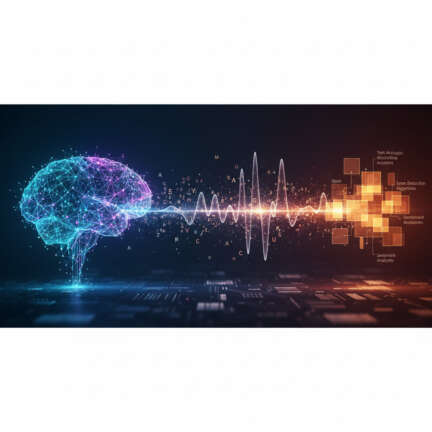

In the modern era of computation, few technologies have reshaped our world as profoundly as deep learning. While the term often appears in headlines alongside discussions about self-driving cars, facial recognition, and generative AI, the underlying mechanics are rooted in decades of mathematical research. Deep learning is not merely a new way to process data; it represents a fundamental shift in how machines learn to perceive and interpret the world around them.
For tech professionals, students, and researchers, understanding deep learning is no longer optional—it is a core competency. Unlike traditional software engineering, where developers write explicit rules for a computer to follow, deep learning allows us to build systems that discover these rules themselves. By mimicking the layered structure of the human brain, these systems can identify patterns in massive, unstructured datasets that would be impossible for a human or a standard algorithm to parse.
This article serves as a deep dive into the architecture, mechanics, and ecosystem of deep learning. We will explore how multilayer neural networks function, the evolution of different architectures, and the tools that power the current AI revolution. Whether you are just starting your journey or looking to deepen your technical intuition, understanding these layers is the first step toward mastering the frontier of artificial intelligence.
The Foundation: From Machine Learning to Deep Learning
To understand deep learning, one must first understand its place within the broader landscape of artificial intelligence. It is helpful to visualize this as a set of nested Russian dolls. At the outermost layer is Artificial Intelligence, the broad concept of machines acting intelligently. Inside that is Machine Learning, a subset of AI that uses statistical techniques to enable computers to learn from data. Deep learning is the most specialized subset of machine learning, characterized by the use of multi-layered neural networks.
The primary distinction between traditional machine learning and deep learning lies in the concept of feature engineering. In classical machine learning, a human expert must manually identify and extract the most important features from the raw data—such as edges in an image or specific keywords in a text—before the model can learn from them. This process is labor-intensive and prone to human error. In contrast, deep learning models perform feature extraction automatically. As the data passes through various layers of the network, the model learns to identify increasingly complex features on its own, wikipedia.org.
The Hierarchy of AI
The hierarchy begins with Artificial Intelligence, which encompasses everything from simple rule-based systems (if-then logic) to complex adaptive systems. Machine Learning sits within this, focusing on algorithms that improve their performance as they are exposed to more data. Deep Learning is the “deep” end of this pool, utilizing many layers of artificial neurons to process data in a hierarchical manner.
This hierarchy is crucial for researchers to understand because it dictates the complexity of the problem being solved. While a simple linear regression (a machine learning technique) might suffice for predicting house prices based on square footage, it would fail miserably at recognizing a face in a photograph. Deep learning excels in these high-dimensional, unstructured environments where the relationship between input and output is too complex for manual feature definition.
Why “Deep” Matters
The term “deep” refers specifically to the number of layers through which the data is transformed. A shallow neural network might only have one or two hidden layers, limiting its ability to represent complex functions. A deep neural network, however, can have dozens, hundreds, or even thousands of layers. Each additional layer allows the network to build a more sophisticated internal representation of the input.
In a deep architecture, the first layers might detect simple patterns like lines or dots. The middle layers might combine those lines to recognize shapes like circles or squares. The final layers can then combine those shapes to recognize complex objects like eyes, noses, or even entire human faces. This hierarchical abstraction is what gives deep learning its incredible power to handle complexity.
The Mechanics of Neural Networks
At its core, a deep learning model is a mathematical function that maps an input to an output. This function is composed of interconnected nodes, or neurons, organized into layers. The magic of the system lies in how the connections between these neurons—known as weights—are adjusted during the training process to minimize error.
To understand how these networks function, we must look at the components of a single neuron and the process of backpropagation. This is where the heavy lifting of learning actually occurs. Without the ability to correct errors, a neural network would be nothing more and nothing more than a random collection of numbers. As noted by geeksforgeeks.org, the training process is an iterative cycle of prediction and correction.
Multilayer Neural Networks and Layers
A standard deep learning model consists of three types of layers: the input layer, the hidden layers, and the output layer. The input layer receives the raw data, such as the pixels of an image. The hidden layers are where the transformation happens; they apply mathematical operations to the data to extract features. Finally, the output layer provides the prediction, such as a probability score indicating whether an image contains a cat or a dog.
Each neuron in a layer is connected to neurons in the subsequent layer. Each connection has an associated weight, which determines the influence of one neuron on another. Additionally, each neuron has a bias, which allows the activation function to shift the output. The combination of weights, biases, and activation functions (like ReLU or Sigmoid) allows the network to model non-linear relationships, which is essential for solving real-world problems.
How Learning Happens: Backpropagation and Gradient Descent
The most critical part of training a neural network is the backpropagation algorithm. When a model makes a prediction, it compares that prediction to the actual correct answer (the ground truth) using a “loss function.” The loss function quantifies the error. If the error is high, the model knows it needs to make significant adjustments.
Backpropagation works by calculating the gradient of the loss function with respect to each weight in the network. It essentially asks, “How much did this specific weight contribute to the total error?” Once these gradients are calculated, an optimization algorithm, typically Gradient Descent, updates the weights in the opposite direction of the gradient. This process is repeated millions of times across vast datasets until the loss function reaches a minimum, meaning the model’s predictions are as accurate as possible.
Key Deep Learning Architectures
Not all deep learning problems are solved with the same type of network. Depending on the nature of the data—whether it is spatial (images), sequential (text), or structured (tabular)—different architectures are required. The evolution of these architectures has been the primary driver of the AI breakthroughs we see today.
The landscape of deep learning is dominated by a few key architectures that have become the industry standard. Understanding when to use a Convolutional Neural Network versus a Transformer is a fundamental skill for any AI practitioner. As ibm.com explains, the choice of architecture is dictated by the inherent structure of the input data.
Convolutional Neural Networks (CNNs)
CNNs are the gold standard for computer vision tasks. They are designed to process data with a grid-like topology, such as pixels in an image. The defining feature of a CNN is the convolutional layer, which uses “filters” that slide across the input to create feature maps. These filters are excellent at detecting local patterns like edges, textures, and shapes.
Following the convolutional layers, CNNs typically use pooling layers to reduce the spatial dimensions of the data, making the computation more efficient and helping the model become invariant to small shifts in the input. This makes CNNs incredibly robust for tasks like object detection, image segmentation, and even medical imaging analysis.
Recurrent Neural Networks (RNNs) and Transformers
While CNNs excel at spatial data, Recurrent Neural Networks (RNNs) were traditionally used for sequential data, such as speech or text. RNNs have “memory” because they take information from previous steps in the sequence as input for the current step. However, standard RNNs struggle with long-term dependencies due to the vanishing gradient problem.
This limitation led to the rise of the Transformer architecture, which has revolutionized Natural Language Processing (NLP). Unlike RNNs, Transformers use a mechanism called “Attention” to look at all parts of a sequence simultaneously, regardless of distance. This allows the model to understand the context of a word based on every other word in a sentence. This architecture is the foundation of Large Language Models (LLMs) like GPT-4, enabling the unprecedented capabilities of modern generative AI.
The Modern Ecosystem: Frameworks and Tools
Building a deep learning model from scratch using only raw mathematics would be an impossible task for most developers. Fortunately, an ecosystem of powerful frameworks and hardware has emerged, allowing researchers to focus on architecture and data rather than low-level implementation details.
The choice of framework often depends on the specific use case—whether you are conducting academic research or deploying a model into a large-scale production environment. Currently, the industry is largely split between two dominant players, each with its own strengths and philosophies.
PyTorch vs. TensorFlow
PyTorch, developed by Meta’s AI Research lab, has become the favorite among the research community. Its primary advantage is its dynamic computational graph, which allows for much more flexibility during the development process. This makes debugging easier and allows researchers to experiment with complex, changing architectures more fluidly. If you are writing a paper or prototyping a new idea, PyTorch is often the go-to choice.
TensorFlow, developed by Google, has historically been the powerhouse of the production world. It is designed with a focus on scalability and deployment. With tools like TensorFlow Extended (TFX) and TensorFlow Lite, it is much easier to take a model from a research notebook and deploy it onto a mobile device or a massive distributed server cluster. While the gap between the two is narrowing, the distinction between research-oriented PyTorch and production-oriented TensorFlow remains a key consideration for engineers.
Hardware Requirements
Deep learning is computationally expensive. The massive number of matrix multiplications required during backpropagation necessitates specialized hardware. While CPUs can technically perform these tasks, they are far too slow for modern deep learning. The industry has moved toward GPUs (Graphics Processing Units) and TPUs (Tensor Processing Units).
GPUs, originally designed for rendering video game graphics, are exceptionally good at the parallel processing tasks required by neural networks. TPUs, custom-built by Google, are even more specialized for the specific tensor operations used in deep learning. For any professional working in this field, understanding the relationship between model complexity and hardware availability is crucial for managing both cost and performance.
Real-World Applications and Future Frontiers
The impact of deep learning is visible in almost every digital interaction we have today. In healthcare, deep learning models are analyzing X-rays and MRIs to detect tumors with higher accuracy than human radiologists. In the automotive industry, they are the “eyes” of autonomous vehicles, allowing cars to distinguish between a pedestrian and a lamppost. In finance, they are used for sophisticated fraud detection and algorithmic trading.
As we look toward the future, the frontier of deep learning is moving toward “Self-Supervised Learning,” where models learn from unlabeled data, much like humans learn by observing the world. We are also seeing the rise of “Multimodal AI,” which can process text, images, and audio all within a single unified architecture. The goal is to move closer to Artificial General Intelligence (AGI)—a system that can perform any intellectual task a human can.
TL;DR
- Core Concept: Deep learning is a subset of machine learning that uses multi-layered neural networks to automatically learn features from data.
- Key Mechanism: The learning process relies on backpropagation and gradient descent to adjust weights and minimize error.
- Architectures: CNNs are the standard for vision; Transformers are the standard for language and sequential data.
- Tools: PyTorch is preferred for research and flexibility, while TensorFlow is widely used for large-scale production.
- Hardware: GPUs and TPUs are essential for handling the massive parallel computations required by deep models.