
Artificial Intelligence (AI) and Machine Learning (ML) have become integral parts of our daily lives, from personalized recommendations on streaming platforms to autonomous vehicles. As we move through 2026, these technologies continue to evolve, offering new possibilities and challenges. But what exactly are AI and ML? How do they differ, and what are their applications? This article aims to provide a comprehensive overview of these technologies, their underlying principles, and their impact on various industries.
Whether you’re a tech enthusiast, a professional in the field, or simply curious about the latest advancements, understanding AI and ML is crucial. These technologies are reshaping industries, from healthcare to finance, and their influence is only set to grow. By the end of this article, you’ll have a clear grasp of AI and ML, their key differences, and their potential future developments.
Understanding Artificial Intelligence
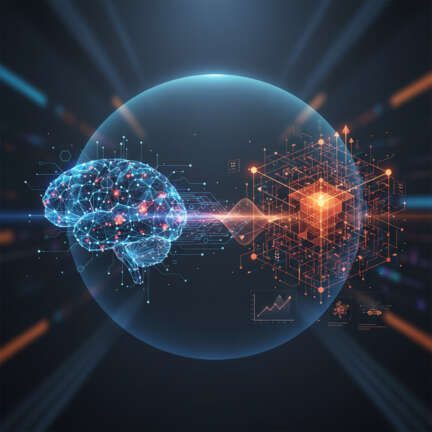
Artificial Intelligence refers to the simulation of human intelligence in machines that are programmed to think and learn. These machines, or AI systems, can perform tasks that typically require human intelligence, such as visual perception, speech recognition, decision-making, and language translation. AI can be categorized into two main types: narrow AI and general AI.
Narrow AI, also known as weak AI, is designed to perform a narrow task, such as facial recognition or internet searches. These systems are highly specialized and excel in their specific domains but lack the ability to perform tasks outside their designated function. On the other hand, general AI, or strong AI, possesses the ability to perform any intellectual task that a human can do. This type of AI is still largely theoretical and remains a significant challenge for researchers.
The Basics of Machine Learning
Machine Learning is a subset of AI that focuses on the development of algorithms that allow computers to learn from data. Unlike traditional programming, where developers explicitly instruct the computer on what to do, ML algorithms use data to train models that can make predictions or decisions without being explicitly programmed. This ability to learn from data makes ML particularly powerful and versatile.
ML algorithms can be broadly classified into three categories: supervised learning, unsupervised learning, and reinforcement learning. Supervised learning involves training models on labeled data, where the correct answers are provided. Unsupervised learning, on the other hand, involves training models on unlabeled data, allowing the algorithm to identify patterns and relationships on its own. Reinforcement learning involves training models through trial and error, using rewards and punishments to guide the learning process.
Key Differences Between AI and ML
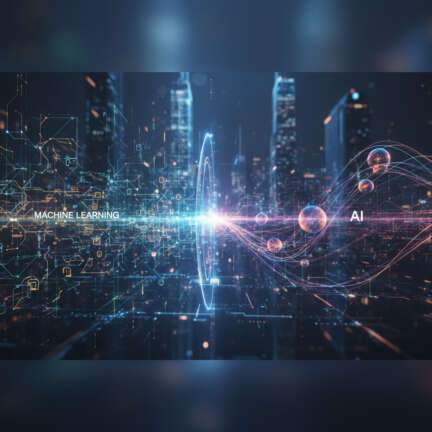
While AI and ML are often used interchangeably, they are not the same. AI is a broader concept that encompasses any technique that enables machines to mimic human intelligence. ML, on the other hand, is a specific approach to achieving AI. In other words, ML is a subset of AI that focuses on learning from data. For more detailed insights, you can refer to columbia.edu.
One key difference lies in their scope. AI can include any method that allows machines to perform tasks that require human intelligence, including rule-based systems and expert systems. ML, however, specifically involves learning from data. Another difference is in their applications. AI can be used for a wide range of tasks, from playing chess to driving a car. ML is primarily used for tasks that involve predicting outcomes or making decisions based on data.
Applications of AI and ML
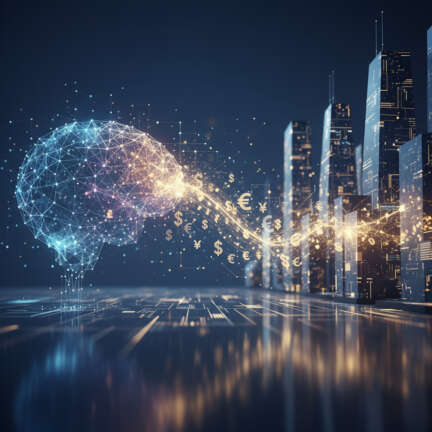
AI and ML have a wide range of applications across various industries. In healthcare, these technologies are used for diagnosing diseases, developing personalized treatment plans, and predicting patient outcomes. In finance, AI and ML are used for fraud detection, risk assessment, and algorithmic trading. In retail, these technologies are used for personalized recommendations, inventory management, and customer service.
One of the most exciting applications of AI and ML is in the field of Natural Language Processing (NLP). NLP enables machines to understand and interpret human language, allowing for applications such as language translation, sentiment analysis, and chatbots. Generative AI, a subset of NLP, can create new content, such as text, images, and music, based on learned patterns. For more on this, check out mitsloan.mit.edu.
The Future of AI and ML
The future of AI and ML is bright, with ongoing advancements in algorithms, computing power, and data availability. One of the most promising areas of development is in the field of deep learning, a subset of ML that involves training neural networks with multiple layers. Deep learning has already led to significant breakthroughs in areas such as computer vision and speech recognition.
Another area of development is in the field of explainable AI, which aims to make AI systems more transparent and understandable. As AI becomes more integrated into our lives, it is crucial that we understand how these systems make decisions. This is particularly important in high-stakes areas such as healthcare and finance, where the consequences of incorrect decisions can be severe. For further reading, visit ibm.com.
Challenges and Ethical Considerations
Despite their potential, AI and ML also present significant challenges and ethical considerations. One major challenge is the need for large amounts of high-quality data to train ML models. This can be a significant barrier for smaller organizations and can lead to biases in the data that are used to train models.
Ethical considerations include issues such as privacy, accountability, and the potential for AI systems to perpetuate or amplify existing biases. As AI becomes more integrated into our lives, it is crucial that we address these challenges and consider the ethical implications of these technologies.
TL;DR
AI and ML are transformative technologies that are reshaping industries and our daily lives. AI refers to the simulation of human intelligence in machines, while ML is a specific approach to achieving AI that involves learning from data. These technologies have a wide range of applications, from healthcare to finance, and their potential is only set to grow. However, they also present significant challenges and ethical considerations that must be addressed.
As we move through 2026, the future of AI and ML is bright, with ongoing advancements in algorithms, computing power, and data availability. By understanding these technologies and their implications, we can harness their potential to create a better future for all.