
Deep learning has emerged as a transformative force in the realm of artificial intelligence (AI), revolutionizing industries from healthcare to autonomous vehicles. As a subset of machine learning, deep learning leverages neural networks with many layers to analyze vast amounts of data, uncovering patterns and insights that were previously beyond reach. For professionals and students in computer science and related fields, understanding deep learning is not just an advantage—it’s a necessity. This article delves into the fundamentals of deep learning, its applications, and the cutting-edge advancements that are shaping the future of technology.
From robotics to natural language processing, deep learning algorithms are at the heart of some of the most groundbreaking innovations of our time. Whether you’re a seasoned professional looking to expand your knowledge or a student eager to explore the possibilities of AI, this guide will provide you with the insights and tools you need to navigate the complex landscape of deep learning. So, let’s dive in and explore the fascinating world of deep learning together.
Understanding Deep Learning
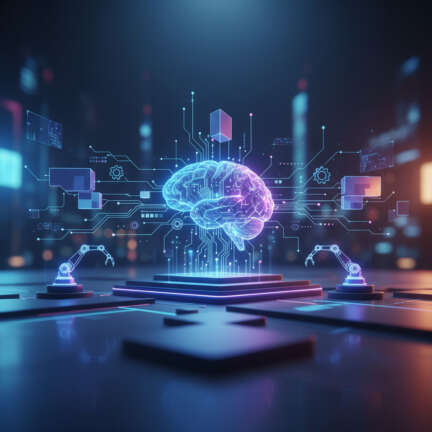
Deep learning is a subset of machine learning that uses neural networks with many layers to model and solve complex problems. These neural networks, often referred to as deep neural networks, are inspired by the structure and function of the human brain. The ‘depth’ in deep learning comes from the multiple layers of neurons that process and transform data, allowing the network to learn hierarchical representations of the input data.
The key strength of deep learning lies in its ability to automatically learn and extract features from raw data. Traditional machine learning methods often require manual feature engineering, where domain experts need to identify and extract relevant features from the data. In contrast, deep learning models can learn these features directly from the data, making them highly adaptable and scalable. This ability to learn from data has made deep learning particularly effective for tasks involving large datasets and complex patterns, such as image recognition, speech recognition, and natural language processing.
For a more detailed understanding of deep learning, you can refer to resources like the Deep Learning Book by Ian Goodfellow, Yoshua Bengio, and Aaron Courville, which provides a comprehensive introduction to the field.
Neural Networks: The Building Blocks of Deep Learning
Neural networks are the foundation of deep learning. They consist of layers of interconnected nodes, or neurons, that process input data and produce an output. The simplest neural network is a single-layer network, which can be used for basic tasks like linear regression. However, as the complexity of the task increases, so does the need for more layers. This is where deep neural networks come into play.
Deep neural networks can have hundreds or even thousands of layers, each performing a specific transformation on the input data. These transformations allow the network to learn increasingly abstract representations of the data, enabling it to capture intricate patterns and relationships. The depth of the network is what gives deep learning its power and flexibility, allowing it to tackle a wide range of problems across different domains.
The Applications of Deep Learning
Deep learning has a wide range of applications across various industries. One of the most well-known applications is in computer vision, where deep learning algorithms are used to analyze and interpret images and videos. This has led to advancements in areas such as autonomous vehicles, medical imaging, and surveillance systems. For example, deep learning models can be trained to detect tumors in medical images, assisting doctors in early diagnosis and treatment.
Another area where deep learning has made significant strides is natural language processing (NLP). NLP involves the interaction between computers and humans through natural language. Deep learning models have been instrumental in developing applications like virtual assistants, language translation services, and sentiment analysis tools. These models can understand and generate human language, making them invaluable for tasks that require human-like interaction.
For more information on the applications of deep learning, you can explore the Dive into Deep Learning website, which offers a wealth of resources and tutorials on various deep learning applications.
Robotics and Automation
Deep learning is also playing a crucial role in the field of robotics and automation. Robots equipped with deep learning algorithms can perform complex tasks with a high degree of accuracy and precision. For instance, industrial robots can use deep learning to identify and manipulate objects on an assembly line, while service robots can assist in tasks like cleaning and delivery. The ability of deep learning models to learn from experience and adapt to new situations makes them ideal for robotic applications.
In addition to physical robots, deep learning is also being used to develop software robots, or bots, that can automate repetitive tasks. These bots can handle everything from customer service inquiries to data entry, freeing up human workers to focus on more creative and strategic tasks. The integration of deep learning into robotics and automation is transforming industries and paving the way for a future where machines and humans work together seamlessly.
Advancements in Deep Learning
The field of deep learning is constantly evolving, with new advancements and breakthroughs being made all the time. One of the most exciting recent developments is the emergence of physics-informed neural networks (PINNs). PINNs combine the power of deep learning with the principles of physics, allowing models to incorporate physical laws and constraints into their learning process. This makes them particularly useful for solving complex problems in fields like fluid dynamics, materials science, and quantum mechanics.
Another area of advancement is the development of more efficient and scalable deep learning algorithms. As the amount of data continues to grow, so does the need for models that can process and analyze this data quickly and efficiently. Researchers are exploring new architectures and techniques, such as attention mechanisms and transformers, to improve the performance and scalability of deep learning models. These advancements are making deep learning more accessible and practical for a wider range of applications.
For a deeper dive into the latest advancements in deep learning, you can check out the Deep Learning Systems course, which covers cutting-edge research and developments in the field.
The Future of Deep Learning
The future of deep learning is bright, with endless possibilities and potential. As technology continues to advance, we can expect deep learning to play an even more significant role in our lives. From personalized medicine to smart cities, the applications of deep learning are limited only by our imagination. However, with great power comes great responsibility, and it is essential to consider the ethical implications of deep learning and AI as a whole.
One of the key challenges facing the future of deep learning is the need for more diverse and representative datasets. Currently, many deep learning models are trained on datasets that are biased towards certain groups or demographics, leading to potential biases and inequalities in their outputs. Addressing this challenge will require a concerted effort from researchers, developers, and policymakers to ensure that deep learning models are fair, transparent, and accountable.
TL;DR
In this article, we’ve explored the fundamentals of deep learning, its applications, and the latest advancements in the field. We’ve seen how deep learning is transforming industries and paving the way for a future where machines and humans work together seamlessly. From computer vision to natural language processing, deep learning algorithms are at the heart of some of the most groundbreaking innovations of our time.
As we look to the future, it is clear that deep learning will continue to play a crucial role in shaping the world around us. However, it is essential to approach this powerful technology with caution and consider the ethical implications of its use. By doing so, we can ensure that deep learning is used for the benefit of all, creating a more equitable and sustainable future for generations to come.