
In the rapidly evolving landscape of artificial intelligence, one field stands out for its ability to enable machines to interpret and understand the visual world: computer vision. This technology is transforming industries by automating tasks that were once exclusively human domains, such as image analysis, object recognition, and visual data interpretation. From healthcare to autonomous vehicles, computer vision is paving the way for innovative solutions and efficiencies.
But what exactly is computer vision, and how does it work? In this article, we’ll delve into the fundamentals of computer vision, its applications, and the underlying technologies that make it possible. Whether you’re a tech professional looking to expand your knowledge or an enthusiast curious about the latest advancements in AI, this guide will provide you with a comprehensive understanding of computer vision.
What is Computer Vision?
Computer vision is a branch of artificial intelligence that focuses on enabling machines to interpret and make decisions based on visual inputs. Essentially, it’s about teaching computers to ‘see’ and understand the world in a way that’s similar to how humans do. This involves capturing, processing, and analyzing digital images or videos to extract meaningful information.
The concept of computer vision has been around for decades, but recent advancements in machine learning and deep learning have significantly enhanced its capabilities. Today, computer vision systems can perform complex tasks such as facial recognition, object detection, and even reading handwritten text with remarkable accuracy. These systems rely on a combination of algorithms, neural networks, and vast amounts of data to achieve human-like visual understanding.
The Core Components of Computer Vision
To understand how computer vision works, it’s essential to break down its core components. These include image acquisition, preprocessing, feature extraction, and pattern recognition. Image acquisition involves capturing visual data using cameras or other sensors. Preprocessing steps, such as noise reduction and contrast enhancement, prepare the images for further analysis. Feature extraction identifies key elements within the images, such as edges, shapes, and textures. Finally, pattern recognition algorithms analyze these features to classify and interpret the visual data.
One of the most significant advancements in computer vision has been the use of deep learning techniques, particularly convolutional neural networks (CNNs). These neural networks are designed to automatically learn and extract features from images, eliminating the need for manual feature engineering. CNNs have proven to be highly effective in tasks such as object recognition and image classification, making them a cornerstone of modern computer vision systems.
Applications of Computer Vision
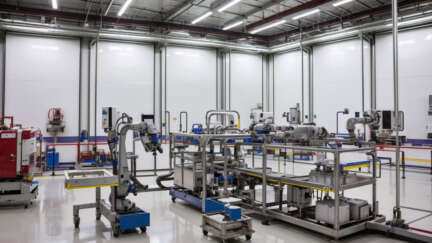
Computer vision has a wide range of applications across various industries. In healthcare, it’s used for medical imaging analysis, assisting in the diagnosis of diseases such as cancer. In automotive, computer vision enables advanced driver-assistance systems (ADAS) and autonomous vehicles to navigate and make real-time decisions. Retailers use computer vision for inventory management and customer behavior analysis, while manufacturers employ it for quality control and defect detection.
The versatility of computer vision extends to other sectors as well. In agriculture, it’s used for crop monitoring and disease detection. In security, computer vision systems enhance surveillance and facial recognition capabilities. Even in the entertainment industry, computer vision plays a crucial role in augmented reality (AR) and virtual reality (VR) applications, creating immersive experiences for users.
Real-World Examples
To illustrate the impact of computer vision, let’s look at a few real-world examples. One notable application is in the field of autonomous vehicles. Companies like Tesla and Waymo use computer vision to enable their self-driving cars to interpret road conditions, detect obstacles, and make driving decisions. These systems rely on a combination of cameras, sensors, and machine learning algorithms to achieve real-time visual understanding.
Another compelling example is in the healthcare sector. Computer vision algorithms are used to analyze medical images, such as X-rays and MRIs, to detect anomalies and assist in diagnosis. For instance, AI-powered systems can identify early signs of diseases like breast cancer in mammograms, potentially saving lives through early intervention. According to aws.amazon.com, these advancements are revolutionizing the way healthcare professionals approach diagnosis and treatment.
The Role of Machine Learning and Deep Learning
Machine learning and deep learning are at the heart of modern computer vision systems. These technologies enable computers to learn from vast amounts of data and improve their performance over time. In the context of computer vision, machine learning algorithms are trained on large datasets of images to recognize patterns and make accurate predictions.
Deep learning, a subset of machine learning, has been particularly transformative. Convolutional neural networks (CNNs) are a type of deep learning model specifically designed for image analysis. These networks consist of multiple layers of artificial neurons that process and extract features from images. By training CNNs on extensive datasets, computer vision systems can achieve high levels of accuracy in tasks such as object detection and image classification.
The Future of Computer Vision
The future of computer vision is bright, with ongoing advancements in AI and machine learning pushing the boundaries of what’s possible. Emerging technologies, such as edge computing and quantum computing, are expected to further enhance the capabilities of computer vision systems. Edge computing, for instance, allows for real-time processing of visual data on devices like smartphones and IoT sensors, reducing the need for cloud-based processing.
Quantum computing, on the other hand, has the potential to revolutionize the way computer vision algorithms are trained and executed. By leveraging the principles of quantum mechanics, these systems can process vast amounts of data at unprecedented speeds, leading to more accurate and efficient computer vision applications. As these technologies continue to evolve, we can expect computer vision to play an even more significant role in various industries.
Challenges and Considerations
Despite its many advancements, computer vision still faces several challenges. One of the primary concerns is data privacy and security. As computer vision systems rely on vast amounts of visual data, ensuring the protection of sensitive information is crucial. Additionally, biases in training data can lead to inaccurate or unfair outcomes, highlighting the need for diverse and representative datasets.
Another challenge is the computational complexity of computer vision algorithms. Training and deploying deep learning models require significant computational resources, which can be a barrier for smaller organizations. However, advancements in hardware, such as graphics processing units (GPUs) and tensor processing units (TPUs), are helping to mitigate these challenges by providing more efficient and scalable solutions.
TL;DR
Computer vision is a transformative technology that enables machines to interpret and understand visual inputs. Powered by machine learning and deep learning, it has a wide range of applications across industries, from healthcare to autonomous vehicles. While challenges such as data privacy and computational complexity remain, ongoing advancements in AI and hardware are paving the way for even more innovative solutions. As we continue to explore the potential of computer vision, its impact on our daily lives and industries will only grow, making it an exciting field to watch and engage with.