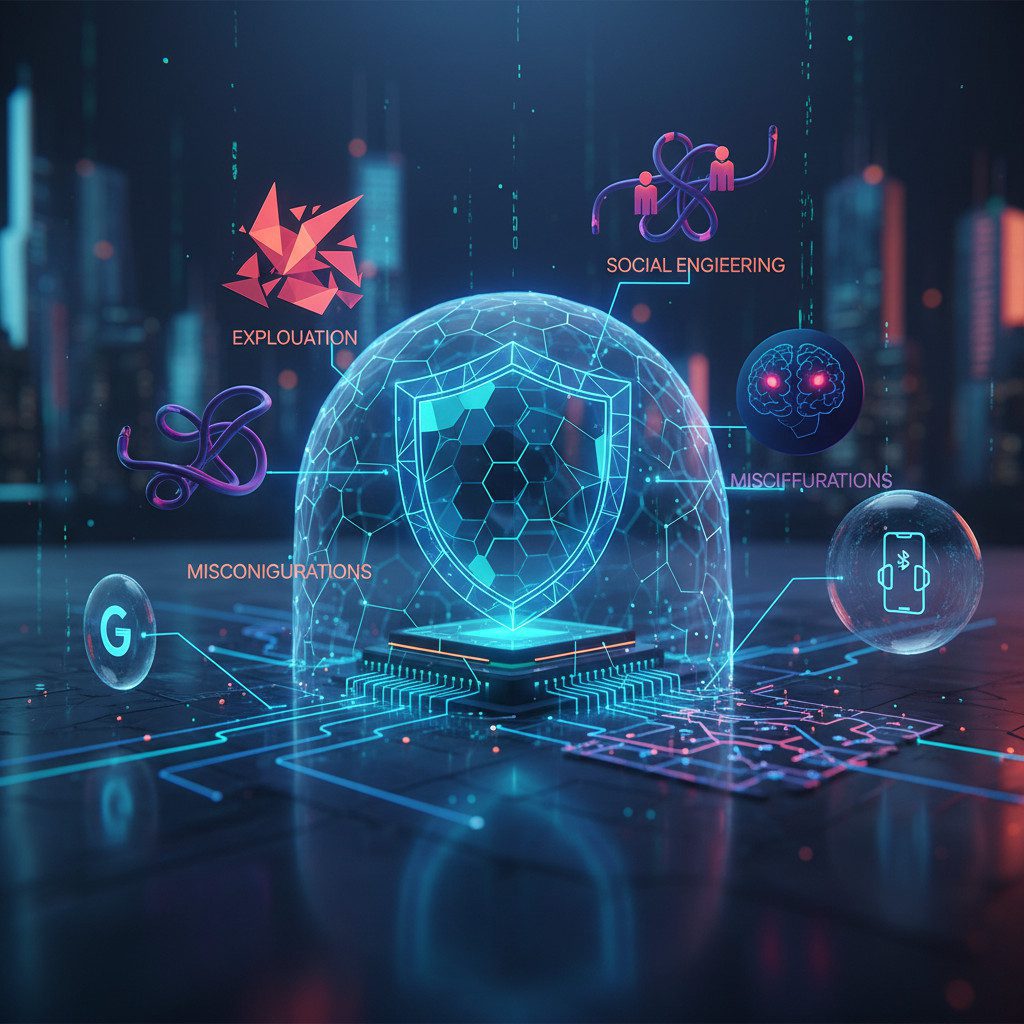

As we look ahead to 2026, the cybersecurity landscape is evolving at an unprecedented pace. IT professionals, cybersecurity experts, and business leaders must stay informed about emerging threats and trends to protect their organizations effectively. The future of cybersecurity is shaped by a combination of technological advancements and persistent human factors, making it a complex and dynamic field.
In this article, we will delve into the key trends that will define cybersecurity in 2026. From the exploitation of misconfigurations to the rise of AI-driven threats and the continued relevance of social engineering, we will explore the challenges and opportunities that lie ahead. By understanding these trends, you can better prepare your organization to navigate the cybersecurity challenges of the future.
The Persistent Threat of Misconfigurations
Misconfigurations have long been a significant vulnerability in cybersecurity. In 2026, this trend is expected to continue, as the complexity of IT environments grows. Misconfigurations can occur in various systems, including cloud platforms, network devices, and applications. These errors can leave systems exposed to exploitation, providing attackers with easy entry points.
According to a cybersecurity advisory from cisa.gov, misconfigurations are often the result of human error, rushed deployments, or lack of proper security practices. To mitigate this risk, organizations must implement robust configuration management processes, conduct regular audits, and ensure that all team members are trained in best practices for system configuration.
Common Types of Misconfigurations
Some of the most common types of misconfigurations include default settings, incorrect permissions, and unpatched systems. Default settings are often set to prioritize usability over security, making them a prime target for attackers. Incorrect permissions can lead to unauthorized access to sensitive data, while unpatched systems can be exploited through known vulnerabilities.
To address these issues, organizations should adopt a proactive approach to configuration management. This includes using automated tools to detect and remediate misconfigurations, implementing least privilege access controls, and regularly updating and patching systems. By taking these steps, you can significantly reduce the risk of exploitation due to misconfigurations.
The Rise of AI-Driven Threats
Artificial Intelligence (AI) is transforming the cybersecurity landscape, both as a tool for defense and a weapon for attack. In 2026, AI-driven threats are expected to become more sophisticated and prevalent. Attackers are leveraging AI to automate attacks, identify vulnerabilities, and evade detection. This poses a significant challenge for cybersecurity professionals, who must adapt their strategies to counter these advanced threats.
A report from thehackernews.com highlights the growing use of AI in cyberattacks. For example, AI can be used to generate convincing phishing emails, automate the exploitation of vulnerabilities, and even mimic human behavior to bypass security measures. To combat these threats, organizations must invest in AI-powered security solutions that can detect and respond to attacks in real-time.
AI in Cyber Defense
AI is not just a threat; it is also a powerful tool for cyber defense. AI-powered security solutions can analyze vast amounts of data to identify patterns and anomalies that may indicate an attack. These solutions can also automate responses to threats, reducing the time and effort required to mitigate risks. By integrating AI into their cybersecurity strategies, organizations can enhance their ability to detect, prevent, and respond to attacks.
However, it is essential to recognize that AI is not a silver bullet. It must be used in conjunction with other security measures, such as robust access controls, regular updates, and employee training. By combining AI with traditional security practices, organizations can create a comprehensive defense strategy that is capable of withstanding the evolving threats of 2026.
Social Engineering: The Human Factor
Despite advancements in technology, social engineering remains a significant threat to cybersecurity. In 2026, attackers will continue to exploit human psychology to gain access to systems and data. Social engineering attacks can take many forms, including phishing, pretexting, and baiting. These attacks are often successful because they prey on human emotions, such as fear, curiosity, and trust.
According to a cybersecurity advisory from cisa.gov, social engineering attacks are becoming more sophisticated and targeted. Attackers are using personalized information to create convincing messages that are difficult to detect. To protect against these attacks, organizations must prioritize employee training and awareness. By educating employees about the signs of social engineering and the importance of vigilance, organizations can reduce the risk of falling victim to these attacks.
Best Practices for Social Engineering Defense
Some best practices for defending against social engineering attacks include implementing multi-factor authentication (MFA), conducting regular phishing simulations, and encouraging a culture of security awareness. MFA adds an extra layer of security by requiring users to provide two or more forms of identification before accessing systems. Phishing simulations can help employees recognize and respond to phishing attempts, while a culture of security awareness fosters vigilance and responsibility among all team members.
By combining technical solutions with human-centered approaches, organizations can create a robust defense against social engineering attacks. It is essential to recognize that cybersecurity is not just about technology; it is also about people. By empowering employees with the knowledge and tools they need to protect themselves and their organizations, you can significantly reduce the risk of social engineering exploitation.
Emerging Threats: Bluetooth Audio Accessories and Google Fast Pair
In 2026, emerging technologies will present new cybersecurity challenges. One such challenge is the exploitation of Bluetooth audio accessories. As more devices become connected, attackers are finding new ways to exploit these connections for malicious purposes. Bluetooth audio accessories, such as headphones and speakers, can be used to eavesdrop on conversations, intercept data, or even deliver malware.
A report from securityweek.com highlights the risks associated with Bluetooth audio accessories. For example, attackers can use a technique called “bluebugging” to gain unauthorized access to a device through its Bluetooth connection. To mitigate these risks, organizations should ensure that all Bluetooth devices are securely configured, regularly updated, and used with caution.
Securing Bluetooth Connections
To secure Bluetooth connections, organizations should implement strong authentication measures, such as requiring a PIN or passkey for pairing. They should also disable Bluetooth when it is not in use and keep all devices updated with the latest security patches. By taking these steps, organizations can reduce the risk of exploitation through Bluetooth audio accessories.
Additionally, organizations should be aware of the risks associated with Google Fast Pair, a feature that allows users to quickly connect Bluetooth devices to their Google accounts. While Fast Pair can enhance user experience, it also presents a potential security risk. Attackers can exploit this feature to gain access to a user’s account or device. To mitigate this risk, organizations should ensure that all devices using Google Fast Pair are securely configured and monitored for suspicious activity.
TL;DR
As we look ahead to 2026, the cybersecurity landscape is shaped by a combination of technological advancements and persistent human factors. Misconfigurations, AI-driven threats, and social engineering will continue to pose significant challenges for IT professionals and business leaders. To protect their organizations, it is essential to stay informed about emerging threats and trends, implement robust security measures, and prioritize employee training and awareness.
By understanding the key trends that will define cybersecurity in 2026, you can better prepare your organization to navigate the challenges of the future. From adopting AI-powered security solutions to securing Bluetooth connections and defending against social engineering attacks, a comprehensive and proactive approach to cybersecurity is essential for safeguarding your organization’s data and systems.