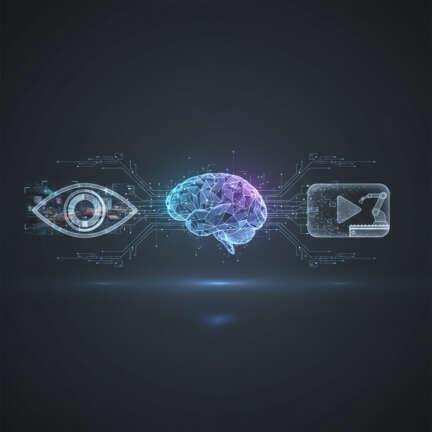

In the realm of Artificial Intelligence (AI), few technologies have the potential to transform our world as profoundly as Computer Vision. This field, dedicated to enabling machines to interpret and understand the visual world, is at the forefront of innovations ranging from autonomous vehicles to advanced medical diagnostics. For developers, researchers, and professionals in AI, understanding Computer Vision is not just beneficial—it’s essential.
Computer Vision leverages techniques from Machine Learning, Deep Learning, and Neural Networks to process and analyze digital images and videos. By mimicking the human visual system, it allows machines to perform tasks such as object recognition, image processing, and video analysis. Whether you’re a seasoned professional or just diving into the field, this guide will walk you through the fundamentals, applications, and future trends of Computer Vision.
Understanding Computer Vision
Computer Vision is a branch of AI that enables machines to derive meaningful information from digital images, videos, and other visual inputs. This field combines techniques from image processing, pattern recognition, and machine learning to interpret and understand visual data. Essentially, it gives machines the ability to ‘see’ and make decisions based on what they ‘see.’
At its core, Computer Vision involves several key steps: capturing visual data through cameras or other sensors, preprocessing this data to enhance its quality, analyzing the data to extract relevant features, and finally, making decisions or predictions based on the analysis. This process is akin to how humans perceive and interpret visual information, but with the added power of computational algorithms.
For a deeper understanding of the theoretical foundations of Computer Vision, you can explore resources like the book ‘Computer Vision: Algorithms and Applications’ available on springer.com.
Key Techniques in Computer Vision
Computer Vision employs a variety of techniques to process and analyze visual data. Some of the most common techniques include:
- Image Processing: This involves enhancing the quality of images, removing noise, and preparing them for further analysis. Techniques like filtering, thresholding, and edge detection are commonly used.
- Pattern Recognition: This technique focuses on identifying patterns and structures within images. It often involves training machine learning models to recognize specific patterns.
- Object Recognition: This is the process of identifying and classifying objects within an image. It’s widely used in applications like autonomous vehicles and surveillance systems.
These techniques are often combined to create robust systems capable of handling complex visual tasks. For example, an autonomous vehicle might use image processing to clean up the visual data from its cameras, pattern recognition to identify lanes and other vehicles, and object recognition to avoid obstacles.
The Role of AI in Computer Vision
AI plays a crucial role in Computer Vision, providing the algorithms and models that enable machines to interpret visual data. Machine Learning, a subset of AI, is particularly important as it allows systems to improve their performance over time by learning from data. Deep Learning, another subset of AI, uses neural networks to process large amounts of data and make accurate predictions.
Neural Networks, inspired by the human brain, are particularly effective at processing visual data. Convolutional Neural Networks (CNNs), for example, are commonly used in Computer Vision tasks due to their ability to automatically and adaptively learn spatial hierarchies of features from input images.
For more insights into how AI is transforming Computer Vision, you can visit ibm.com.
Applications of AI in Computer Vision
AI’s impact on Computer Vision is evident in numerous applications across various industries. Here are a few examples:
- Autonomous Vehicles: AI-powered Computer Vision enables self-driving cars to navigate roads, avoid obstacles, and make decisions based on visual data.
- Medical Imaging: In healthcare, AI-driven Computer Vision systems assist in diagnosing diseases, analyzing medical images, and even performing surgeries.
- Surveillance: AI enhances surveillance systems by enabling real-time object recognition and tracking, improving security and public safety.
These applications highlight the transformative potential of AI in Computer Vision, making it a critical area of research and development.
Challenges in Computer Vision
Despite its advancements, Computer Vision faces several challenges. One of the primary challenges is the need for large amounts of high-quality data to train machine learning models. Collecting and labeling this data can be time-consuming and expensive. Additionally, the performance of Computer Vision systems can be affected by variations in lighting, angles, and other environmental factors.
Another challenge is the interpretability of AI models. While deep learning models can achieve high accuracy, their decision-making processes are often a ‘black box,’ making it difficult to understand how they arrive at their conclusions. This lack of transparency can be a significant barrier in applications where explainability is crucial, such as healthcare.
For a comprehensive overview of the challenges and solutions in Computer Vision, you can refer to resources like geeksforgeeks.org.
The Future of Computer Vision
The future of Computer Vision is bright, with ongoing advancements in AI and machine learning promising to enhance its capabilities further. Emerging technologies like edge computing, which allows data processing to occur closer to the data source, can improve the efficiency and speed of Computer Vision systems. Additionally, the integration of Computer Vision with other AI technologies, such as natural language processing, can lead to more sophisticated applications.
As AI continues to evolve, we can expect Computer Vision to become more accurate, reliable, and versatile. This will open up new possibilities in industries ranging from manufacturing to entertainment, making Computer Vision an exciting field to watch.
TL;DR
Computer Vision is a transformative field within AI that enables machines to interpret and understand visual data. It leverages techniques from image processing, pattern recognition, and object recognition to perform tasks ranging from autonomous navigation to medical diagnostics. AI, particularly Machine Learning and Deep Learning, plays a crucial role in enhancing the capabilities of Computer Vision systems. Despite challenges like data requirements and model interpretability, the future of Computer Vision is promising, with advancements in AI and emerging technologies set to further revolutionize the field.
For developers, researchers, and professionals in AI, staying informed about the latest trends and techniques in Computer Vision is essential. Whether you’re looking to implement Computer Vision in your projects or simply want to understand its potential, this guide provides a comprehensive overview of the field and its exciting possibilities.