
In the realm of artificial intelligence (AI), deep learning has emerged as a revolutionary force, driving unprecedented advancements in various fields. From self-driving cars to virtual assistants, deep learning algorithms are at the heart of modern AI applications. This article delves into the intricacies of deep learning, its relationship with machine learning and neural networks, and its transformative impact on technology.
For developers, data scientists, and researchers, understanding deep learning is crucial. It empowers professionals to harness the full potential of AI, creating innovative solutions that push the boundaries of what machines can achieve. Whether you’re a seasoned expert or a curious beginner, this guide will provide valuable insights into the world of deep learning.
Understanding Deep Learning
Deep learning is a subset of machine learning that utilizes neural networks with many layers (hence ‘deep’) to model complex patterns in data. These neural networks, known as deep neural networks, are capable of learning hierarchical representations of data, making them exceptionally powerful for tasks like image recognition, natural language processing, and speech synthesis.
According to wikipedia.org, deep learning algorithms can automatically discover patterns and features in raw data, eliminating the need for manual feature engineering. This autonomy makes deep learning particularly useful for handling large-scale, high-dimensional data.
Neural Networks: The Backbone of Deep Learning
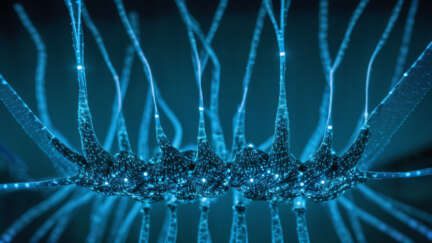
Neural networks are computational models inspired by the human brain. They consist of interconnected nodes or ‘neurons’ organized in layers. Each layer performs a specific transformation on the input data, progressively extracting higher-level features. In deep learning, the depth of the network—i.e., the number of layers—allows the model to learn increasingly abstract representations.
For a comprehensive understanding of neural networks, refer to deeplearningbook.org. This resource provides an in-depth look at the architecture and functioning of neural networks, offering practical examples and theoretical insights.
The Evolution of Deep Learning
Deep learning has evolved significantly since its inception. Early neural networks were limited by computational constraints and the lack of large datasets. However, advancements in hardware, particularly graphics processing units (GPUs), and the availability of big data have propelled deep learning into the mainstream.
ResearchGate’s publication researchgate.net highlights the historical milestones in deep learning, from the development of the backpropagation algorithm to the advent of convolutional neural networks (CNNs) and recurrent neural networks (RNNs). These milestones have paved the way for modern deep learning applications.
Key Milestones in Deep Learning
The introduction of the backpropagation algorithm in the 1980s enabled the training of multi-layer neural networks. This breakthrough allowed researchers to develop more complex models capable of learning from data. The 2000s saw the rise of CNNs, which revolutionized image processing tasks. More recently, RNNs and their variants, like long short-term memory (LSTM) networks, have enhanced the capabilities of natural language processing systems.
For a detailed exploration of these milestones, check out udlbook.github.io. This resource offers a chronological overview of deep learning’s evolution, providing context for its current state and future directions.
Applications of Deep Learning
Deep learning’s versatility makes it applicable to a wide range of industries and use cases. In healthcare, deep learning algorithms analyze medical images to detect diseases like cancer with high accuracy. In finance, they predict stock market trends and detect fraudulent transactions. The automotive industry leverages deep learning for autonomous driving, while the entertainment sector uses it to recommend personalized content to users.
GeeksforGeeks’ article geeksforgeeks.org provides a comprehensive list of deep learning applications, showcasing its transformative potential across various domains. From virtual assistants like Siri and Alexa to advanced robotics, deep learning is reshaping the way we interact with technology.
Multi-View Deep Learning
Multi-view deep learning is an emerging area that integrates data from multiple sources or perspectives to improve model performance. This approach is particularly useful in scenarios where data is inherently multi-modal, such as in multimedia applications or multi-sensor fusion. By leveraging information from different views, multi-view deep learning models can achieve more robust and accurate predictions.
For example, in computer vision, combining data from RGB images and depth sensors can enhance object recognition tasks. Similarly, in natural language processing, incorporating text and speech data can improve language understanding and generation systems. Multi-view deep learning represents a promising direction for future research and development in the field.
Challenges and Future Directions
Despite its impressive capabilities, deep learning faces several challenges. The need for large amounts of labeled data can be a bottleneck, especially in domains where data is scarce or expensive to obtain. Additionally, deep learning models are often criticized for their lack of interpretability, making it difficult to understand how they arrive at specific decisions.
Future research aims to address these challenges by developing more efficient and interpretable deep learning models. Techniques like transfer learning, which leverages pre-trained models to reduce the need for labeled data, and explainable AI (XAI), which enhances model interpretability, are gaining traction in the deep learning community. These advancements will further expand the scope and impact of deep learning in the years to come.
TL;DR
Deep learning is a powerful subset of machine learning that utilizes neural networks with many layers to model complex patterns in data. Its evolution has been marked by significant milestones, including the development of the backpropagation algorithm, CNNs, and RNNs. Deep learning has a wide range of applications, from healthcare and finance to autonomous driving and entertainment. Challenges such as the need for large labeled datasets and model interpretability are being addressed through innovative research. As deep learning continues to evolve, it will undoubtedly unlock new possibilities in the field of artificial intelligence.