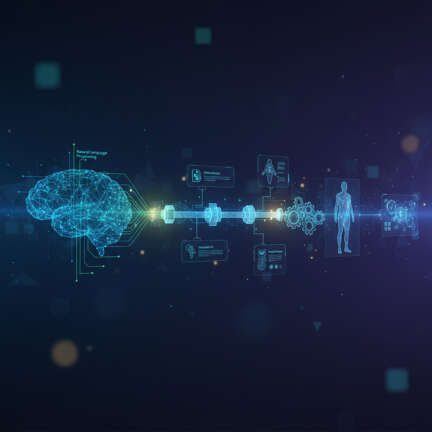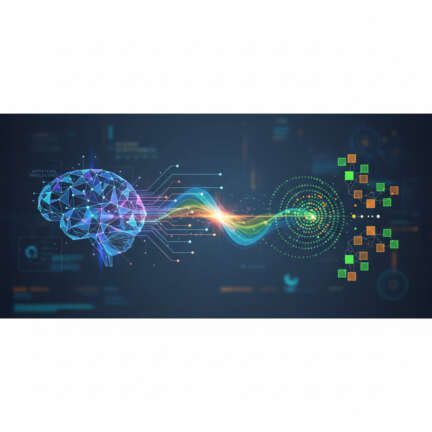

The field of artificial intelligence (AI) has seen remarkable progress over recent years, with deep learning emerging as a cornerstone technology driving this transformation. Deep learning, a subset of machine learning, is based on neural networks that mimic the human brain’s ability to learn from experience. By using algorithms and computational models, deep learning enables machines to recognize patterns in large datasets, making it possible to perform tasks such as speech recognition, image classification, and natural language processing with unprecedented accuracy.
Understanding Deep Learning
To grasp the essence of deep learning, we need to first understand its foundational concepts. At its core, deep learning involves training neural networks through multiple layers to extract features from raw data. This process enables machines to make predictions and decisions based on complex patterns within datasets. Neural networks are composed of interconnected nodes or neurons that work together to solve problems. By stacking these layers, deep learning models can capture intricate relationships between inputs and outputs.
One key advantage of deep learning is its ability to automatically extract features from raw data without manual intervention. Traditional machine learning approaches often require extensive feature engineering by human experts, which can be time-consuming and error-prone. In contrast, deep learning algorithms can learn these features directly from the data, leading to more accurate predictions and better performance in real-world applications.
Applications of Deep Learning
The impact of deep learning extends across various domains, revolutionizing industries such as healthcare, finance, and autonomous vehicles. In healthcare, for instance, deep learning models have been used to diagnose diseases from medical images with high precision. These systems can analyze vast amounts of data quickly and accurately, providing insights that may not be immediately apparent to human practitioners.
Another notable application is in natural language processing (NLP), where deep learning has made significant strides. With advancements like transformer models, deep learning enables machines to understand and generate human-like text with remarkable fluency. This technology powers chatbots, virtual assistants, and automated customer service systems, enhancing user experience across multiple platforms.
Speech Recognition
Speech recognition is another area where deep learning has shown exceptional promise. By leveraging neural networks, speech recognition systems can transcribe spoken words with high accuracy, even in noisy environments. This capability has led to the development of voice-controlled devices and applications that facilitate hands-free interactions.
Reinforcement learning (RL) is a complementary approach within the deep learning framework that focuses on training agents through trial-and-error experiences. In RL, an agent learns by interacting with its environment to maximize rewards while minimizing penalties. This method has proven particularly effective in game playing and robotics, where machines can learn optimal strategies for navigating complex scenarios.
Challenges and Future Directions
Despite the impressive achievements of deep learning, several challenges remain. One major issue is the need for large amounts of labeled data to train models effectively. Collecting and annotating such datasets can be costly and time-consuming, limiting the scalability of certain applications.
To address these limitations, researchers are exploring techniques like transfer learning, which allows pre-trained models to be fine-tuned on smaller datasets with similar characteristics. This approach reduces the dependency on extensive labeled data while maintaining high performance levels. Additionally, advances in unsupervised and semi-supervised learning aim to minimize the reliance on manually labeled examples.
Neural Architecture Search
Another exciting frontier in deep learning is neural architecture search (NAS), which automates the process of designing optimal network architectures. By using algorithms to search through possible configurations, NAS can identify efficient models tailored for specific tasks without requiring expert knowledge. This innovation has the potential to democratize access to cutting-edge deep learning technologies.
TL;DR
Deep learning is a transformative technology in the field of AI and machine learning. It enables machines to learn from raw data, improving accuracy in tasks like speech recognition and natural language processing. Key challenges include the need for large labeled datasets and computational resource requirements, but innovations like transfer learning and neural architecture search are helping overcome these limitations.