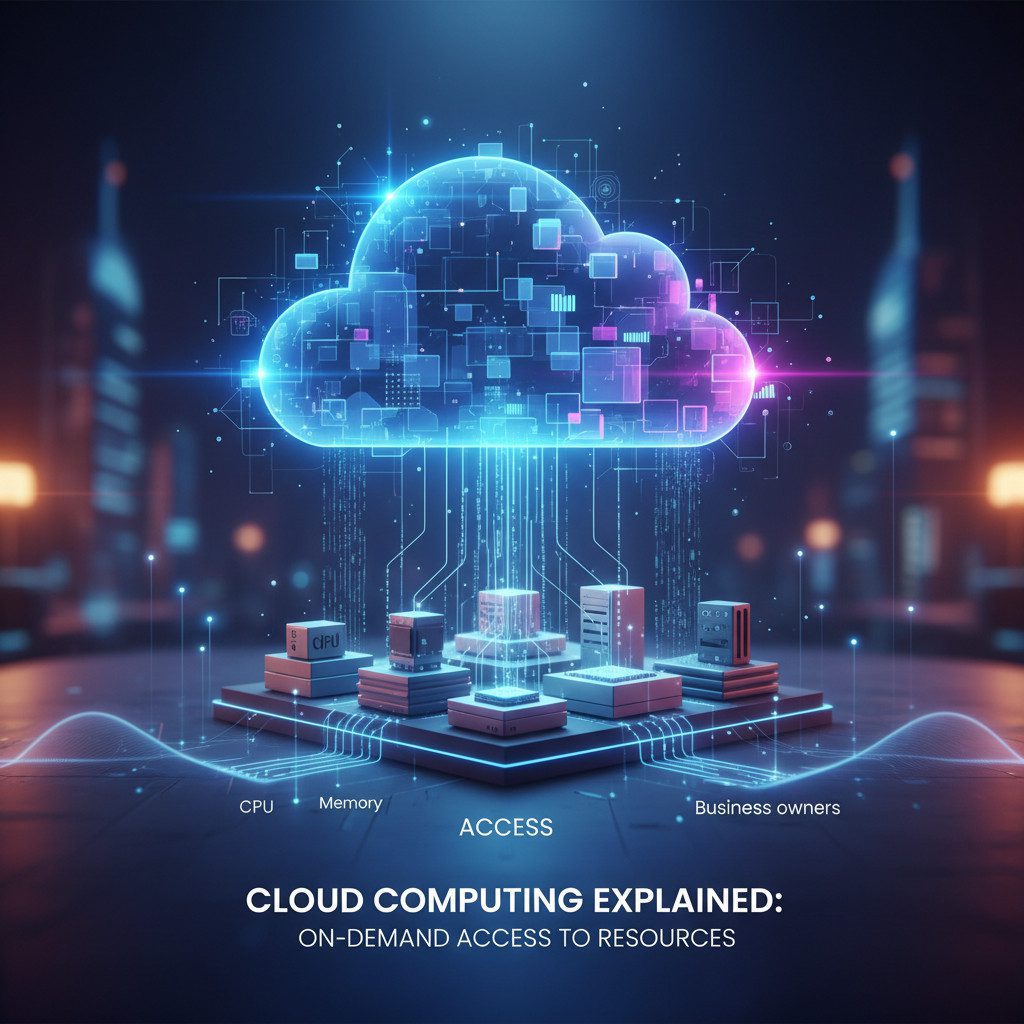

Welcome to the world of cloud computing, where technology meets innovation to transform the way businesses operate and individuals work. In this comprehensive guide, we delve into the intricacies of cloud computing, exploring its fundamental concepts, key benefits, and practical applications. Whether you’re a business owner looking for cost-effective solutions or an IT professional seeking advanced infrastructure management tools, understanding cloud computing is essential.
Cloud computing offers a revolutionary approach to managing computing resources, enabling users to access scalable, flexible, and secure services over the internet. This technology has become increasingly prevalent in recent years as organizations seek ways to streamline operations and reduce costs while enhancing productivity and collaboration. In this article, we will cover everything from basic definitions to advanced features of cloud computing.
Let’s start by understanding what cloud computing is all about and why it matters today more than ever before.
The Basics of Cloud Computing
Cloud computing can be defined as a model that enables convenient, on-demand network access to configurable computing resources such as servers, storage devices, applications, and services. The key feature here is the concept of ‘on-demand,’ meaning users can acquire these resources whenever they need them without having to worry about upfront investments or physical infrastructure.
One of the most appealing aspects of cloud computing is its pay-per-use model. Users only pay for what they consume, making it a highly cost-effective solution compared to traditional IT setups where companies often invest heavily in hardware and software that might not be fully utilized at all times. This flexibility allows businesses to scale their resources up or down depending on demand, ensuring optimal performance while minimizing expenses.
Cloud computing also offers robust security measures and compliance features, which are crucial for protecting sensitive data and maintaining regulatory standards across various industries such as healthcare, finance, and government sectors.
The Essential Characteristics of Cloud Computing
The National Institute of Standards and Technology (NIST) defines five essential characteristics of cloud computing that help distinguish it from other forms of technology services:
- On-demand self-service: Users can provision computing resources without requiring human interaction with each service provider.
- Broad network access: Services are available over the Internet and through various standard mechanisms like mobile phones, tablets, laptops, etc.
- Resource pooling: Multiple users’ resources are combined together to serve multiple geographical locations or departments.
- Rapid elasticity: Capabilities can be elastically provisioned and released to scale rapidly outward and inward commensurate with demand. To the consumer, the capabilities available for provisioning often appear unlimited and can be appropriated in any quantity at any time.
- Metering service: Cloud systems automatically control and optimize resource use by leveraging a metering capability.
These characteristics ensure that cloud computing provides an efficient, reliable, and flexible environment for users to operate within. By adhering to these principles, providers can offer high-quality services while maintaining transparency and accountability towards their customers.
The benefits of on-demand access are numerous. With cloud computing, businesses don’t have to worry about the upfront costs associated with purchasing hardware or software licenses. Instead, they can start small and scale up as needed. This model also allows for rapid deployment of new applications and services without significant delays caused by traditional procurement processes.
Types of Cloud Deployment Models
Cloud computing comes in various forms depending on how resources are managed and accessed:
- Public Cloud: In a public cloud environment, the infrastructure is owned and operated by third-party providers who deliver their services over the Internet. Public clouds provide scalable services that can be used by anyone.
- Private Cloud: A private cloud is dedicated to a single organization and provides greater control and security compared to public clouds.
- Hybrid Cloud: This model combines elements of both public and private clouds, allowing organizations to leverage the benefits of each type. Data and applications can be moved between environments based on performance requirements or regulatory constraints.
The choice between these models depends largely on factors such as data privacy needs, compliance regulations, and specific business objectives. Public clouds offer cost savings and scalability but may lack customization options; private clouds provide high levels of security and control over resources at the expense of increased costs; hybrid clouds strike a balance by offering flexibility while adhering to strict governance policies.
Benefits for Business Owners
The advantages of adopting cloud computing extend beyond cost savings. For business owners, it means faster time-to-market for new products and services since developers can focus on innovation rather than setting up infrastructure. Additionally, disaster recovery planning becomes simpler because backups are automatically handled by the service provider.
Another significant benefit is improved collaboration among team members regardless of their physical locations thanks to integrated communication tools provided within many cloud platforms. This enhances productivity while fostering a sense of community across remote workforces.
Tips for IT Professionals
For IT professionals, leveraging cloud computing means taking advantage of advanced automation capabilities and robust security frameworks offered by major players in the market. Automation tools enable efficient management of resources across multiple environments, reducing manual intervention and minimizing human error.
Security remains a top concern when moving critical operations to the cloud. Providers typically offer comprehensive protection measures including encryption technologies, intrusion detection systems, and continuous monitoring services. However, it’s important for organizations to conduct thorough audits and assessments before fully committing to any solution.
The Future of Cloud Computing
As technology evolves rapidly, so does the landscape of cloud computing. Emerging trends such as edge computing, artificial intelligence (AI), and Internet-of-Things (IoT) integration promise even greater efficiencies and opportunities for businesses in the coming years.
Edge computing, for instance, allows data processing closer to where it’s generated – reducing latency issues associated with centralized cloud architectures. Meanwhile, AI-driven analytics can help organizations gain deeper insights into their operations and customer behaviors.
Tl;dr
In summary, cloud computing offers immense potential for businesses seeking agility, cost-efficiency, and cutting-edge technology solutions. By understanding its core principles and leveraging the right deployment models, companies can unlock new levels of productivity and innovation. For further exploration, consider diving into specific use cases or consulting with experts in your industry who specialize in implementing successful cloud strategies.
Related reading
- Unlocking NLP for Document AI: Insights and Benefits — Related article
- Mastering Taxes for Motor Fuel Transporters: Compliance Guide — Related article
- Boost Efficiency with Workflow Automation Strategies — Related article
- Effective Tech Startup Strategies for Success — Related article
- Unlocking AI’s Visual Power: Computer Vision Applications — Related article