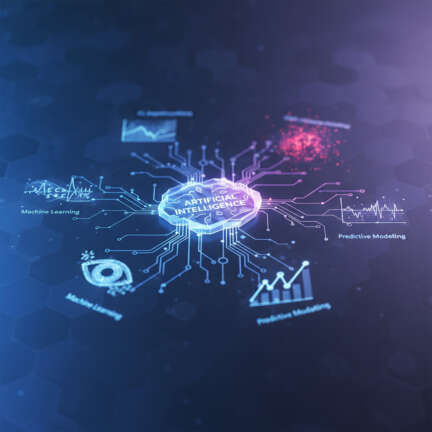

Computer vision is an exciting field at the intersection of artificial intelligence (AI), machine learning (ML), and image processing. It involves developing algorithms that enable machines to interpret and understand visual information from the world around us, similar to how humans do it.
Understanding Computer Vision
At its core, computer vision is about teaching computers to see—processing, analyzing, and understanding images and videos in a way that can be used for decision-making. This technology has revolutionized numerous industries by automating tasks that were once done manually or not possible at all.
Applications of Computer Vision
- Healthcare: From medical imaging analysis to robotic surgery, computer vision is transforming healthcare by improving accuracy and efficiency. VisionComputers highlights how AI-driven technologies are advancing diagnostics and treatment options.
- Manufacturing: In quality control, computer vision systems can inspect products for defects faster and more accurately than humans. This leads to reduced waste and improved product safety.
- Autonomous Vehicles: Self-driving cars rely heavily on computer vision to detect pedestrians, other vehicles, road signs, and obstacles in real-time. GeeksforGeeks explains the role of deep learning models in enabling this technology.
Theoretical Foundations and Techniques
Computer vision involves a combination of theoretical knowledge, algorithm development, and practical application. Key techniques include edge detection, object recognition, tracking, and more advanced methods like semantic segmentation and instance segmentation.
Key Concepts in Computer Vision
- Edge Detection: Identifying boundaries between objects or textures within an image is crucial for many computer vision tasks. This process helps in simplifying images by reducing their complexity while preserving important features.
- Feature Extraction: Extracting meaningful information from visual data, such as color histograms, texture descriptors, and shape representations, enables machines to understand complex visual scenes.
Deep Learning in Computer Vision
The advent of deep learning has significantly advanced the capabilities of computer vision systems. Convolutional Neural Networks (CNNs) are particularly effective at handling image data due to their ability to automatically learn hierarchical features from raw input. This approach allows for more accurate and robust visual recognition tasks.
Common Architectures in Computer Vision
- VGGNet: Developed by Visual Geometry Group, this architecture popularized the use of many convolutional layers for image classification tasks. Its simplicity made it accessible to researchers and practitioners alike.Wikipedia
- ResNet: Residual Networks address the vanishing gradient problem in deep neural networks, making them suitable for training very deep models. This has been pivotal in achieving state-of-the-art results in computer vision challenges.
- Inception: Google’s Inception architecture introduced a modular approach to CNN design, focusing on efficient feature extraction without increasing the number of parameters significantly.IBM
Real-World Implementations and Case Studies
Computer vision is not just theoretical; it has numerous practical applications across various industries. From security systems to social media analytics, the technology plays a vital role in shaping our daily lives.
Cross-Industry Applications of Computer Vision
- Security: Facial recognition and license plate detection are commonly used for surveillance and access control. IBM’s computer vision solutions offer robust security measures that can enhance public safety.
- Social Media: Instagram uses computer vision to detect and remove harmful content like hate speech or nudity. This not only ensures a safer platform but also helps in maintaining community standards.
The Future of Computer Vision
As technology continues to evolve, the potential for computer vision applications is vast. From advanced robotics to environmental monitoring, this field holds immense promise. Innovations like real-time analysis and predictive analytics are pushing the boundaries of what’s possible.
Trends in Computer Vision Research
- Real-Time Analysis: The ability to process and understand visual data instantly is crucial for applications requiring quick decision-making, such as autonomous vehicles or emergency response systems.
- Predictive Analytics: By analyzing historical data, computer vision can predict future events or behaviors, enabling proactive measures in various fields. For example, predictive maintenance can prevent equipment failures before they occur.
Conclusion
In summary, computer vision is a dynamic and rapidly growing field with far-reaching implications across multiple sectors. Its integration of AI and machine learning makes it an essential tool for solving complex problems and improving efficiency in numerous industries. Whether you’re interested in healthcare, manufacturing, or autonomous systems, the applications are endless.
TL;DR
Computer vision leverages AI and ML to analyze images and videos, enabling machines to see and understand the world like humans do. Its applications range from healthcare diagnostics to self-driving cars, demonstrating its transformative potential across industries. As technology advances, real-time analysis and predictive analytics are becoming increasingly important in this field.