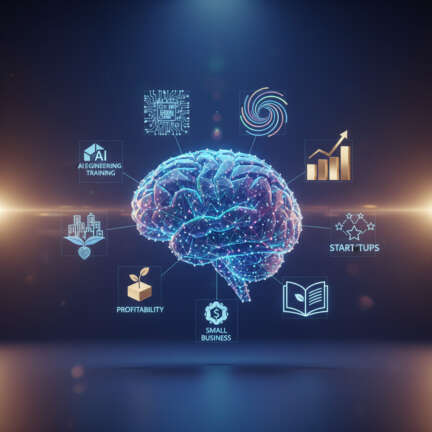

The field of artificial intelligence (AI) has exploded in recent years, driven by advancements in machine learning techniques such as deep learning. Deep learning is a subset of machine learning that focuses on training complex neural network architectures to perform tasks like image recognition, natural language processing, and predictive analytics. In this article, we will explore the basics of deep learning, its benefits for data scientists, marketers, and other professionals working with big data.
Understanding Deep Learning
At its core, deep learning involves creating artificial neural networks that mimic the structure and function of biological brains. These networks are composed of layers of interconnected nodes or neurons, which process information in a hierarchical manner. The first layer receives raw input data, such as images or audio recordings, while subsequent layers extract increasingly abstract features from this data.
One key advantage of deep learning is its ability to automatically learn and identify relevant features without manual feature engineering. This reduces the need for domain-specific expertise and allows researchers and practitioners to focus on building accurate models rather than handcrafting rules or algorithms. However, training deep neural networks can be computationally expensive due to their complexity and large number of parameters.
Applications in Data Science
Data scientists are increasingly leveraging deep learning for a variety of tasks. For example, they use convolutional neural networks (CNNs) for image recognition and classification, recurrent neural networks (RNNs) for natural language processing, and autoencoders for anomaly detection. Deep learning also enables the analysis of large datasets with high-dimensional feature spaces that would be difficult or impossible to process using traditional statistical methods.
Moreover, deep learning algorithms can detect patterns in unstructured data such as text documents, social media posts, or customer reviews. This capability allows organizations to gain valuable insights from vast amounts of unstructured information and make informed business decisions based on these findings. Companies like Google, Facebook, and Amazon are already using deep learning models to improve their products and services.
Challenges and Limitations
Despite its many advantages, deep learning is not without challenges. One major issue is the need for large amounts of labeled training data to achieve good performance on specific tasks. Collecting such datasets can be time-consuming and expensive, especially in domains where obtaining high-quality labels requires domain expertise or specialized equipment.
In addition, interpretability remains a significant challenge when working with deep learning models. Unlike traditional machine learning techniques like decision trees or logistic regression, the reasoning behind predictions made by neural networks is often opaque and difficult to explain. This lack of transparency can be problematic in industries where regulatory compliance requires clear justification for model decisions.
Deep Learning in Marketing
The marketing industry has also seen substantial benefits from deep learning technology. Marketers are using deep learning models to analyze customer behavior patterns, predict future trends, and personalize user experiences across various channels including email campaigns, social media platforms, and mobile apps. By leveraging advanced image recognition techniques powered by CNNs, advertisers can target specific demographics more accurately based on visual cues detected within images.
Furthermore, natural language processing (NLP) capabilities enabled through deep learning algorithms help marketers understand sentiment analysis of customer feedback across different touchpoints like surveys or online reviews. This information allows businesses to improve product quality and service delivery while enhancing brand reputation among consumers. Deep learning also powers recommendation engines that suggest personalized products or services tailored specifically for individual users.
Getting Started with Deep Learning
For those interested in exploring deep learning further, there are numerous resources available online ranging from beginner-friendly tutorials to advanced research papers published by leading institutions worldwide. Python libraries like TensorFlow and PyTorch provide powerful tools for implementing state-of-the-art neural network architectures efficiently.
To get started with practical projects, you may want to consider working on datasets related to your area of interest or industry. Kaggle competitions offer great opportunities to practice applying deep learning techniques while collaborating with fellow enthusiasts from around the globe. Additionally, attending workshops or taking courses offered by reputable organizations can help build a solid foundation in this exciting field.
Real-World Examples
One notable example of deep learning application is IBM Watson’s use of neural networks to analyze medical images and detect early signs of cancer with high accuracy rates. Another instance includes Netflix utilizing recommendation systems powered by collaborative filtering algorithms trained on user viewing history data to suggest relevant TV shows or movies.
In the retail sector, companies like Amazon employ sophisticated computer vision technologies based on deep learning models for inventory management purposes such as automated counting and tracking products across warehouses efficiently without human intervention. These examples illustrate how deep learning can revolutionize various aspects of modern society by enabling smarter decision-making processes backed up by robust predictive analytics frameworks.
Conclusion
To recap, deep learning represents a powerful toolset for extracting meaningful insights from complex datasets and enhancing automation in diverse domains including data science and marketing. While it comes with certain challenges such as interpretability issues or resource-intensive training requirements, its potential benefits far outweigh these drawbacks.
We encourage readers to explore further the world of neural networks and artificial intelligence through hands-on experimentation and continuous learning opportunities provided by online communities and educational platforms dedicated to advancing knowledge in this rapidly evolving field.
TL;DR
In summary, deep learning offers immense potential for transforming data science practices and marketing strategies via advanced neural network architectures. Despite some limitations related to computational demands or model explainability challenges, embracing deep learning technologies can lead to significant improvements in predictive accuracy and personalized user experiences across multiple industries.